
Should you choose tax-saving FDs to save tax or are regular FDs enough? Here’s how to decide
Should you choose tax-saving FDs to save tax or are regular FDs enough? Here’s how to decide
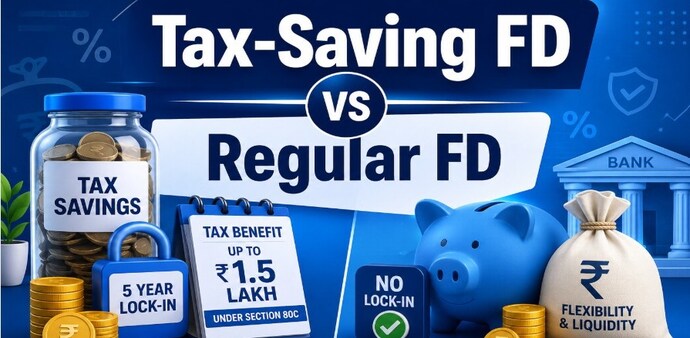
Tax-saving FDs can help reduce taxable income under Section 80C, but they come with a strict five-year lock-in. Regular FDs, meanwhile, offer flexibility and liquidity — making the choice more about financial goals than tax savings alone.
Business Today Desk
- May 28, 2026,
- Updated May 28, 2026 7:20 AM IST
Fixed Deposits (FDs) remain among India’s most popular investment choices for conservative savers seeking predictable returns and capital protection. But when it comes to choosing between a regular FD and a tax-saving FD, investors often face a common question: should they lock their money for tax benefits, or prioritize flexibility and liquidity?
Advertisement
The answer depends largely on your financial goals, tax planning needs and access to emergency funds.
While both instruments offer fixed returns and low risk, their structure, benefits and restrictions differ significantly.
What is a tax-saving FD?
A tax-saving Fixed Deposit is a special type of bank FD that allows investors to claim deductions of up to ₹1.5 lakh under Section 80C of the Income Tax Act.
Like regular FDs, these deposits earn a fixed interest rate. Current rates generally range between 5.5% and 7.75% annually, depending on the bank and investor category.
However, the biggest difference lies in the lock-in requirement.
Once money is invested in a tax-saving FD, it remains locked for five years, and investors cannot prematurely withdraw the amount or take loans against the deposit.
Advertisement
This lock-in exists because the product is designed primarily as a tax-planning instrument rather than a liquidity tool.
Regular FD vs Tax-Saving FD
For many investors, liquidity often becomes the deciding factor.
Regular FDs allow withdrawal before maturity, usually with a small penalty. Investors can also choose multiple payout options such as monthly, quarterly or cumulative interest structures.
Tax-saving FDs sacrifice these features in exchange for tax benefits.
Tax benefit does not mean tax-free returns
One misconception among investors is that tax-saving FDs provide completely tax-free income.
Advertisement
That is not the case.
Only the principal invested qualifies for deduction under Section 80C. The interest earned on both tax-saving and regular FDs remains fully taxable and gets added to annual income according to the investor’s tax slab.
Tax Deducted at Source (TDS) may also apply if interest exceeds prescribed limits.
Who should choose tax-saving FDs?
Tax-saving FDs may suit investors who:
Need Section 80C deductions Prefer guaranteed returns over market-linked products Have a long-term horizon Do not expect to need the funds for five years Prefer low-risk instruments
They are often considered suitable for individuals approaching retirement or conservative investors focused on stability.
Regular FDs are better if?
Regular FDs can make more sense if flexibility is your priority.
Investors creating emergency funds, saving for short-term goals or requiring access to money at uncertain times may find regular FDs more practical.
Financial planners also note that tax-saving FDs compete with other Section 80C products such as PPF, NPS and ELSS, which offer varying combinations of returns, taxation and lock-in periods.
Ultimately, choosing between the two is less about which FD is “better” and more about whether your priority is tax savings or financial flexibility.
Fixed Deposits (FDs) remain among India’s most popular investment choices for conservative savers seeking predictable returns and capital protection. But when it comes to choosing between a regular FD and a tax-saving FD, investors often face a common question: should they lock their money for tax benefits, or prioritize flexibility and liquidity?
Advertisement
The answer depends largely on your financial goals, tax planning needs and access to emergency funds.
While both instruments offer fixed returns and low risk, their structure, benefits and restrictions differ significantly.
What is a tax-saving FD?
A tax-saving Fixed Deposit is a special type of bank FD that allows investors to claim deductions of up to ₹1.5 lakh under Section 80C of the Income Tax Act.
Like regular FDs, these deposits earn a fixed interest rate. Current rates generally range between 5.5% and 7.75% annually, depending on the bank and investor category.
However, the biggest difference lies in the lock-in requirement.
Once money is invested in a tax-saving FD, it remains locked for five years, and investors cannot prematurely withdraw the amount or take loans against the deposit.
Advertisement
This lock-in exists because the product is designed primarily as a tax-planning instrument rather than a liquidity tool.
Regular FD vs Tax-Saving FD
For many investors, liquidity often becomes the deciding factor.
Regular FDs allow withdrawal before maturity, usually with a small penalty. Investors can also choose multiple payout options such as monthly, quarterly or cumulative interest structures.
Tax-saving FDs sacrifice these features in exchange for tax benefits.
Tax benefit does not mean tax-free returns
One misconception among investors is that tax-saving FDs provide completely tax-free income.
Advertisement
That is not the case.
Only the principal invested qualifies for deduction under Section 80C. The interest earned on both tax-saving and regular FDs remains fully taxable and gets added to annual income according to the investor’s tax slab.
Tax Deducted at Source (TDS) may also apply if interest exceeds prescribed limits.
Who should choose tax-saving FDs?
Tax-saving FDs may suit investors who:
Need Section 80C deductions Prefer guaranteed returns over market-linked products Have a long-term horizon Do not expect to need the funds for five years Prefer low-risk instruments
They are often considered suitable for individuals approaching retirement or conservative investors focused on stability.
Regular FDs are better if?
Regular FDs can make more sense if flexibility is your priority.
Investors creating emergency funds, saving for short-term goals or requiring access to money at uncertain times may find regular FDs more practical.
Financial planners also note that tax-saving FDs compete with other Section 80C products such as PPF, NPS and ELSS, which offer varying combinations of returns, taxation and lock-in periods.
Ultimately, choosing between the two is less about which FD is “better” and more about whether your priority is tax savings or financial flexibility.
Read more!