
Taxes in 2025-26: Why business owners and employees can’t use the same strategy to choose tax regimes
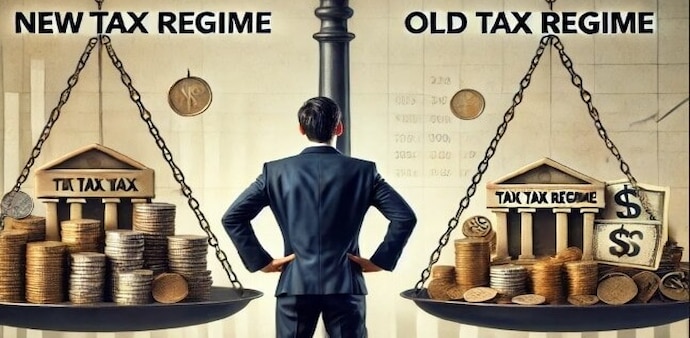
The government introduced a new tax regime in 2020 with lower slab rates but without standard deductions and exemptions. Taxpayers can choose between the old and new regimes each year, but switching rules differ for salaried individuals and pensioners vs business or professional income earners.
- Sep 16, 2025,
- Updated Sep 16, 2025 8:25 AM IST
As the final date for filing Income Tax Returns (ITR) for the assessment year 2025–26 approaches, many taxpayers are still weighing the choice between the old and new tax regimes. Chartered Accountant Nitin Kaushik, in a recent social media post, emphasized that this choice is not uniform. The flexibility to switch between regimes and the overall tax strategy largely depend on whether you earn as a salaried employee or as a business owner/professional.
Taxes for salaried employees
For salaried individuals, tax planning is often limited to the benefits structured into the salary package. The old tax regime provides several deductions and exemptions, including:
House Rent Allowance (HRA)
Leave Travel Allowance (LTA)
Standard deduction of Rs 50,000
Section 80C deductions (investments like PPF, ELSS, LIC)
Section 80D deductions (medical insurance premiums)
Home loan interest under Section 24(b)
These can significantly reduce taxable income. However, under the new regime, most of these perks disappear. Employees only get the slab-based rates, the standard deduction, and certain contributions like the employer’s share to the National Pension System (NPS).
The key point: an employee’s tax planning is employer-driven. While individuals can submit investment proofs or claim HRA based on rent paid, the overall flexibility is limited.
Taxes for business owners, professionals
For self-employed individuals, the scenario is vastly different. Business owners and professionals have broader opportunities to reduce taxable income through business-related expenses. These may include:
Rent for office space
Employee salaries
Business travel costs
Depreciation on assets like machinery or laptops
A proportion of home expenses, if used for business purposes
For example, if a consultant earns Rs 15 lakh in revenue but incurs Rs 8 lakh in legitimate expenses, their taxable income drops to just Rs 7 lakh — not the full Rs 15 lakh. In this case, deductions do the heavy lifting, rather than exemptions under 80C or 80D.
Additional levers
Presumptive taxation under Sections 44AD and 44ADA for small businesses and professionals.
Cash flow planning, allowing them to time income recognition.
Income distribution, such as paying legitimate salaries to family members (subject to anti-avoidance rules).
Greater control over expense structuring to lower net taxable income.
The Fundamental Difference
The contrast lies in the sequence of taxation:
Employees: earn first, then manage taxes with limited deductions.
Business owners: plan taxes first, then recognize income accordingly.
This means tax-saving strategies for the two groups cannot be the same.
Switching between regimes
The government’s new tax regime, introduced in 2020, allows taxpayers to choose between the old and new systems. But switching rules vary:
Salaried individuals and pensioners: Can switch every year while filing ITR under Section 139(1), with no restriction on the number of times.
Business owners/professionals: Can opt for the new regime once. If they revert to the old regime, they can do so only once in their lifetime. After that, they cannot switch back.
This makes the decision critical for entrepreneurs, as it effectively locks them into a regime.
Key takeaways for 2025
Salaried individuals enjoy flexibility and can optimize annually.
Business owners must choose carefully, since switching out of the new regime is nearly permanent.
The new regime is the default, but filing the right form on time allows opting out.
The best approach depends on income structure, expenses, and long-term plans.
Kaushik sums it up neatly: “Salaried employees play within the system, while business owners play around it.”
As the final date for filing Income Tax Returns (ITR) for the assessment year 2025–26 approaches, many taxpayers are still weighing the choice between the old and new tax regimes. Chartered Accountant Nitin Kaushik, in a recent social media post, emphasized that this choice is not uniform. The flexibility to switch between regimes and the overall tax strategy largely depend on whether you earn as a salaried employee or as a business owner/professional.
Taxes for salaried employees
For salaried individuals, tax planning is often limited to the benefits structured into the salary package. The old tax regime provides several deductions and exemptions, including:
House Rent Allowance (HRA)
Leave Travel Allowance (LTA)
Standard deduction of Rs 50,000
Section 80C deductions (investments like PPF, ELSS, LIC)
Section 80D deductions (medical insurance premiums)
Home loan interest under Section 24(b)
These can significantly reduce taxable income. However, under the new regime, most of these perks disappear. Employees only get the slab-based rates, the standard deduction, and certain contributions like the employer’s share to the National Pension System (NPS).
The key point: an employee’s tax planning is employer-driven. While individuals can submit investment proofs or claim HRA based on rent paid, the overall flexibility is limited.
Taxes for business owners, professionals
For self-employed individuals, the scenario is vastly different. Business owners and professionals have broader opportunities to reduce taxable income through business-related expenses. These may include:
Rent for office space
Employee salaries
Business travel costs
Depreciation on assets like machinery or laptops
A proportion of home expenses, if used for business purposes
For example, if a consultant earns Rs 15 lakh in revenue but incurs Rs 8 lakh in legitimate expenses, their taxable income drops to just Rs 7 lakh — not the full Rs 15 lakh. In this case, deductions do the heavy lifting, rather than exemptions under 80C or 80D.
Additional levers
Presumptive taxation under Sections 44AD and 44ADA for small businesses and professionals.
Cash flow planning, allowing them to time income recognition.
Income distribution, such as paying legitimate salaries to family members (subject to anti-avoidance rules).
Greater control over expense structuring to lower net taxable income.
The Fundamental Difference
The contrast lies in the sequence of taxation:
Employees: earn first, then manage taxes with limited deductions.
Business owners: plan taxes first, then recognize income accordingly.
This means tax-saving strategies for the two groups cannot be the same.
Switching between regimes
The government’s new tax regime, introduced in 2020, allows taxpayers to choose between the old and new systems. But switching rules vary:
Salaried individuals and pensioners: Can switch every year while filing ITR under Section 139(1), with no restriction on the number of times.
Business owners/professionals: Can opt for the new regime once. If they revert to the old regime, they can do so only once in their lifetime. After that, they cannot switch back.
This makes the decision critical for entrepreneurs, as it effectively locks them into a regime.
Key takeaways for 2025
Salaried individuals enjoy flexibility and can optimize annually.
Business owners must choose carefully, since switching out of the new regime is nearly permanent.
The new regime is the default, but filing the right form on time allows opting out.
The best approach depends on income structure, expenses, and long-term plans.
Kaushik sums it up neatly: “Salaried employees play within the system, while business owners play around it.”