
'Tesla gets ₹30 lakh, govt gets ₹30 lakh': Financial expert breaks down India’s EV tax trap
Tesla has long expressed interest in entering the Indian market but has pushed back against steep import duties. The company has said it would consider local manufacturing, but only after testing market demand through imports, a step made prohibitively expensive under current rules.
- Nov 5, 2025,
- Updated Nov 5, 2025 1:45 PM IST
Ever wonder why a Tesla costs twice as much in India as it does in the U.S.? A financial advisor has laid out a blunt answer: nearly half of that inflated price goes straight to taxes, not Tesla.
In a LinkedIn post, SV Varun explained why global electric vehicle makers like Tesla continue to struggle with entry into India, despite booming demand. The problem, he says, isn’t technology, infrastructure, or interest: it’s the tax structure.
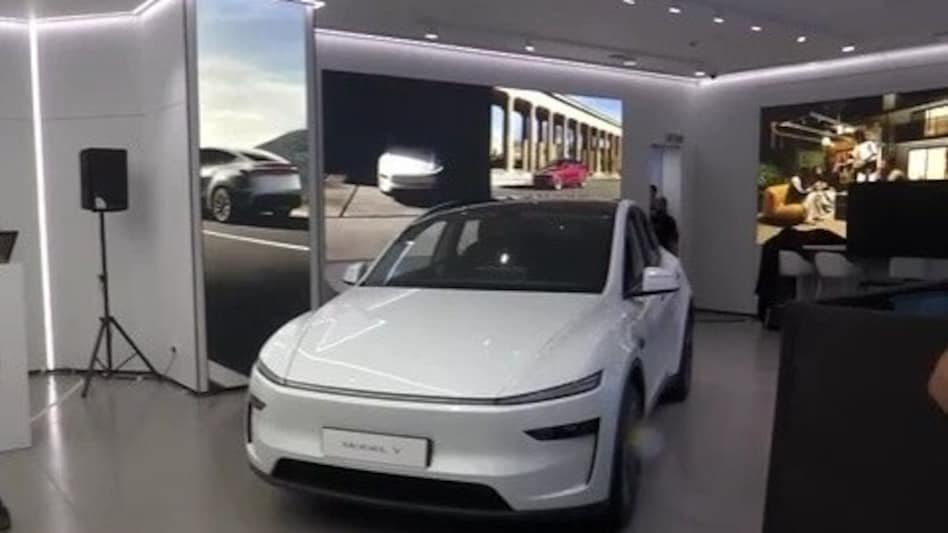
Using the Tesla Model Y as an example, Varun breaks down how a car priced at ₹30 lakh in the U.S. ends up costing over ₹61 lakh on Indian roads.
Here’s where the money goes:
Import duty (70%): Adds ~₹19 lakh
GST (28%) + cess: Adds another ₹10 lakh
Road tax & insurance: Push the total cost even higher
“Tesla gets ₹30 lakh, but the Indian government collects over ₹30 lakh,” Varun wrote. “Almost 50% of the car’s price is just taxes.”
The post raises a larger policy question: are India’s high import duties truly incentivizing domestic manufacturing — or simply acting as a barrier to clean energy adoption?
Tesla has long expressed interest in entering the Indian market but has pushed back against steep import duties. The company has said it would consider local manufacturing, but only after testing market demand through imports — a step made prohibitively expensive under current rules.
“While India aims to promote ‘Make in India,’ this pricing gap makes EVs a luxury rather than a necessity,” Varun noted, calling for tax reform as a lever to drive clean mobility adoption.
Ever wonder why a Tesla costs twice as much in India as it does in the U.S.? A financial advisor has laid out a blunt answer: nearly half of that inflated price goes straight to taxes, not Tesla.
In a LinkedIn post, SV Varun explained why global electric vehicle makers like Tesla continue to struggle with entry into India, despite booming demand. The problem, he says, isn’t technology, infrastructure, or interest: it’s the tax structure.
Using the Tesla Model Y as an example, Varun breaks down how a car priced at ₹30 lakh in the U.S. ends up costing over ₹61 lakh on Indian roads.
Here’s where the money goes:
Import duty (70%): Adds ~₹19 lakh
GST (28%) + cess: Adds another ₹10 lakh
Road tax & insurance: Push the total cost even higher
“Tesla gets ₹30 lakh, but the Indian government collects over ₹30 lakh,” Varun wrote. “Almost 50% of the car’s price is just taxes.”
The post raises a larger policy question: are India’s high import duties truly incentivizing domestic manufacturing — or simply acting as a barrier to clean energy adoption?
Tesla has long expressed interest in entering the Indian market but has pushed back against steep import duties. The company has said it would consider local manufacturing, but only after testing market demand through imports — a step made prohibitively expensive under current rules.
“While India aims to promote ‘Make in India,’ this pricing gap makes EVs a luxury rather than a necessity,” Varun noted, calling for tax reform as a lever to drive clean mobility adoption.