
Artemis II launch: Why NASA's ambitious Moon mission matters for everyday life on Earth?
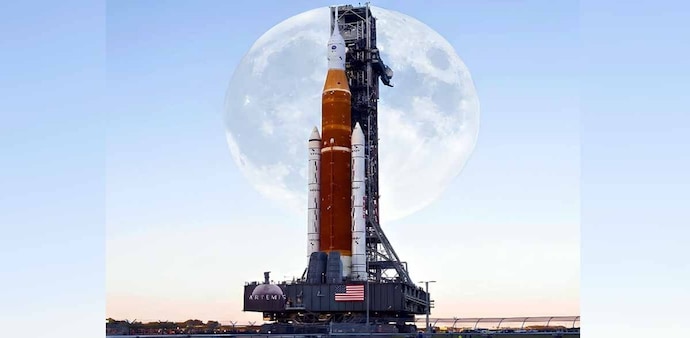
The mission, led by NASA, will send four astronauts on a roughly 10-day journey around the Moon aboard the Orion spacecraft.
- Mar 31, 2026,
- Updated Mar 31, 2026 4:14 PM IST
More than five decades after humans last travelled to the Moon, Artemis II is set to mark a return — but this time, the focus is not just space exploration, but what it delivers back on Earth. The mission, led by NASA, will send four astronauts on a roughly 10-day journey around the Moon aboard the Orion spacecraft. It will be the first crewed lunar mission since the Apollo program ended in 1972.
What Artemis II will actually test in space
Unlike Apollo-era missions that were aimed at proving human spaceflight capability, Artemis II is designed to test systems needed for sustained deep-space travel. These include life-support, navigation, propulsion and communication technologies — many of which have direct applications beyond space.
The mission is part of the broader Artemis program, which aims to establish a long-term human presence on the Moon and eventually support missions to Mars. Artemis II is a key step before astronauts attempt to land on the lunar surface again under Artemis III later this decade, as outlined in NASA’s official mission brief.
What it means for healthcare sector?
Healthcare is one of the clearest examples. Systems developed to track astronauts’ health in real time during deep-space missions are shaping remote monitoring tools used in hospitals and home care, a trend highlighted in Associated Press coverage of space innovation.
Water, air and survival systems with Earth use
Water purification and air filtration systems designed for spacecraft — where resources are limited and must be recycled — have historically been adapted for civilian use, according to NASA’s spinoff programme. Artemis-era upgrades are expected to further improve efficiency in urban water systems and disaster response.
Energy systems built for extreme conditions
Energy and sustainability are another focus area. Artemis II will test power systems that can operate in extreme temperatures and harsh conditions. Such innovations could influence renewable energy storage and grid resilience, Reuters noted in its analysis of space technologies.
Boosting connectivity through deep-space tech
The mission is also pushing advances in communications. Deep-space data transmission requires highly reliable, long-distance networks. Improvements in this area are expected to support satellite-based internet services and strengthen global connectivity, according to NASA.
Materials that move from space to everyday life
Material science is another spillover. Heat-resistant materials and lightweight composites developed for spacecraft re-entry and long-duration missions are already being used in aviation, construction and consumer products — a trend documented in NASA’s technology reports and highlighted in AP features.
Strategic push: beyond exploration to economy
Beyond technology, the mission carries strategic and economic weight. The United States is working with international partners to build infrastructure around the Moon, including future stations and surface systems. This is expected to open up new commercial opportunities in space, according to Reuters coverage of the Artemis programme.
For now, Artemis II remains a test mission. But its significance extends beyond space — into the systems, tools and technologies that increasingly shape life back on Earth.
More than five decades after humans last travelled to the Moon, Artemis II is set to mark a return — but this time, the focus is not just space exploration, but what it delivers back on Earth. The mission, led by NASA, will send four astronauts on a roughly 10-day journey around the Moon aboard the Orion spacecraft. It will be the first crewed lunar mission since the Apollo program ended in 1972.
What Artemis II will actually test in space
Unlike Apollo-era missions that were aimed at proving human spaceflight capability, Artemis II is designed to test systems needed for sustained deep-space travel. These include life-support, navigation, propulsion and communication technologies — many of which have direct applications beyond space.
The mission is part of the broader Artemis program, which aims to establish a long-term human presence on the Moon and eventually support missions to Mars. Artemis II is a key step before astronauts attempt to land on the lunar surface again under Artemis III later this decade, as outlined in NASA’s official mission brief.
What it means for healthcare sector?
Healthcare is one of the clearest examples. Systems developed to track astronauts’ health in real time during deep-space missions are shaping remote monitoring tools used in hospitals and home care, a trend highlighted in Associated Press coverage of space innovation.
Water, air and survival systems with Earth use
Water purification and air filtration systems designed for spacecraft — where resources are limited and must be recycled — have historically been adapted for civilian use, according to NASA’s spinoff programme. Artemis-era upgrades are expected to further improve efficiency in urban water systems and disaster response.
Energy systems built for extreme conditions
Energy and sustainability are another focus area. Artemis II will test power systems that can operate in extreme temperatures and harsh conditions. Such innovations could influence renewable energy storage and grid resilience, Reuters noted in its analysis of space technologies.
Boosting connectivity through deep-space tech
The mission is also pushing advances in communications. Deep-space data transmission requires highly reliable, long-distance networks. Improvements in this area are expected to support satellite-based internet services and strengthen global connectivity, according to NASA.
Materials that move from space to everyday life
Material science is another spillover. Heat-resistant materials and lightweight composites developed for spacecraft re-entry and long-duration missions are already being used in aviation, construction and consumer products — a trend documented in NASA’s technology reports and highlighted in AP features.
Strategic push: beyond exploration to economy
Beyond technology, the mission carries strategic and economic weight. The United States is working with international partners to build infrastructure around the Moon, including future stations and surface systems. This is expected to open up new commercial opportunities in space, according to Reuters coverage of the Artemis programme.
For now, Artemis II remains a test mission. But its significance extends beyond space — into the systems, tools and technologies that increasingly shape life back on Earth.