
Artemis II mission: Who was Artemis and why the Moon link matters
The thinking behind the name is simple and deliberate. Apollo proved that humans could land on the Moon. Artemis is about going back, but with a longer plan in mind.
- Apr 2, 2026,
- Updated Apr 2, 2026 7:42 AM IST
As NASA prepares to send astronauts around the Moon again after more than five decades, the name “Artemis” is doing more than just identifying the mission — it explains the idea behind it.
According to NASA, Artemis comes from Greek mythology. She is the twin sister of Apollo and known as the goddess of the Moon. Her brother Apollo's name was used for the program that first took humans to the Moon between 1968 and 1972. By choosing Artemis, NASA is clearly linking its next set of Moon missions to that legacy — while also showing that this is a new chapter, not a repeat.
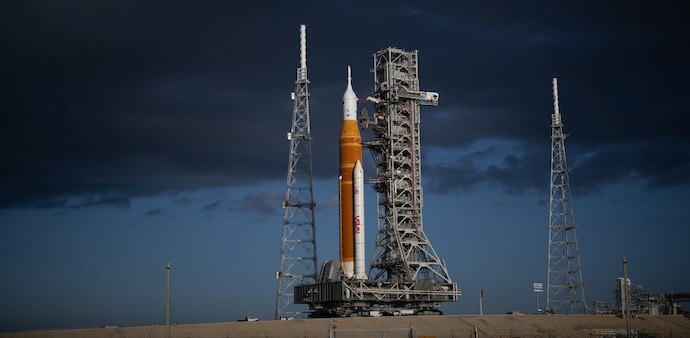
Artemis II will be the first mission in this program to carry astronauts. Four crew members will travel around the Moon and return to Earth. The mission is designed to test the Orion spacecraft and Space Launch System rocket with humans on board, something that has not been done in this program before.
Why the name matters
The thinking behind the name is simple and deliberate. Apollo proved that humans could land on the Moon. Artemis is about going back, but with a longer plan in mind.
NASA has said the Artemis programme is focused on building a sustained presence on and around the Moon. That means not just short visits, but learning how to operate there, test new technology, and prepare for future missions deeper into space.
The name also reflects a shift in how these missions are being presented. While Apollo was driven by the Cold War race, Artemis is being positioned as a long-term effort involving multiple missions over several years.
Why the Moon link matters
The connection to the Moon is both symbolic and practical. It marks the return of human spaceflight to lunar distance after more than 50 years.
Artemis II itself will not land on the Moon, but it is a key step. By flying astronauts around the Moon, NASA will test life-support systems, navigation, communication and other critical functions needed for future missions.
NASA has said later Artemis missions aim to send astronauts to parts of the Moon that have not been explored before, especially the south pole region.
In simple terms, Apollo showed that humans could reach the Moon and come back. Artemis is about returning with better technology, staying longer, and using what is learned there for future missions beyond the Moon.
As NASA prepares to send astronauts around the Moon again after more than five decades, the name “Artemis” is doing more than just identifying the mission — it explains the idea behind it.
According to NASA, Artemis comes from Greek mythology. She is the twin sister of Apollo and known as the goddess of the Moon. Her brother Apollo's name was used for the program that first took humans to the Moon between 1968 and 1972. By choosing Artemis, NASA is clearly linking its next set of Moon missions to that legacy — while also showing that this is a new chapter, not a repeat.
Artemis II will be the first mission in this program to carry astronauts. Four crew members will travel around the Moon and return to Earth. The mission is designed to test the Orion spacecraft and Space Launch System rocket with humans on board, something that has not been done in this program before.
Why the name matters
The thinking behind the name is simple and deliberate. Apollo proved that humans could land on the Moon. Artemis is about going back, but with a longer plan in mind.
NASA has said the Artemis programme is focused on building a sustained presence on and around the Moon. That means not just short visits, but learning how to operate there, test new technology, and prepare for future missions deeper into space.
The name also reflects a shift in how these missions are being presented. While Apollo was driven by the Cold War race, Artemis is being positioned as a long-term effort involving multiple missions over several years.
Why the Moon link matters
The connection to the Moon is both symbolic and practical. It marks the return of human spaceflight to lunar distance after more than 50 years.
Artemis II itself will not land on the Moon, but it is a key step. By flying astronauts around the Moon, NASA will test life-support systems, navigation, communication and other critical functions needed for future missions.
NASA has said later Artemis missions aim to send astronauts to parts of the Moon that have not been explored before, especially the south pole region.
In simple terms, Apollo showed that humans could reach the Moon and come back. Artemis is about returning with better technology, staying longer, and using what is learned there for future missions beyond the Moon.