
India's first 80-tonne FFSC rocket engine is coming. Here's why it's a big deal
Astrobase's engine is modelled after SpaceX's Raptor engine. Like Raptor, it uses liquid oxygen (LOX) as the oxidiser and liquid methane (CH4) as the fuel, a combination known as methalox.
- Aug 4, 2026,
- Updated Aug 4, 2026 8:30 PM IST
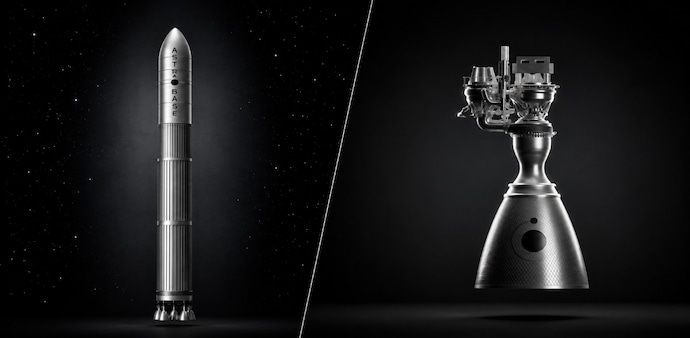
India's private space sector could mark another major milestone this week. On Tuesday, Bengaluru-based startup Astrobase Space Technologies announced on its social media channel that it will "reveal India’s first fully integrated 80-tonne-class FFSC rocket engine" on Friday.
The unveiling is being viewed as a major development not only for India's private space sector but also for the country's broader ambitions of building reusable launch vehicles.
If successful, India will become only the fourth country after the Soviet Union, the United States and China to test a Full Flow Staged Combustion (FFSC) rocket engine. Astrobase will also become only the eighth entity in the world to achieve the feat.
FFSC stands for Full Flow Staged Combustion, one of the most advanced and complex liquid-propellant rocket engine designs ever developed.
In this design, both the fuel and the oxidiser are fed into separate preburners. Each propellant passes through its own turbine before entering the main combustion chamber.
This process improves efficiency because the main chamber receives fully gasified propellants, allowing faster combustion inside a smaller combustion chamber.
The design also offers other advantages. The turbines operate at lower temperatures and lower pressure despite handling higher mass flow, increasing the engine's lifespan and reliability. It also removes the need for a seal between the fuel and oxidiser sides.
Don't Miss: Will India’s steel exports be impacted due to CBAM?
These characteristics make FFSC engines especially suitable for reusable rockets, but they also make them among the most difficult rocket engines to design, build and operate successfully.
Modelled on SpaceX's Raptor engine
Astrobase's engine is modelled after SpaceX's Raptor engine. Like Raptor, it uses liquid oxygen (LOX) as the oxidiser and liquid methane (CH4) as the fuel, a combination known as methalox.
The company had successfully hot-fired a sub-scale version of this engine in September 2025, paving the way for the unveiling of the full-scale integrated version.
Why is this important?
The announcement is significant not just because of the technology involved but also because of what it means for India's private space ecosystem.
Astrobase's engine development has been supported through the Technology Adoption Fund (TAF) of the Indian National Space Promotion and Authorisation Centre (IN-SPACe), making it a notable outcome of the Centre's space policy aimed at encouraging private-sector innovation.
The development also comes just a month after Hyderabad-based startup Skyroot Aerospace successfully launched Vikram-1, India's first privately developed orbital-class small-lift launch vehicle, adding further momentum to India's growing private space industry.
A technology only a handful have mastered
The first FFSC engine variant, RD-270, was tested by Soviet company NPO Energomash between 1967 and 1969. For decades afterwards, no such engine was successfully tested.
SpaceX changed that in 2019 when it successfully tested its Raptor Methalox engine, which later became the foundation for the company's reusable rocket and re-entry capabilities.
Although five more FFSC engine tests have taken place since then, including by Chinese entities, Raptor Methalox remains the only FFSC engine to have been successfully used in flight launches.
If Astrobase's upcoming engine performs as expected, it will place India among a small group of nations that have demonstrated one of the world's most challenging rocket engine technologies while further strengthening the country's ambitions in reusable launch systems and private spaceflight.
India's private space sector could mark another major milestone this week. On Tuesday, Bengaluru-based startup Astrobase Space Technologies announced on its social media channel that it will "reveal India’s first fully integrated 80-tonne-class FFSC rocket engine" on Friday.
The unveiling is being viewed as a major development not only for India's private space sector but also for the country's broader ambitions of building reusable launch vehicles.
If successful, India will become only the fourth country after the Soviet Union, the United States and China to test a Full Flow Staged Combustion (FFSC) rocket engine. Astrobase will also become only the eighth entity in the world to achieve the feat.
FFSC stands for Full Flow Staged Combustion, one of the most advanced and complex liquid-propellant rocket engine designs ever developed.
In this design, both the fuel and the oxidiser are fed into separate preburners. Each propellant passes through its own turbine before entering the main combustion chamber.
This process improves efficiency because the main chamber receives fully gasified propellants, allowing faster combustion inside a smaller combustion chamber.
The design also offers other advantages. The turbines operate at lower temperatures and lower pressure despite handling higher mass flow, increasing the engine's lifespan and reliability. It also removes the need for a seal between the fuel and oxidiser sides.
Don't Miss: Will India’s steel exports be impacted due to CBAM?
These characteristics make FFSC engines especially suitable for reusable rockets, but they also make them among the most difficult rocket engines to design, build and operate successfully.
Modelled on SpaceX's Raptor engine
Astrobase's engine is modelled after SpaceX's Raptor engine. Like Raptor, it uses liquid oxygen (LOX) as the oxidiser and liquid methane (CH4) as the fuel, a combination known as methalox.
The company had successfully hot-fired a sub-scale version of this engine in September 2025, paving the way for the unveiling of the full-scale integrated version.
Why is this important?
The announcement is significant not just because of the technology involved but also because of what it means for India's private space ecosystem.
Astrobase's engine development has been supported through the Technology Adoption Fund (TAF) of the Indian National Space Promotion and Authorisation Centre (IN-SPACe), making it a notable outcome of the Centre's space policy aimed at encouraging private-sector innovation.
The development also comes just a month after Hyderabad-based startup Skyroot Aerospace successfully launched Vikram-1, India's first privately developed orbital-class small-lift launch vehicle, adding further momentum to India's growing private space industry.
A technology only a handful have mastered
The first FFSC engine variant, RD-270, was tested by Soviet company NPO Energomash between 1967 and 1969. For decades afterwards, no such engine was successfully tested.
SpaceX changed that in 2019 when it successfully tested its Raptor Methalox engine, which later became the foundation for the company's reusable rocket and re-entry capabilities.
Although five more FFSC engine tests have taken place since then, including by Chinese entities, Raptor Methalox remains the only FFSC engine to have been successfully used in flight launches.
If Astrobase's upcoming engine performs as expected, it will place India among a small group of nations that have demonstrated one of the world's most challenging rocket engine technologies while further strengthening the country's ambitions in reusable launch systems and private spaceflight.