
Inside Artemis II: NASA’s Orion spacecraft to test life-support, navigation, and deep-space crew systems
The spacecraft can accommodate four astronauts—one more than Apollo—and offers greater internal volume, allowing for extended missions.
- Mar 31, 2026,
- Updated Mar 31, 2026 10:35 PM IST
NASA’s Artemis II mission will send astronauts around the Moon for the first time in over 50 years, marking a critical test of the systems that will support future lunar landings.
The 10-day mission, expected to carry a four-member crew aboard the Orion spacecraft, is designed to validate life-support, navigation, and safety systems in deep space before humans attempt to land on the Moon again.
According to NASA, Artemis II will be the first crewed flight of the Orion spacecraft, following an uncrewed test in 2022. The mission will loop around the Moon on a “free-return trajectory,” allowing the spacecraft to return to Earth even in the event of a major system failure.
Orion spacecraft: Built for deep space
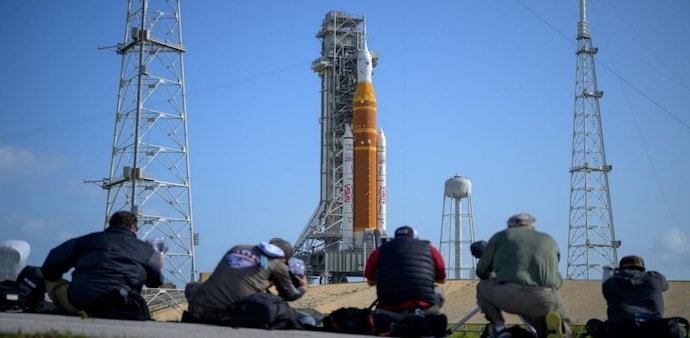
The Orion capsule, developed by Lockheed Martin, sits atop NASA’s Space Launch System rocket and is designed to carry astronauts farther than any spacecraft since the Apollo era.
The spacecraft can accommodate four astronauts—one more than Apollo—and offers greater internal volume, enabling extended missions. It consists of a crew module, where astronauts live and work, and a European-built service module that provides propulsion, power, and thermal control.
Bloomberg has reported that Orion and the Space Launch System together form the backbone of NASA’s Artemis programme, which aims to return humans to the Moon later this decade.
Inside the cabin: Confined living in space
Despite its upgrades, Orion remains a compact environment. Astronauts will spend the mission inside a tightly packed cabin, relying on pre-packed food, wall-mounted sleeping bags, and a small onboard toilet system.
There are no showers onboard, and hygiene is maintained using wipes and limited water supplies. Exercise equipment is included to help astronauts maintain muscle strength in microgravity, according to NASA mission details.
Life-support and safety systems under test
A key objective of Artemis II is to test Orion’s life-support systems in real deep-space conditions for the first time with humans onboard.
These include systems that regulate oxygen and cabin pressure, remove carbon dioxide, and manage water and waste. The spacecraft is also equipped with fire suppression systems, emergency breathing gear, and multiple layers of redundancy, including backup computers.
Reuters reported that validating these systems is essential before NASA proceeds with future missions involving lunar landings.
Crew control and operations
Unlike earlier uncrewed tests, Artemis II astronauts will take active control of the spacecraft during parts of the mission.
NASA has said the crew will perform manual flying demonstrations, system checks, and proximity operations, helping certify Orion for future missions where astronauts will need to operate independently in deep space.
Heat shield and re-entry risks
One of the most critical systems being tested is Orion’s heat shield, designed to withstand extreme temperatures during re-entry into Earth’s atmosphere.
At speeds of around 40,000 km/h, temperatures can reach nearly 2,760 degrees Celsius. The spacecraft uses an ablative heat shield that gradually burns away to dissipate heat—a technology refined from earlier missions.
Human health and research objectives
Artemis II will also collect data on how the human body responds to deep-space conditions.
Astronauts will be monitored for radiation exposure, sleep patterns, and overall health. NASA plans to use this data to prepare for longer missions, including future lunar stays and eventual missions to Mars.
A critical step before Moon landings
Artemis II is positioned as a full-scale systems test ahead of Artemis III, which aims to land astronauts on the lunar surface.
The mission’s outcome will determine whether Orion and its supporting systems are ready to safely carry humans deeper into space, marking the next phase of NASA’s long-term exploration programme.
NASA’s Artemis II mission will send astronauts around the Moon for the first time in over 50 years, marking a critical test of the systems that will support future lunar landings.
The 10-day mission, expected to carry a four-member crew aboard the Orion spacecraft, is designed to validate life-support, navigation, and safety systems in deep space before humans attempt to land on the Moon again.
According to NASA, Artemis II will be the first crewed flight of the Orion spacecraft, following an uncrewed test in 2022. The mission will loop around the Moon on a “free-return trajectory,” allowing the spacecraft to return to Earth even in the event of a major system failure.
Orion spacecraft: Built for deep space
The Orion capsule, developed by Lockheed Martin, sits atop NASA’s Space Launch System rocket and is designed to carry astronauts farther than any spacecraft since the Apollo era.
The spacecraft can accommodate four astronauts—one more than Apollo—and offers greater internal volume, enabling extended missions. It consists of a crew module, where astronauts live and work, and a European-built service module that provides propulsion, power, and thermal control.
Bloomberg has reported that Orion and the Space Launch System together form the backbone of NASA’s Artemis programme, which aims to return humans to the Moon later this decade.
Inside the cabin: Confined living in space
Despite its upgrades, Orion remains a compact environment. Astronauts will spend the mission inside a tightly packed cabin, relying on pre-packed food, wall-mounted sleeping bags, and a small onboard toilet system.
There are no showers onboard, and hygiene is maintained using wipes and limited water supplies. Exercise equipment is included to help astronauts maintain muscle strength in microgravity, according to NASA mission details.
Life-support and safety systems under test
A key objective of Artemis II is to test Orion’s life-support systems in real deep-space conditions for the first time with humans onboard.
These include systems that regulate oxygen and cabin pressure, remove carbon dioxide, and manage water and waste. The spacecraft is also equipped with fire suppression systems, emergency breathing gear, and multiple layers of redundancy, including backup computers.
Reuters reported that validating these systems is essential before NASA proceeds with future missions involving lunar landings.
Crew control and operations
Unlike earlier uncrewed tests, Artemis II astronauts will take active control of the spacecraft during parts of the mission.
NASA has said the crew will perform manual flying demonstrations, system checks, and proximity operations, helping certify Orion for future missions where astronauts will need to operate independently in deep space.
Heat shield and re-entry risks
One of the most critical systems being tested is Orion’s heat shield, designed to withstand extreme temperatures during re-entry into Earth’s atmosphere.
At speeds of around 40,000 km/h, temperatures can reach nearly 2,760 degrees Celsius. The spacecraft uses an ablative heat shield that gradually burns away to dissipate heat—a technology refined from earlier missions.
Human health and research objectives
Artemis II will also collect data on how the human body responds to deep-space conditions.
Astronauts will be monitored for radiation exposure, sleep patterns, and overall health. NASA plans to use this data to prepare for longer missions, including future lunar stays and eventual missions to Mars.
A critical step before Moon landings
Artemis II is positioned as a full-scale systems test ahead of Artemis III, which aims to land astronauts on the lunar surface.
The mission’s outcome will determine whether Orion and its supporting systems are ready to safely carry humans deeper into space, marking the next phase of NASA’s long-term exploration programme.