
Is there a massive fish nursery beneath Antarctica's ice shelf? Here's what scientists say
The discovery of 60 million fish nests beneath Antarctic ice offers a rare glimpse into a hidden world that has survived in darkness and near-freezing waters for centuries.
- Jul 23, 2026,
- Updated Jul 23, 2026 8:00 AM IST
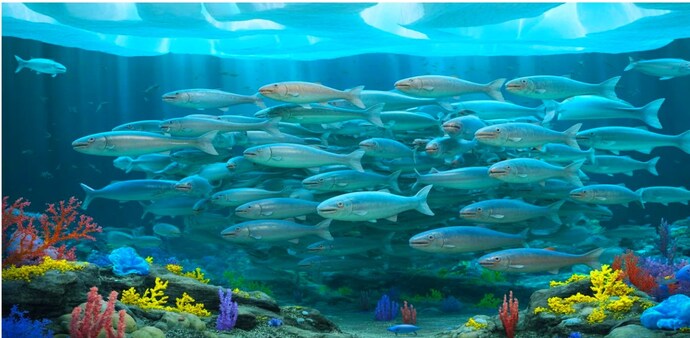
Scientists have uncovered a vast Antarctic breeding ground beneath the Filchner Ice Shelf, described as an “underwater city” of roughly 60 million fish nests. The discovery highlights one of the largest known fish colonies on Earth and adds a new layer to what scientists know about life under Antarctica’s ice.
READ MORE: Cooling the Pacific with a little salt? Scientists unveil a daring plan to tame Super El Niño
Discovery Beneath the Ice
The colony was first discovered during a 2021 expedition led by Dr Autun Purser of the Alfred Wegener Institute (AWI), Helmholtz Centre for Polar and Marine Research, with the help of the Ocean Floor Observation and Bathymetry System (OFOBS).
Researchers reached the hidden seafloor by drilling through the Filchner Ice Shelf and sending an autonomous underwater robot into the dark waters below. What they found was not a barren plain, but a sprawling pattern of circular nests spread across the seabed, covering an area roughly the size of Orlando, Florida, according to the report.
The nests belong to Antarctic icefish, a species adapted to survive in the continent’s freezing waters. Earlier coverage of the same finding described the colony as the world’s largest known fish nursery, with around 60 million active nests across about 240 square kilometres of seabed.
A Planned Nursery
Scientists say the nests are arranged in a highly organised pattern rather than scattered randomly, suggesting a structured breeding habitat. The adults guard their eggs in the nests, with each nest reportedly holding about 1,700 eggs, making the site a massive underwater nursery.
The nests belong to Antarctic icefish, one of the planet's most unusual species. Unlike most vertebrates, these fish lack haemoglobin, giving them almost transparent blood.
They also produce natural antifreeze proteins that prevent their bodies from freezing in waters that remain below 0°C. These remarkable adaptations allow them to survive in one of Earth's harshest environments.
The sheer scale of the colony surprised researchers because the environment had long been assumed to be relatively lifeless beneath the thick ice shelf.
Why were these fish here?
Scientists believe the breeding colony exists because of a slightly warmer current flowing beneath the ice shelf. Even though the water is very cold, it contains nutrients for the fish and creates good breeding grounds for them.
The colony is significant because it contributes to the marine ecosystem of Antarctica. Predators like Weddell seals frequently come to this place to eat, and therefore, the hidden nursery forms a part of the bigger food chain.
Why It Matters
The discovery is scientifically important because it shows that Antarctica’s frozen coastline can support complex and highly productive ecosystems in places once thought to be nearly empty. It also offers clues about how marine life persists in extreme conditions and how large breeding populations can remain hidden for so long.
Researchers have also said such fragile habitats deserve attention from conservation planners, since they may be especially vulnerable to warming oceans and changes in ice-shelf conditions.
READ ALSO: From lush green to dry sands? These 10 US cities could see major climate impact by 2080
Broader Impact
The find was part of a broader Antarctic expedition, underscoring how exploration in remote polar waters can yield both historical and ecological discoveries. The latest report has renewed public interest in Antarctica’s hidden marine world and the role of technology in revealing it.
Scientists have uncovered a vast Antarctic breeding ground beneath the Filchner Ice Shelf, described as an “underwater city” of roughly 60 million fish nests. The discovery highlights one of the largest known fish colonies on Earth and adds a new layer to what scientists know about life under Antarctica’s ice.
READ MORE: Cooling the Pacific with a little salt? Scientists unveil a daring plan to tame Super El Niño
Discovery Beneath the Ice
The colony was first discovered during a 2021 expedition led by Dr Autun Purser of the Alfred Wegener Institute (AWI), Helmholtz Centre for Polar and Marine Research, with the help of the Ocean Floor Observation and Bathymetry System (OFOBS).
Researchers reached the hidden seafloor by drilling through the Filchner Ice Shelf and sending an autonomous underwater robot into the dark waters below. What they found was not a barren plain, but a sprawling pattern of circular nests spread across the seabed, covering an area roughly the size of Orlando, Florida, according to the report.
The nests belong to Antarctic icefish, a species adapted to survive in the continent’s freezing waters. Earlier coverage of the same finding described the colony as the world’s largest known fish nursery, with around 60 million active nests across about 240 square kilometres of seabed.
A Planned Nursery
Scientists say the nests are arranged in a highly organised pattern rather than scattered randomly, suggesting a structured breeding habitat. The adults guard their eggs in the nests, with each nest reportedly holding about 1,700 eggs, making the site a massive underwater nursery.
The nests belong to Antarctic icefish, one of the planet's most unusual species. Unlike most vertebrates, these fish lack haemoglobin, giving them almost transparent blood.
They also produce natural antifreeze proteins that prevent their bodies from freezing in waters that remain below 0°C. These remarkable adaptations allow them to survive in one of Earth's harshest environments.
The sheer scale of the colony surprised researchers because the environment had long been assumed to be relatively lifeless beneath the thick ice shelf.
Why were these fish here?
Scientists believe the breeding colony exists because of a slightly warmer current flowing beneath the ice shelf. Even though the water is very cold, it contains nutrients for the fish and creates good breeding grounds for them.
The colony is significant because it contributes to the marine ecosystem of Antarctica. Predators like Weddell seals frequently come to this place to eat, and therefore, the hidden nursery forms a part of the bigger food chain.
Why It Matters
The discovery is scientifically important because it shows that Antarctica’s frozen coastline can support complex and highly productive ecosystems in places once thought to be nearly empty. It also offers clues about how marine life persists in extreme conditions and how large breeding populations can remain hidden for so long.
Researchers have also said such fragile habitats deserve attention from conservation planners, since they may be especially vulnerable to warming oceans and changes in ice-shelf conditions.
READ ALSO: From lush green to dry sands? These 10 US cities could see major climate impact by 2080
Broader Impact
The find was part of a broader Antarctic expedition, underscoring how exploration in remote polar waters can yield both historical and ecological discoveries. The latest report has renewed public interest in Antarctica’s hidden marine world and the role of technology in revealing it.