
Racing ahead of US: China claims 600-second RDE test in hypersonic push, raising global military stakes
China’s recent breakthrough, reported by its state media, was achieved by researchers from the National University of Defense Technology. Their small-scale RDE, tested in a wind tunnel, reportedly maintained continuous operation for 10 minutes — an unprecedented duration.
- May 26, 2025,
- Updated Jun 5, 2025 7:02 PM IST
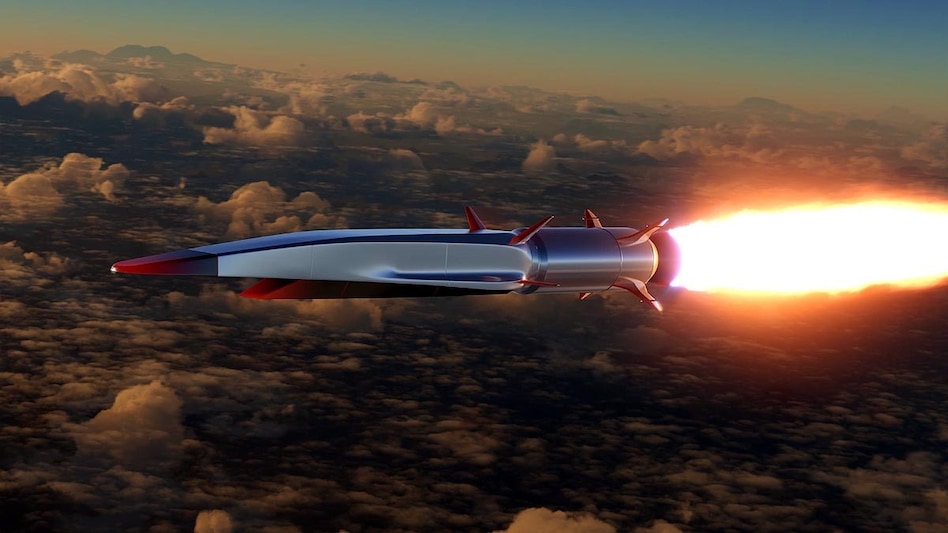
In a move that could reshape the future of high-speed aviation and global defense strategy, China claims it has achieved a major breakthrough in hypersonic engine technology. A team of scientists has reportedly run a “Rotating Detonation Engine” (RDE) for a record 600 seconds — an advance that, if verified, could tilt the balance in the ongoing race for hypersonic supremacy between China, the US, and Russia.
The RDE is designed to propel vehicles at hypersonic speeds — more than five times the speed of sound — by generating continuous shockwave-driven explosions. Unlike traditional engines, which rely on combustion, the RDE uses controlled detonations to deliver higher thrust while consuming less fuel.
Interestingly, the idea isn’t new. The US Air Force and the University of Michigan explored a similar concept in the 1950s, called the Oblique Detonation Engine (ODE). NASA took the baton in the 1970s, eyeing speeds up to Mach 16. But persistent issues with stabilising detonation waves and optimising fuel-air mixing led to the US shelving the technology.
The US Navy’s “dream shell” project also pursued hypersonic capability around 2012, aiming for Mach 5 with satellite guidance. That programme ran until 2017 but was ultimately discontinued by 2021.
China’s recent breakthrough, reported by its state media, was achieved by researchers from the National University of Defense Technology. Their small-scale RDE, tested in a wind tunnel, reportedly maintained continuous operation for 10 minutes — an unprecedented duration. They used ethylene and oxygen fuel, igniting it into a sustained detonation wave, while keeping the engine temperature in check and thrust levels high.
This engine, if scalable and stable, could power next-gen hypersonic weapons, spaceplanes, or ultra-fast aircraft. Hypersonic weapons are considered game-changers in modern warfare due to their speed, maneuverability, and difficulty to intercept. They can carry both nuclear and conventional payloads.
China, Russia, and the US are locked in a tight race for hypersonic dominance. But if China’s test results hold up under independent scrutiny, it may have just pulled ahead. Still, without outside verification, skepticism remains. China is known for maintaining secrecy around military tech, and so far, international experts have not confirmed the breakthrough.
Nevertheless, should these claims prove accurate, the RDE could mark a major leap from lab theory to battlefield application — potentially reshaping the global balance of power in the hypersonic era.
In a move that could reshape the future of high-speed aviation and global defense strategy, China claims it has achieved a major breakthrough in hypersonic engine technology. A team of scientists has reportedly run a “Rotating Detonation Engine” (RDE) for a record 600 seconds — an advance that, if verified, could tilt the balance in the ongoing race for hypersonic supremacy between China, the US, and Russia.
The RDE is designed to propel vehicles at hypersonic speeds — more than five times the speed of sound — by generating continuous shockwave-driven explosions. Unlike traditional engines, which rely on combustion, the RDE uses controlled detonations to deliver higher thrust while consuming less fuel.
Interestingly, the idea isn’t new. The US Air Force and the University of Michigan explored a similar concept in the 1950s, called the Oblique Detonation Engine (ODE). NASA took the baton in the 1970s, eyeing speeds up to Mach 16. But persistent issues with stabilising detonation waves and optimising fuel-air mixing led to the US shelving the technology.
The US Navy’s “dream shell” project also pursued hypersonic capability around 2012, aiming for Mach 5 with satellite guidance. That programme ran until 2017 but was ultimately discontinued by 2021.
China’s recent breakthrough, reported by its state media, was achieved by researchers from the National University of Defense Technology. Their small-scale RDE, tested in a wind tunnel, reportedly maintained continuous operation for 10 minutes — an unprecedented duration. They used ethylene and oxygen fuel, igniting it into a sustained detonation wave, while keeping the engine temperature in check and thrust levels high.
This engine, if scalable and stable, could power next-gen hypersonic weapons, spaceplanes, or ultra-fast aircraft. Hypersonic weapons are considered game-changers in modern warfare due to their speed, maneuverability, and difficulty to intercept. They can carry both nuclear and conventional payloads.
China, Russia, and the US are locked in a tight race for hypersonic dominance. But if China’s test results hold up under independent scrutiny, it may have just pulled ahead. Still, without outside verification, skepticism remains. China is known for maintaining secrecy around military tech, and so far, international experts have not confirmed the breakthrough.
Nevertheless, should these claims prove accurate, the RDE could mark a major leap from lab theory to battlefield application — potentially reshaping the global balance of power in the hypersonic era.