
Vikram-1 launch: India's first private orbital rocket enters space; joins US, China
Vikram-1 launch: India's first private orbital rocket enters space; joins US, China
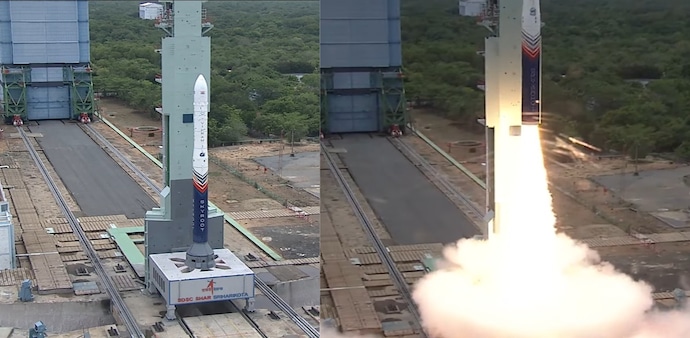
Named after the father of India's space programme, Vikram Sarabhai, Vikram-1 is a seven-storey-tall, multi-stage orbital launch vehicle built with an all-carbon composite structure.
Business Today Desk
- Jul 18, 2026,
- Updated Jul 18, 2026 12:14 PM IST
Skyroot Aerospace's Vikram-1's maiden test flight — Mission Aagaman — lifted off on Saturday from Andhra Pradesh's Sriharikota at 12:05 pm and successfully entered space. Vikram-1, India's first private orbital rocket, lifted off from the First Launch Pad at the Satish Dhawan Space Centre.
With this, India has become the third country in the world after the US and China to have a private player capable of handling orbital launches.
Advertisement
Vikram-1 liftoff video
Who all were present at the event?
Union Minister Dr Jitendra Singh was present at the Vikram-1 launch event. Others present to witness the launch of the Vikram-1 rocket were Indian astronaut Shubhanshu Shukla, INSPACe chairman Pawan Goenka, current ISRO Chairman Dr V Narayanan, and former ISRO Chairman Dr S Somanath.
Andhra Pradesh minister Nara Lokesh and his son Devaansh were also present at Sriharikota.
Advertisement
About the Vikram-1 rocket
Named after the father of India's space programme, Vikram Sarabhai, Vikram-1 is a seven-storey-tall, multi-stage orbital launch vehicle built with an all-carbon composite structure and powered by in-house developed propulsion systems, including 3D-printed engines and high-thrust solid-fuel rocket boosters.
Designed for commercial launches, Vikram-1 is lighter, faster to manufacture, and highly cost-effective. The mission will deploy multiple customer payloads into LEO at an altitude of 450 km (280 miles).
These include Skyroot's SCOPE satellite, DCUBED's technology demonstration payload, Grahaa Space's SOLARAS S3 satellite, and Cosmoserve Space's Embrace, a robotic arm designed to capture orbital debris.
It also includes an 18-carat gold rocket holding tiny sculptures of Nobel Laureate Dr C.V. Raman, Dr APJ Abdul Kalam, and Dr Vikram Sarabhai. These sculptures are smaller than rice grains, and the rocket has been designed by artists from Telangana.
Advertisement
Key stages of Vikram-1 launch
Vikram-1 to carry engineers' signatures, note by PM Modi
According to Skyroot Aerospace, the rocket is also carrying the signatures of the engineers, technicians and team members who helped build it. A special note by Prime Minister Narendra Modi, which says 'Vande Mataram', will also enter space aboard Vikram-1.
PM Modi on Vikram-1 launch
Ahead of the launch, Prime Minister Narendra Modi said that the four-stage rocket is designed to provide rapid and on-demand launch services. "This mission highlights the talent, determination and entrepreneurial spirit of our youth. It also shows how our space-sector reforms are unlocking new opportunities for innovation and enterprise."
He added, "My best wishes to the entire Skyroot Aerospace team for a successful launch. May Vikram-1 soar high, create history and inspire a generation of innovators. I urge all Indians, especially my young friends, to follow this historic mission and join in wishing Team Skyroot success using #IndiaWithVikram1."
Skyroot's second successful mission
The launch marks Skyroot's second mission after the successful suborbital flight of Vikram-S, the first private rocket to reach space from Indian soil, on November 18, 2022.
Skyroot Aerospace's Vikram-1's maiden test flight — Mission Aagaman — lifted off on Saturday from Andhra Pradesh's Sriharikota at 12:05 pm and successfully entered space. Vikram-1, India's first private orbital rocket, lifted off from the First Launch Pad at the Satish Dhawan Space Centre.
With this, India has become the third country in the world after the US and China to have a private player capable of handling orbital launches.
Advertisement
Vikram-1 liftoff video
Who all were present at the event?
Union Minister Dr Jitendra Singh was present at the Vikram-1 launch event. Others present to witness the launch of the Vikram-1 rocket were Indian astronaut Shubhanshu Shukla, INSPACe chairman Pawan Goenka, current ISRO Chairman Dr V Narayanan, and former ISRO Chairman Dr S Somanath.
Andhra Pradesh minister Nara Lokesh and his son Devaansh were also present at Sriharikota.
Advertisement
About the Vikram-1 rocket
Named after the father of India's space programme, Vikram Sarabhai, Vikram-1 is a seven-storey-tall, multi-stage orbital launch vehicle built with an all-carbon composite structure and powered by in-house developed propulsion systems, including 3D-printed engines and high-thrust solid-fuel rocket boosters.
Designed for commercial launches, Vikram-1 is lighter, faster to manufacture, and highly cost-effective. The mission will deploy multiple customer payloads into LEO at an altitude of 450 km (280 miles).
These include Skyroot's SCOPE satellite, DCUBED's technology demonstration payload, Grahaa Space's SOLARAS S3 satellite, and Cosmoserve Space's Embrace, a robotic arm designed to capture orbital debris.
It also includes an 18-carat gold rocket holding tiny sculptures of Nobel Laureate Dr C.V. Raman, Dr APJ Abdul Kalam, and Dr Vikram Sarabhai. These sculptures are smaller than rice grains, and the rocket has been designed by artists from Telangana.
Advertisement
Key stages of Vikram-1 launch
Vikram-1 to carry engineers' signatures, note by PM Modi
According to Skyroot Aerospace, the rocket is also carrying the signatures of the engineers, technicians and team members who helped build it. A special note by Prime Minister Narendra Modi, which says 'Vande Mataram', will also enter space aboard Vikram-1.
PM Modi on Vikram-1 launch
Ahead of the launch, Prime Minister Narendra Modi said that the four-stage rocket is designed to provide rapid and on-demand launch services. "This mission highlights the talent, determination and entrepreneurial spirit of our youth. It also shows how our space-sector reforms are unlocking new opportunities for innovation and enterprise."
He added, "My best wishes to the entire Skyroot Aerospace team for a successful launch. May Vikram-1 soar high, create history and inspire a generation of innovators. I urge all Indians, especially my young friends, to follow this historic mission and join in wishing Team Skyroot success using #IndiaWithVikram1."
Skyroot's second successful mission
The launch marks Skyroot's second mission after the successful suborbital flight of Vikram-S, the first private rocket to reach space from Indian soil, on November 18, 2022.
Read more!