
Delhi's falling air quality threatens India-Sri Lanka ODI as DDCA asks BCCI to shift December 13 match
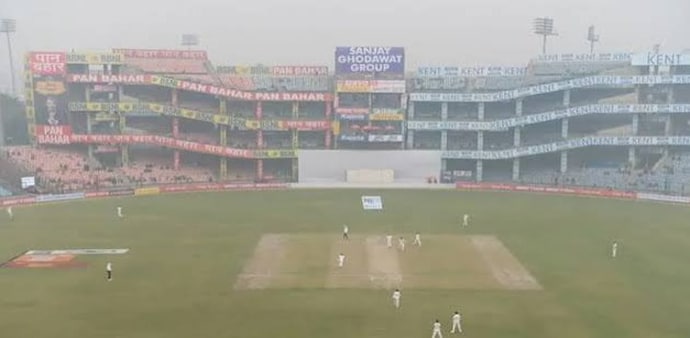
The concerns bring back memories of the India-Sri Lanka Test match played in Delhi in December 2017, when several Sri Lankan players complained of breathing difficulties amid severe pollution
- Nov 3, 2026,
- Updated Nov 3, 2026 8:11 PM IST
Delhi’s worsening air pollution has raised concerns over the upcoming India-Sri Lanka ODI, with the Delhi and District Cricket Association (DDCA) reportedly asking the Board of Control for Cricket in India (BCCI) to shift the match out of the national capital.
The request comes as Delhi’s air quality deteriorates with the onset of winter, bringing renewed attention to the challenges of hosting outdoor sporting events during the city’s pollution season.
The first ODI is scheduled to take place at the Arun Jaitley Stadium in Delhi on December 13. However, according to a report by ANI, the DDCA has approached the BCCI seeking a change of venue, citing concerns related to weather conditions and renovation work at the stadium. Delhi’s worsening pollution has added to the concerns surrounding the match.
Delhi’s air quality deteriorates
Delhi’s air quality has slipped into the ‘very poor’ category, with the Air Quality Index (AQI) reaching 331 at 7 am on November 3, according to reported Central Pollution Control Board data. The reading followed an AQI of 307 on November 2, indicating a further deterioration in air quality.
The city’s winter pollution is driven by a combination of factors, including vehicular emissions, construction dust, industrial pollution and crop-residue burning in neighbouring states. Low temperatures and unfavourable wind conditions can also trap pollutants close to the ground, worsening the impact of smog.
The deteriorating air quality has renewed concerns about the health risks faced by people who spend extended periods outdoors. For professional cricketers, the issue is particularly significant because matches involve sustained physical exertion, running and rapid breathing. Spectators, ground staff and other personnel could also be exposed to polluted air for several hours.
Delhi’s previous cricket pollution controversy
The concerns bring back memories of the India-Sri Lanka Test match played in Delhi in December 2017, when several Sri Lankan players complained of breathing difficulties amid severe pollution. Some players were seen wearing masks on the field, while the incident triggered a wider debate over the suitability of Delhi as a venue for international cricket during the winter months.
Will the India-Sri Lanka ODI be shifted?
The DDCA’s reported request puts the BCCI in a position to assess whether the scheduled match can proceed in Delhi or whether an alternative venue is required. However, a venue change has not been officially confirmed, and the final decision rests with the BCCI.
The development also highlights a wider challenge for sports administrators as Indian cities face recurring winter pollution. While stadium readiness and scheduling are important considerations, air quality is an equally significant factor when assessing the conditions in which players and spectators will attend outdoor events.