
India gets own Disaster Alert Service: How it compares with the US, Japan & Europe systems
The alerts were part of India’s new Cell Broadcast-based disaster warning network being rolled out by the Department of Telecommunications (DoT) and the National Disaster Management Authority (NDMA).
- May 2, 2026,
- Updated May 15, 2026 10:01 PM IST
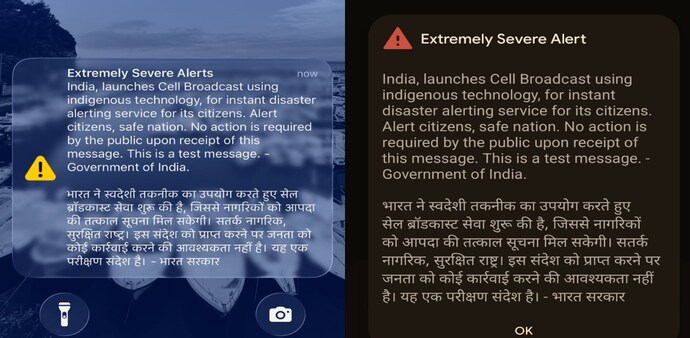
Millions of Indians recently received a loud “Extremely Severe Alert” notification on their mobile phones as the government tested a nationwide emergency warning system. The alerts were part of India’s new Cell Broadcast-based disaster warning network being rolled out by the Department of Telecommunications (DoT) and the National Disaster Management Authority (NDMA).
The system has sparked curiosity because similar emergency alerts have long been used in countries such as the United States, Japan, South Korea and several European nations to warn citizens about earthquakes, tsunamis, floods, wildfires, missile threats and other emergencies.
What are Wireless Emergency Alerts?
Wireless Emergency Alerts (WEA) are government-issued warnings sent directly to mobile phones in a specific geographic area during emergencies.
Unlike ordinary SMS messages, these alerts use Cell Broadcast technology, which allows authorities to instantly push messages to all compatible phones connected to nearby mobile towers.
The alerts are designed to:
- Override silent mode in many cases
- Deliver warnings within seconds
- Reach millions simultaneously
- Work even during network congestion
- Provide location-specific alerts
These notifications are typically accompanied by loud alarm tones and vibrations so people notice them immediately.
How does the technology work?
The system works through mobile towers rather than individual phone numbers.
In a Cell Broadcast system:
- Authorities issue an alert
- Telecom networks send the message through selected cell towers
- Every compatible phone in that area receives the alert instantly
This differs from SMS, where messages are sent individually and networks can become overloaded during emergencies.
India’s new system is integrated with the government’s SACHET disaster platform developed by C-DOT.
Which countries use Wireless Emergency Alerts?
United States: The US operates one of the world’s best-known systems called Wireless Emergency Alerts (WEA), managed by FEMA and the FCC. Americans receive alerts for: Tornadoes, Flash floods, Wildfires, AMBER child abduction alerts and National emergencies. The US also conducts nationwide emergency alert tests periodically.
Japan: Japan uses one of the fastest alert systems globally because of its earthquake and tsunami risks. Its J-Alert network can send warnings within seconds of seismic activity. Phones, TV broadcasts, radio systems and public speakers are activated almost simultaneously.
South Korea: South Korea frequently uses emergency alerts for: Severe weather, Air pollution warnings, Earthquakes and Military emergencies. The system became globally noticed after missile-launch alerts involving North Korea.
European countries: Many European nations use the EU-Alert framework based on Cell Broadcast technology. Countries including: Netherlands, Germany, Greece, France and Italy have implemented location-based emergency alerts in recent years.
Canada: Canada’s Alert Ready system broadcasts emergency messages through television, radio and mobile phones.
Australia & New Zealand: These countries use emergency alert systems mainly for: Bushfires, Cyclones, Floods and Tsunami warnings.
How is India’s system different from others?
India’s emergency alert system differs from many international systems in several important ways.
- Indigenous Technology: India says the platform has been developed domestically through C-DOT and integrated with the SACHET disaster platform. Countries like the US and Europe often use commercially developed systems integrated into telecom infrastructure.
- Multilingual Alerts: India’s system is designed to send alerts in multiple Indian languages. Given India’s linguistic diversity, authorities say regional-language support is a key focus.
- Disaster-Focused Rollout: Unlike countries where alerts may also cover law enforcement or national security issues, India’s current rollout is primarily focused on disaster management and weather-related emergencies.
- Combination Of SMS + Cell Broadcast: India is using Cell Broadcast alongside its existing SMS-based SACHET network rather than replacing it entirely.
- Scale Challenge: India’s telecom ecosystem is among the world’s largest, with hundreds of millions of users across urban and rural regions. Ensuring compatibility across older phones, multiple telecom operators and diverse languages is a far bigger logistical challenge than in many smaller countries.
Millions of Indians recently received a loud “Extremely Severe Alert” notification on their mobile phones as the government tested a nationwide emergency warning system. The alerts were part of India’s new Cell Broadcast-based disaster warning network being rolled out by the Department of Telecommunications (DoT) and the National Disaster Management Authority (NDMA).
The system has sparked curiosity because similar emergency alerts have long been used in countries such as the United States, Japan, South Korea and several European nations to warn citizens about earthquakes, tsunamis, floods, wildfires, missile threats and other emergencies.
What are Wireless Emergency Alerts?
Wireless Emergency Alerts (WEA) are government-issued warnings sent directly to mobile phones in a specific geographic area during emergencies.
Unlike ordinary SMS messages, these alerts use Cell Broadcast technology, which allows authorities to instantly push messages to all compatible phones connected to nearby mobile towers.
The alerts are designed to:
- Override silent mode in many cases
- Deliver warnings within seconds
- Reach millions simultaneously
- Work even during network congestion
- Provide location-specific alerts
These notifications are typically accompanied by loud alarm tones and vibrations so people notice them immediately.
How does the technology work?
The system works through mobile towers rather than individual phone numbers.
In a Cell Broadcast system:
- Authorities issue an alert
- Telecom networks send the message through selected cell towers
- Every compatible phone in that area receives the alert instantly
This differs from SMS, where messages are sent individually and networks can become overloaded during emergencies.
India’s new system is integrated with the government’s SACHET disaster platform developed by C-DOT.
Which countries use Wireless Emergency Alerts?
United States: The US operates one of the world’s best-known systems called Wireless Emergency Alerts (WEA), managed by FEMA and the FCC. Americans receive alerts for: Tornadoes, Flash floods, Wildfires, AMBER child abduction alerts and National emergencies. The US also conducts nationwide emergency alert tests periodically.
Japan: Japan uses one of the fastest alert systems globally because of its earthquake and tsunami risks. Its J-Alert network can send warnings within seconds of seismic activity. Phones, TV broadcasts, radio systems and public speakers are activated almost simultaneously.
South Korea: South Korea frequently uses emergency alerts for: Severe weather, Air pollution warnings, Earthquakes and Military emergencies. The system became globally noticed after missile-launch alerts involving North Korea.
European countries: Many European nations use the EU-Alert framework based on Cell Broadcast technology. Countries including: Netherlands, Germany, Greece, France and Italy have implemented location-based emergency alerts in recent years.
Canada: Canada’s Alert Ready system broadcasts emergency messages through television, radio and mobile phones.
Australia & New Zealand: These countries use emergency alert systems mainly for: Bushfires, Cyclones, Floods and Tsunami warnings.
How is India’s system different from others?
India’s emergency alert system differs from many international systems in several important ways.
- Indigenous Technology: India says the platform has been developed domestically through C-DOT and integrated with the SACHET disaster platform. Countries like the US and Europe often use commercially developed systems integrated into telecom infrastructure.
- Multilingual Alerts: India’s system is designed to send alerts in multiple Indian languages. Given India’s linguistic diversity, authorities say regional-language support is a key focus.
- Disaster-Focused Rollout: Unlike countries where alerts may also cover law enforcement or national security issues, India’s current rollout is primarily focused on disaster management and weather-related emergencies.
- Combination Of SMS + Cell Broadcast: India is using Cell Broadcast alongside its existing SMS-based SACHET network rather than replacing it entirely.
- Scale Challenge: India’s telecom ecosystem is among the world’s largest, with hundreds of millions of users across urban and rural regions. Ensuring compatibility across older phones, multiple telecom operators and diverse languages is a far bigger logistical challenge than in many smaller countries.