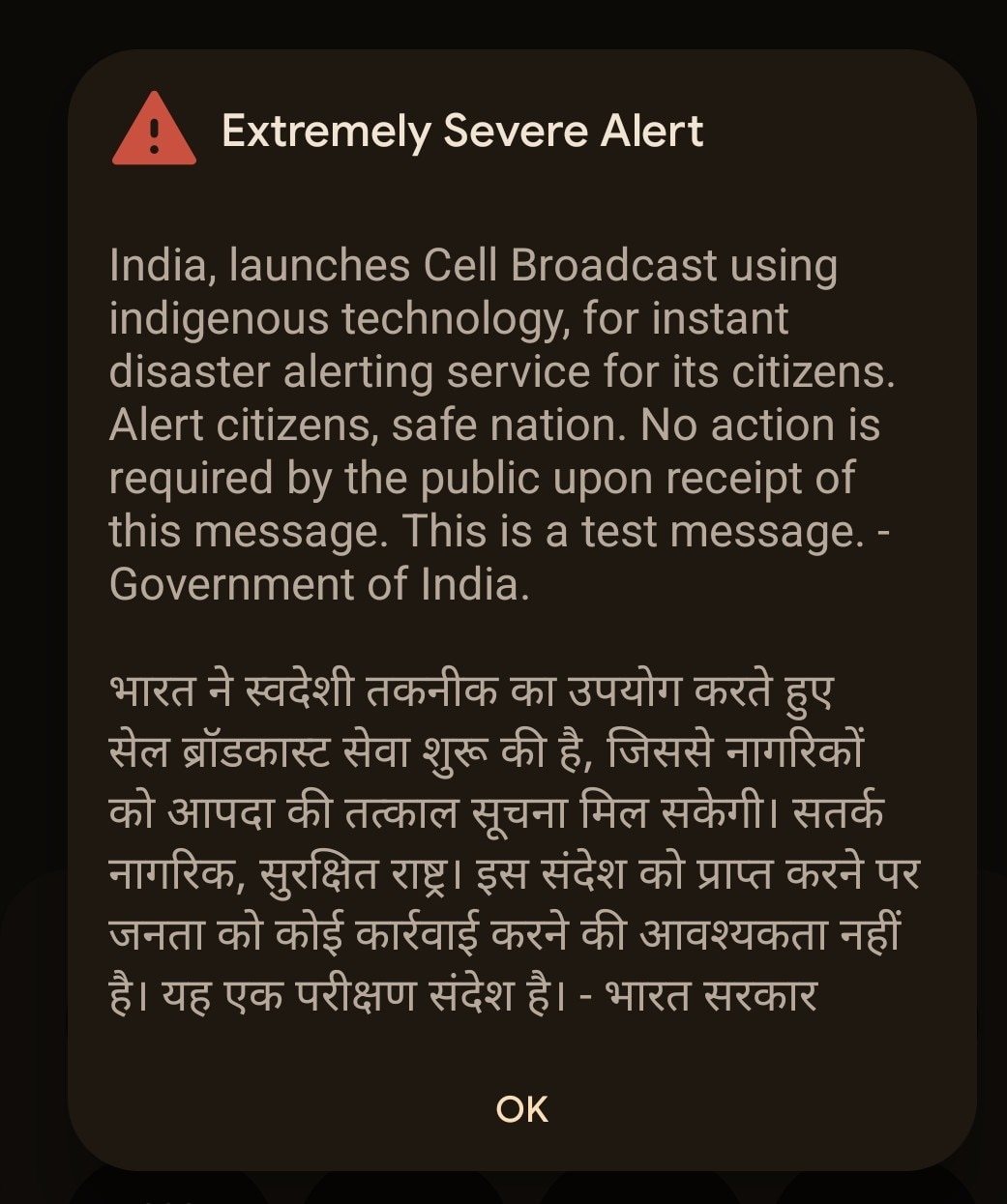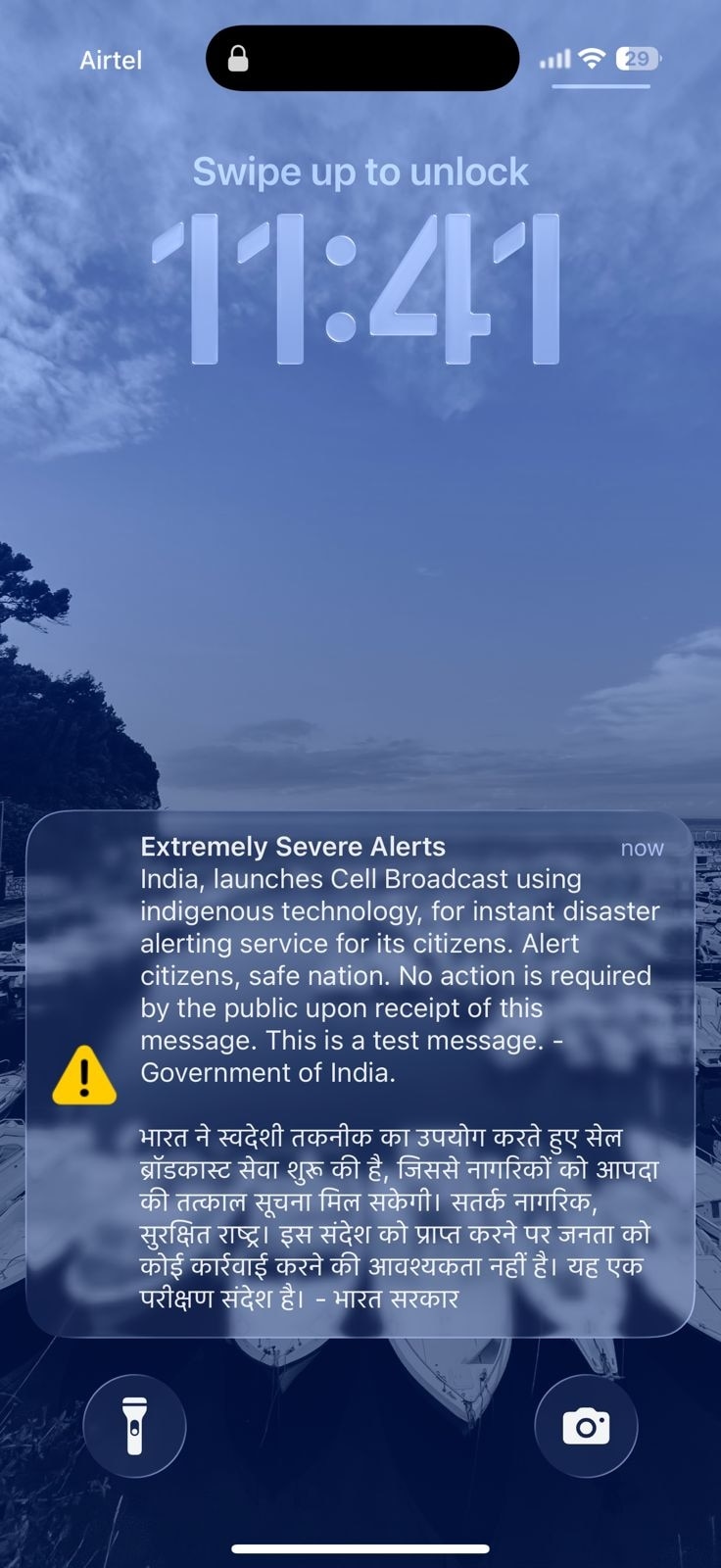



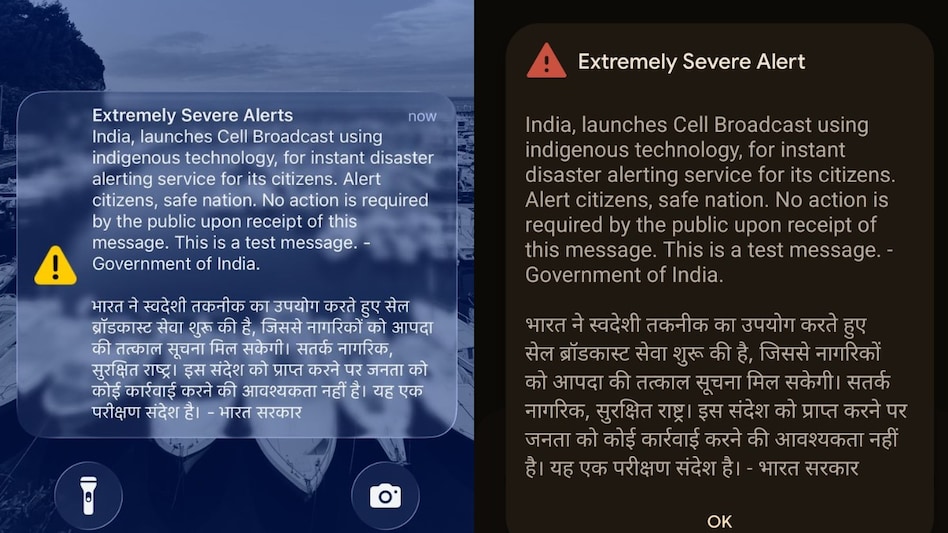
 On Saturday, India officially launched its Cell Broadcast Alert System (CBAS) — a technology that pushes disaster warnings to all phones in a region instantly.
Phones buzzed with a loud alarm. People grabbed their phones. Saw a message "Extremely Severe Alert" flashing on their screens. But here's the thing — it wasn't real. What you experienced was India quietly switching on one of its most powerful safety systems so far.
The alert urges citizens to remain alert and not to panic, while adding that this is a "test message" and that the public should not act upon it. On Saturday, India officially launched its Cell Broadcast Alert System (CBAS) — a technology that pushes disaster warnings to all phones in a region instantly.

 Crude oil may hit $110, India's import basket could touch $130 in 10 days: SBI Research
 Retail inflation hits 21-month high, set to squeeze your household budget further
 Nifty may fall another 5%? Market expert flags key risks for Dalal Street
 India's retail inflation rises to 5.54% in September; food inflation hits 7.74%
 BT EXCLUSIVE | India not unique in satellite licensing process; compliance rules apply globally, says Eutelsat OneWeb's Neha Idnani
  India's Next Connectivity Leap? Tata Communications Bets On Satcom & Smart Villages
 Motorola's Shivam Ranjan Speaks To Business Today About Motorola's Upcoming Flagship @ IMC26
 Is The AI Boom Sustainable? The Debate Over Investment Returns, India's AI Future And Job Disruption
 India-UK Trade Ties Set for Fresh Push? Goyal Calls for Faster Business Cooperation
 Rahul Gandhi Vs Gyanesh Kumar: 200 Officers Claim Escalates Election Commission Row
 Emerging markets lag US stocks in 2026: What India's equity market and FPI flows revealNifty may fall another 5%? Market expert flags key risks for Dalal Street
 HCLTech Q2 results: Profit up 21% at Rs 5,132 crore; announces Rs 12 per share dividend
 L&T Technology Services launches AI lab with NVIDIA for digital manufacturing, stock gains
  CG Power shares: Analyst says book profit on rallies and buy on dips
 This Mumbai barber earns ₹1 lakh monthly, files tax returns. Here's his story
 Indian workers may benefit as Australia's NSW considers new regional migration plan
 Telecom ARPU rises, but prepaid users generate more revenue than postpaid customersEmerging markets lag US stocks in 2026: What India's equity market and FPI flows reveal
 Bahrain introduces 90-day temporary work rule for foreigners; What it means for Indians