
BT AI Summit 2025: AI is an opportunity for India, enterprises must scale adoption, says IBM's Sandip Patel
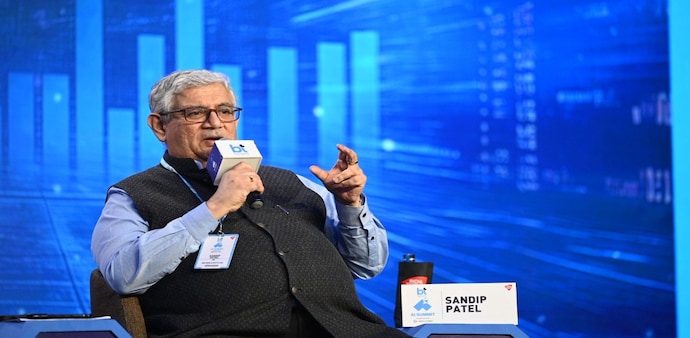
Speaking at the Business Today AI Summit 2025, Patel highlighted the global potential of AI adoption, citing a McKinsey report estimating that AI could add $17 to $26 trillion to the global economy
- Oct 29, 2025,
- Updated Oct 29, 2025 7:24 PM IST
AI offers a vast opportunity for India, not only in business but also in enhancing citizen services and driving national progress, according to Sandip Patel, MD of IBM India & South Asia. Speaking at the Business Today AI Summit 2025, Patel highlighted the global potential of AI adoption, citing a McKinsey report estimating that AI could add $17 to $26 trillion to the global economy. "And for a country like India, it's not just about business-it’s also about improving citizen services and helping realize the promise of Viksit Bharat," he said in conversation with Siddharth Zarabi, Group Editor of Business Today.
When discussing AI adoption in Indian businesses, the IBM MD highlighted the varying levels of engagement with AI. According to a global adoption survey that included India, 80% of Indian businesses reported experimenting with or implementing AI in some form. However, while 50% of these businesses were ready to scale AI, others were hesitant due to concerns over costs, skill availability, and the reliability of AI outcomes. "We are at a point now where adoption needs to take off," Patel noted, "People need to identify where AI can truly drive productivity and customer service."
Comparing India's AI adoption to other economies, Patel pointed to faster AI scaling in countries like the US, UK, and Japan, where enterprises have embraced the technology more quickly. "We need to find a way to scale AI adoption in India, to not just experiment but to implement it for wider business use," he said.
He also addressed India's role in AI development, noting that the country can lead in both services and product development. "We are not just a data-generating market for AI engines," he remarked. "There is significant potential to drive AI innovation, particularly in small language models that can serve India’s unique needs." Patel stressed that IBM has already been developing such models, including Bharat Gen, which focuses on Indic models tailored for India. "We believe in democratising these models, making them open-source so that innovation can extend beyond large corporations."
Looking forward, Patel expressed optimism about India's potential to develop its own indigenous hardware, citing recent developments in semiconductor and server technology. "India is making significant progress in the semiconductor space, and we're contributing our power server IP to the Indian government for development," he said.
Patel was also asked about the potential for an Indian equivalent to companies like NVIDIA, and he remained hopeful. "Given the current trend towards frontier technologies like semiconductors and indigenous server development, I think it’s possible," he said. "If India continues to focus on these areas, there’s a lot of promise."
In discussing the impact of AI on businesses, Patel shared IBM's own success story. "We’ve seen tremendous productivity gains through AI, including $3.5 billion added to our bottom line through automation and streamlining. By the end of the year, we expect this to grow to $4.5 billion," Patel said. He also mentioned how AI has transformed IBM's internal processes, such as HR, where 90% of transactions are now automated using AI.
When asked about the potential job displacement due to AI, Patel said that while some jobs may evolve or be replaced, new opportunities will emerge. "Jobs will evolve with technology. As we automate certain tasks, we create new roles that require enhanced skills," he said. "We've already seen this with the rise of prompt engineers in AI."
Patel concluded with advice for India's future workforce. "People should upskill in areas where data becomes more relevant," he said. "India has a wealth of untapped talent, and with the right focus on skill development, we can become the skill capital of the world."
AI offers a vast opportunity for India, not only in business but also in enhancing citizen services and driving national progress, according to Sandip Patel, MD of IBM India & South Asia. Speaking at the Business Today AI Summit 2025, Patel highlighted the global potential of AI adoption, citing a McKinsey report estimating that AI could add $17 to $26 trillion to the global economy. "And for a country like India, it's not just about business-it’s also about improving citizen services and helping realize the promise of Viksit Bharat," he said in conversation with Siddharth Zarabi, Group Editor of Business Today.
When discussing AI adoption in Indian businesses, the IBM MD highlighted the varying levels of engagement with AI. According to a global adoption survey that included India, 80% of Indian businesses reported experimenting with or implementing AI in some form. However, while 50% of these businesses were ready to scale AI, others were hesitant due to concerns over costs, skill availability, and the reliability of AI outcomes. "We are at a point now where adoption needs to take off," Patel noted, "People need to identify where AI can truly drive productivity and customer service."
Comparing India's AI adoption to other economies, Patel pointed to faster AI scaling in countries like the US, UK, and Japan, where enterprises have embraced the technology more quickly. "We need to find a way to scale AI adoption in India, to not just experiment but to implement it for wider business use," he said.
He also addressed India's role in AI development, noting that the country can lead in both services and product development. "We are not just a data-generating market for AI engines," he remarked. "There is significant potential to drive AI innovation, particularly in small language models that can serve India’s unique needs." Patel stressed that IBM has already been developing such models, including Bharat Gen, which focuses on Indic models tailored for India. "We believe in democratising these models, making them open-source so that innovation can extend beyond large corporations."
Looking forward, Patel expressed optimism about India's potential to develop its own indigenous hardware, citing recent developments in semiconductor and server technology. "India is making significant progress in the semiconductor space, and we're contributing our power server IP to the Indian government for development," he said.
Patel was also asked about the potential for an Indian equivalent to companies like NVIDIA, and he remained hopeful. "Given the current trend towards frontier technologies like semiconductors and indigenous server development, I think it’s possible," he said. "If India continues to focus on these areas, there’s a lot of promise."
In discussing the impact of AI on businesses, Patel shared IBM's own success story. "We’ve seen tremendous productivity gains through AI, including $3.5 billion added to our bottom line through automation and streamlining. By the end of the year, we expect this to grow to $4.5 billion," Patel said. He also mentioned how AI has transformed IBM's internal processes, such as HR, where 90% of transactions are now automated using AI.
When asked about the potential job displacement due to AI, Patel said that while some jobs may evolve or be replaced, new opportunities will emerge. "Jobs will evolve with technology. As we automate certain tasks, we create new roles that require enhanced skills," he said. "We've already seen this with the rise of prompt engineers in AI."
Patel concluded with advice for India's future workforce. "People should upskill in areas where data becomes more relevant," he said. "India has a wealth of untapped talent, and with the right focus on skill development, we can become the skill capital of the world."