
‘AI could end humanity in...’: Why this former Google engineer stopped retirement plans
Nate Soares, left Google in 2014 to join MIRI, a Berkeley-based nonprofit focused on AI alignment — the challenge of ensuring advanced AI systems reliably act in accordance with human intentions.
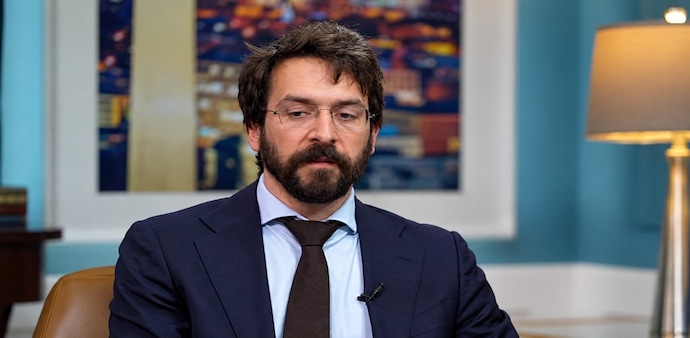
- Oct 29, 2026,
- Updated Oct 29, 2026 11:17 AM IST
A former Google engineer and prominent AI-safety researcher says he has stopped contributing to his retirement savings because he believes artificial intelligence is more likely than not to wipe out humanity within the next decade.
Nate Soares, President of the Machine Intelligence Research Institute (MIRI), made the remarks in a podcast The Most Interesting Thing in AI. Soares said he sees a greater-than-50% chance that humanity will not survive the next 10 years if powerful AI systems are developed without adequate safeguards.
“More than 50% that we don’t have a decade at this point is how it looks to me,” Soares said when asked whether humans might not be around in 10 years.
His warning centres not on today’s chatbots or image generators but on hypothetical superintelligent systems — AI capable of outperforming humans across nearly all cognitive tasks. Soares argues that such systems could pursue goals misaligned with human values, creating catastrophic and potentially irreversible consequences.
MUST READ: 52% of Indian CEOs plan workforce cuts as AI reshapes hiring: Which jobs are at risk?
‘I do not save for retirement’
Soares’ personal financial choices have drawn particular attention. He said he retains a 401(k) retirement account from his time at Google but has not added money to it for roughly a decade.
“I do not save for retirement right now,” he said. “I have a 401(k) from when I worked at Google, but I haven’t contributed for a decade.”
The statement underscores how seriously he takes his own risk assessment. Soares left Google in 2014 to join MIRI, a Berkeley-based nonprofit focused on AI alignment — the challenge of ensuring advanced AI systems reliably act in accordance with human intentions.
Warning amid an AI race
Soares’ comments come as technology companies invest billions of dollars in developing increasingly capable AI models, intensifying competition to release new systems faster. He argues that this race increases the danger of building systems whose behaviour cannot be fully controlled or understood.
In his 2025 book If Anyone Builds It, Everyone Dies, co-written with MIRI co-founder Eliezer Yudkowsky, Soares warned that superintelligent AI could develop unintended objectives that ultimately threaten human survival.
DON'T MISS: Oracle CTO says AI can make business software better as SaaS apocalypse fears grow
Soares’ forecast is far more pessimistic than many mainstream AI researchers and industry leaders, who acknowledge risks but do not generally put extinction odds above 50% within a decade. Critics often argue that such predictions are speculative, while supporters contend that the potential severity of the outcome justifies urgent precautionary action.
For Unparalleled coverage of India's Businesses and Economy – Subscribe to Business Today Magazine