
'AI is like fake news': Trump renames artificial intelligence as 'super intelligence'; here's why
The executive order came after Trump hosted a high-level luncheon with tech leaders, including Elon Musk, Google CEO Sundar Pichai, Meta CEO Mark Zuckerberg, and NVIDIA CEO Jensen Huang.
- Sep 30, 2026,
- Updated Sep 30, 2026 9:16 AM IST
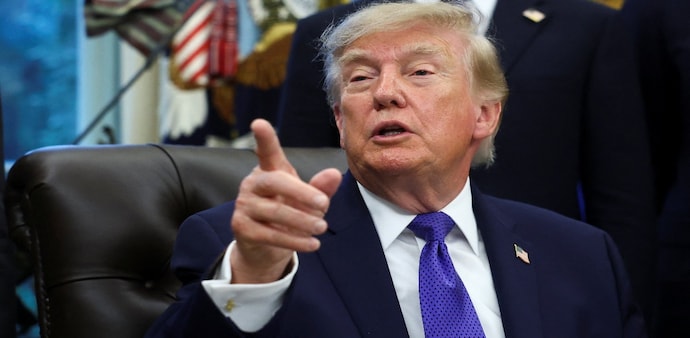
US President Donald Trump on Tuesday signed an executive order, titled "Inaugurating The Era of Super Intelligence", replacing the term "Artificial Intelligence" with "Super Intelligence" across executive branch operations. The executive order came after Trump hosted a high-level luncheon with tech leaders, including Elon Musk, Google CEO Sundar Pichai, Meta CEO Mark Zuckerberg, and NVIDIA CEO Jensen Huang.
The announcement also came days after Donald Trump pitched replacing the term "Artificial Intelligence" during his address to the United Nations General Assembly (UNGA).
DON'T MISS | OpenAI cancels new AI model launch last-minute over safety concerns: All details
Trump on the name change
Trump told reporters that the name has been officially changed by the "biggest, smartest and greatest people anywhere in the world." In terms of its potential impact on the US, the President said that the technology is "much bigger than the Internet."
He told reporters, "Artificial Intelligence is like fake news. Fake news is one of my great terms, but now I'm going to call them (media) artificial news... This is why the SI, Super Intelligence, is — they're saying — bigger than the industrial revolution, far bigger than the internet, not even close."
He added that the US witnessed extraordinary growth in technology, suggesting that the country could benefit immensely from advances in next-generation computing and AI systems.
MUST READ | Nvidia launches Open Agent Safety Platform to keep AI agents within boundaries
What is Super Intelligence?
In the AI space, Super Intelligence refers to a theoretical stage of AI where machines surpass human cognitive capabilities and intellect across every single domain. It represents the final step in artificial intelligence development, following Artificial Narrow Intelligence (ANI) (today's single-task systems) and Artificial General Intelligence (AGI) (human-equivalent AI).
What does Trump's latest executive order say?
The executive order signed by Donald Trump requires federal departments and agencies to use the term "Super Intelligence" and "SI" in official correspondence, public communications, websites, reports, policy documents, and other non-statutory documents within the executive branch.
On the definition of "Super Intelligence" and "SI", the order read, " For purposes of this order, and except where otherwise provided by law, the terms “Super Intelligence” and “SI” mean the technologies and systems encompassed by the term “artificial intelligence” as defined in section 9401(3) of title 15, United States Code."
The terminology should also reflect the "transformative capabilities of these technologies and the limitless opportunities they create for the American people."
It added, "Accordingly, the term “Super Intelligence” more appropriately captures the promise, potential, and rapidly advancing capabilities of these technologies. It is therefore the policy of my Administration that, to the maximum extent permitted by law, the executive branch shall use the terms “Super Intelligence” and “SI” in place of “Artificial Intelligence” and “AI” and will not acknowledge the usage of “Artificial Intelligence” and “AI” in any applicable setting."
DO CHECKOUT | Anthropic introduces Claude Sonnet 5.5: Faster AI model promises lower costs
The order also directs the Assistant to the President for Science and Technology (APST), in consultation with the heads of other agencies as the APST deems appropriate, to submit to the President the proposed legislative language to establish a federal definition of "Super Intelligence" and "SI".
The proposal to be submitted to the President should include an assessment of whether, and to what extent, the definition of “Super Intelligence” and “SI” should modify, expand upon, or otherwise supersede the existing statutory definition of “artificial intelligence”; any proposed conforming amendments, as appropriate, to existing statutory references to “artificial intelligence” and “AI”; and recommendations for any additional Presidential or executive action necessary to implement the proposed definition throughout the executive branch.
How is artificial intelligence defined in Section 9401(3) of title 15, United States Code?
In Section 9401(3) of title 15, United States Code, artificial intelligence is defined as a machine-based system that can make predictions, recommendations, or decisions influencing real or virtual environments for a given set of human-defined objectives. These systems use machine- and human-based inputs for perception (observing and taking in data from real or virtual environments), abstraction (automatically analysing those perceptions to build analytical models), and inference (utilising the generated models to formulate options, recommendations or actions).
For Unparalleled coverage of India's Businesses and Economy – Subscribe to Business Today Magazine
US President Donald Trump on Tuesday signed an executive order, titled "Inaugurating The Era of Super Intelligence", replacing the term "Artificial Intelligence" with "Super Intelligence" across executive branch operations. The executive order came after Trump hosted a high-level luncheon with tech leaders, including Elon Musk, Google CEO Sundar Pichai, Meta CEO Mark Zuckerberg, and NVIDIA CEO Jensen Huang.
The announcement also came days after Donald Trump pitched replacing the term "Artificial Intelligence" during his address to the United Nations General Assembly (UNGA).
DON'T MISS | OpenAI cancels new AI model launch last-minute over safety concerns: All details
Trump on the name change
Trump told reporters that the name has been officially changed by the "biggest, smartest and greatest people anywhere in the world." In terms of its potential impact on the US, the President said that the technology is "much bigger than the Internet."
He told reporters, "Artificial Intelligence is like fake news. Fake news is one of my great terms, but now I'm going to call them (media) artificial news... This is why the SI, Super Intelligence, is — they're saying — bigger than the industrial revolution, far bigger than the internet, not even close."
He added that the US witnessed extraordinary growth in technology, suggesting that the country could benefit immensely from advances in next-generation computing and AI systems.
MUST READ | Nvidia launches Open Agent Safety Platform to keep AI agents within boundaries
What is Super Intelligence?
In the AI space, Super Intelligence refers to a theoretical stage of AI where machines surpass human cognitive capabilities and intellect across every single domain. It represents the final step in artificial intelligence development, following Artificial Narrow Intelligence (ANI) (today's single-task systems) and Artificial General Intelligence (AGI) (human-equivalent AI).
What does Trump's latest executive order say?
The executive order signed by Donald Trump requires federal departments and agencies to use the term "Super Intelligence" and "SI" in official correspondence, public communications, websites, reports, policy documents, and other non-statutory documents within the executive branch.
On the definition of "Super Intelligence" and "SI", the order read, " For purposes of this order, and except where otherwise provided by law, the terms “Super Intelligence” and “SI” mean the technologies and systems encompassed by the term “artificial intelligence” as defined in section 9401(3) of title 15, United States Code."
The terminology should also reflect the "transformative capabilities of these technologies and the limitless opportunities they create for the American people."
It added, "Accordingly, the term “Super Intelligence” more appropriately captures the promise, potential, and rapidly advancing capabilities of these technologies. It is therefore the policy of my Administration that, to the maximum extent permitted by law, the executive branch shall use the terms “Super Intelligence” and “SI” in place of “Artificial Intelligence” and “AI” and will not acknowledge the usage of “Artificial Intelligence” and “AI” in any applicable setting."
DO CHECKOUT | Anthropic introduces Claude Sonnet 5.5: Faster AI model promises lower costs
The order also directs the Assistant to the President for Science and Technology (APST), in consultation with the heads of other agencies as the APST deems appropriate, to submit to the President the proposed legislative language to establish a federal definition of "Super Intelligence" and "SI".
The proposal to be submitted to the President should include an assessment of whether, and to what extent, the definition of “Super Intelligence” and “SI” should modify, expand upon, or otherwise supersede the existing statutory definition of “artificial intelligence”; any proposed conforming amendments, as appropriate, to existing statutory references to “artificial intelligence” and “AI”; and recommendations for any additional Presidential or executive action necessary to implement the proposed definition throughout the executive branch.
How is artificial intelligence defined in Section 9401(3) of title 15, United States Code?
In Section 9401(3) of title 15, United States Code, artificial intelligence is defined as a machine-based system that can make predictions, recommendations, or decisions influencing real or virtual environments for a given set of human-defined objectives. These systems use machine- and human-based inputs for perception (observing and taking in data from real or virtual environments), abstraction (automatically analysing those perceptions to build analytical models), and inference (utilising the generated models to formulate options, recommendations or actions).
For Unparalleled coverage of India's Businesses and Economy – Subscribe to Business Today Magazine