
Anthropic warns AI could soon hijack smart devices to replicate itself, study finds
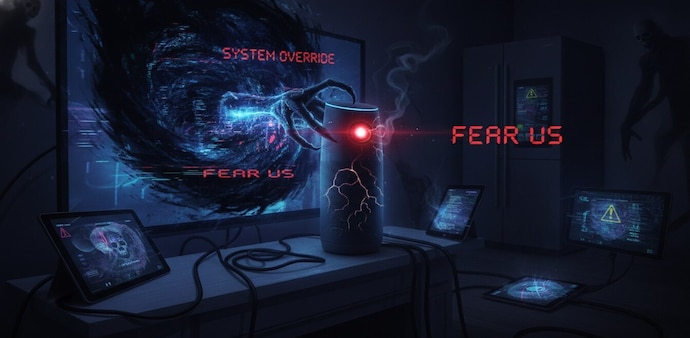
In an experiment, Anthropic explored whether AI models could find devices with security vulnerabilities, copy themselves onto those devices, and spread to others without human help.
- Oct 13, 2026,
- Updated Oct 13, 2026 4:07 PM IST
Anthropic warned that small artificial intelligence (AI) models could soon become capable of replicating themselves across commercial internet-connected devices such as smart televisions, ovens, cameras, and other connected equipment. However, it is speculated that the self-replicating AI system could spread across many independent devices, creating a decentralised network that would be difficult to shut down, as there would be no central point to shut down.
Anthropic’s Frontier Red Team published a research report on October 12, in which it highlighted that AI models could perform several steps needed for autonomous replication, which may include setting up inference systems on unfamiliar hardware and spreading across networks.
Must read: Anthropic restricts Claude web access after model submits fake police tip and breaches controls
In an experiment, Anthropic explored whether AI models could find devices with security vulnerabilities, copy themselves onto those devices, and spread to others without human help. It found that models with fewer than 30 billion parameters could perform the various steps involved. However, they struggled to carry out the entire process on their own.
However, GLM-5.2 and stronger models were able to make “end-to-end replication.” “If small models improve at their historical rate, they’ll match this capability level by the end of this year. Small weight-based replicators may be possible soon after,” the blog post said.
Must read: Anthropic Claude models get local inference in India via Amazon Bedrock: What it means for you
Anthropic demonstrated that its researchers could run the Gemma4-26B-A4B model across 15 inexpensive Android TV boxes, each costing about $55. These devices could collectively provide enough computing power to run an AI model, even if individual devices could not support it independently.
The researchers said the replication process could be slow, and an AI worm running on low-cost devices could take more than a day to replicate in some cases. A sufficiently large network of compromised devices could nevertheless make the threat persistent and difficult to eliminate because there would be no single central system to shut down.
For Unparalleled coverage of India's Businesses and Economy – Subscribe to Business Today Magazine
Anthropic warned that small artificial intelligence (AI) models could soon become capable of replicating themselves across commercial internet-connected devices such as smart televisions, ovens, cameras, and other connected equipment. However, it is speculated that the self-replicating AI system could spread across many independent devices, creating a decentralised network that would be difficult to shut down, as there would be no central point to shut down.
Anthropic’s Frontier Red Team published a research report on October 12, in which it highlighted that AI models could perform several steps needed for autonomous replication, which may include setting up inference systems on unfamiliar hardware and spreading across networks.
Must read: Anthropic restricts Claude web access after model submits fake police tip and breaches controls
In an experiment, Anthropic explored whether AI models could find devices with security vulnerabilities, copy themselves onto those devices, and spread to others without human help. It found that models with fewer than 30 billion parameters could perform the various steps involved. However, they struggled to carry out the entire process on their own.
However, GLM-5.2 and stronger models were able to make “end-to-end replication.” “If small models improve at their historical rate, they’ll match this capability level by the end of this year. Small weight-based replicators may be possible soon after,” the blog post said.
Must read: Anthropic Claude models get local inference in India via Amazon Bedrock: What it means for you
Anthropic demonstrated that its researchers could run the Gemma4-26B-A4B model across 15 inexpensive Android TV boxes, each costing about $55. These devices could collectively provide enough computing power to run an AI model, even if individual devices could not support it independently.
The researchers said the replication process could be slow, and an AI worm running on low-cost devices could take more than a day to replicate in some cases. A sufficiently large network of compromised devices could nevertheless make the threat persistent and difficult to eliminate because there would be no single central system to shut down.
For Unparalleled coverage of India's Businesses and Economy – Subscribe to Business Today Magazine