
From AI art to human anatomy: Why Midjourney's leap into medical imaging is turning heads
The company said its immediate aim is to develop “body composition maps” that would allow users to monitor physical changes over time. It envisions people undergoing scans regularly and then sharing the data with doctors, health platforms or AI-powered wellness tools.
- Jun 18, 2026,
- Updated Jun 18, 2026 10:27 PM IST
Midjourney, which has long been known for AI-generated artwork, has announced a healthcare initiative called Midjourney Medical, marking a shift from creating digital images to capturing images of the human body. The company said the project is centred on a full-body ultrasonic scanning system designed to make internal imaging faster, safer and more accessible.
At the centre of the initiative is the Midjourney Scanner, which uses ultrasound technology instead of radiation or powerful magnetic fields. Midjourney is positioning the system not as a replacement for hospitals or diagnostic imaging centres, but as a preventive health and body-monitoring tool, with its first uses expected to focus on tracking physical changes over time.
A scanner built around ultrasound
The scanner uses more than 40 ultrasound-on-chip imaging modules developed in partnership with medical imaging company Butterfly Network. According to the company, users step onto a platform, descend into water and pass through a ring of sensors that collect data from multiple angles to create three-dimensional images of the body.
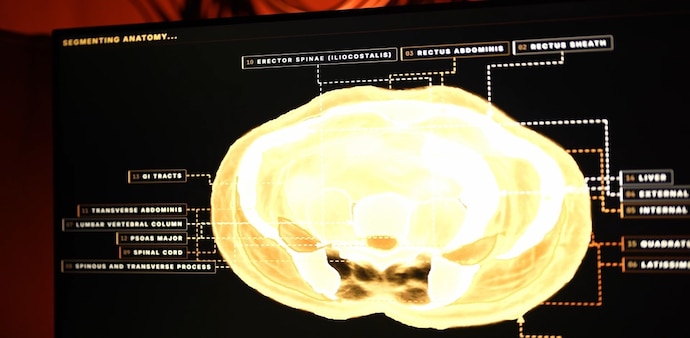
Midjourney said the scan is intended to take around 60 seconds and produce detailed visualisations of muscles, fat, bones and organs. The system combines ultrasound hardware with substantial computing power to reconstruct images from the data collected during the scan.
Focus on preventive body mapping
The company said its immediate aim is to develop “body composition maps” that would allow users to monitor physical changes over time. It envisions people undergoing scans regularly and then sharing the data with doctors, health platforms or AI-powered wellness tools.
Midjourney said more advanced medical applications would require regulatory clearances before they could be introduced. The move also reflects a wider trend in healthcare, where AI is increasingly being used to analyse medical data and support preventive care. Researchers have pointed to the growing role of generative AI and advanced imaging technologies in diagnostic workflows, medical image analysis and personalised healthcare.
The spa model
One of the more unconventional parts of the project is Midjourney’s plan to open a wellness-focused facility in San Francisco by the end of 2027. The proposed “Midjourney Spa” would include multiple scanners along with saunas, gyms and cold plunges, combining health monitoring with a consumer wellness experience.
The concept is aimed at making advanced body imaging a routine consumer service rather than something limited to hospitals and clinics.
Debate around the claims
The announcement has sparked discussion across technology and healthcare circles. Some observers see the project as an attempt to widen access to preventive health imaging, while others have questioned whether the company can meet its stated goals.
Online discussions have raised concerns about regulatory approvals, technical validation and the lack of published peer-reviewed studies showing performance comparable to existing imaging methods such as MRI or CT scans. Several commentators have said the concept is intriguing, but added that independent verification will be necessary before it can gain wider acceptance.
Supporters, however, have pointed to the use of established ultrasound technology and the possibility of safe, repeatable imaging that could be carried out frequently without exposing users to radiation.
For Unparalleled coverage of India's Businesses and Economy – Subscribe to Business Today Magazine
Midjourney, which has long been known for AI-generated artwork, has announced a healthcare initiative called Midjourney Medical, marking a shift from creating digital images to capturing images of the human body. The company said the project is centred on a full-body ultrasonic scanning system designed to make internal imaging faster, safer and more accessible.
At the centre of the initiative is the Midjourney Scanner, which uses ultrasound technology instead of radiation or powerful magnetic fields. Midjourney is positioning the system not as a replacement for hospitals or diagnostic imaging centres, but as a preventive health and body-monitoring tool, with its first uses expected to focus on tracking physical changes over time.
A scanner built around ultrasound
The scanner uses more than 40 ultrasound-on-chip imaging modules developed in partnership with medical imaging company Butterfly Network. According to the company, users step onto a platform, descend into water and pass through a ring of sensors that collect data from multiple angles to create three-dimensional images of the body.
Midjourney said the scan is intended to take around 60 seconds and produce detailed visualisations of muscles, fat, bones and organs. The system combines ultrasound hardware with substantial computing power to reconstruct images from the data collected during the scan.
Focus on preventive body mapping
The company said its immediate aim is to develop “body composition maps” that would allow users to monitor physical changes over time. It envisions people undergoing scans regularly and then sharing the data with doctors, health platforms or AI-powered wellness tools.
Midjourney said more advanced medical applications would require regulatory clearances before they could be introduced. The move also reflects a wider trend in healthcare, where AI is increasingly being used to analyse medical data and support preventive care. Researchers have pointed to the growing role of generative AI and advanced imaging technologies in diagnostic workflows, medical image analysis and personalised healthcare.
The spa model
One of the more unconventional parts of the project is Midjourney’s plan to open a wellness-focused facility in San Francisco by the end of 2027. The proposed “Midjourney Spa” would include multiple scanners along with saunas, gyms and cold plunges, combining health monitoring with a consumer wellness experience.
The concept is aimed at making advanced body imaging a routine consumer service rather than something limited to hospitals and clinics.
Debate around the claims
The announcement has sparked discussion across technology and healthcare circles. Some observers see the project as an attempt to widen access to preventive health imaging, while others have questioned whether the company can meet its stated goals.
Online discussions have raised concerns about regulatory approvals, technical validation and the lack of published peer-reviewed studies showing performance comparable to existing imaging methods such as MRI or CT scans. Several commentators have said the concept is intriguing, but added that independent verification will be necessary before it can gain wider acceptance.
Supporters, however, have pointed to the use of established ultrasound technology and the possibility of safe, repeatable imaging that could be carried out frequently without exposing users to radiation.
For Unparalleled coverage of India's Businesses and Economy – Subscribe to Business Today Magazine