
OpenAI is buying thousands of Apple Mac Minis to train AI agents: Here’s what’s driving the move
OpenAI is using the Macs for specialised AI training, particularly for reinforcement learning (RL) and training AI agents that can operate computers.
- Aug 31, 2026,
- Updated Aug 31, 2026 12:08 PM IST
Over the years, AI companies have relied heavily on large clusters of Nvidia GPUs in data centres to develop advanced AI models. These clusters help companies provide the enormous computing power required to train increasingly complex models, process vast amounts of data, and run AI workloads at scale.
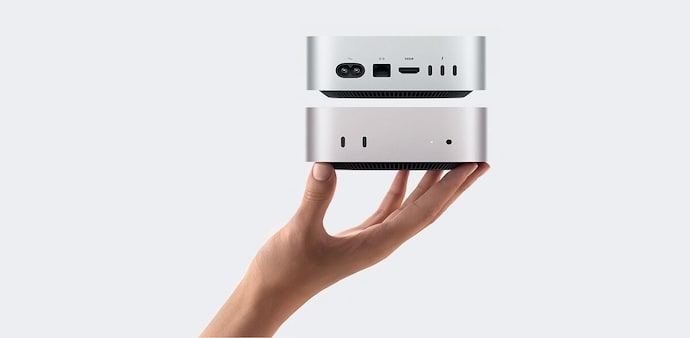
Now, many companies are using Apple's Mac mini and Mac Studio computers for particular AI workloads, especially those related to AI agents. According to The Information, OpenAI has purchased tens of thousands of Mac mini and Mac Studio systems to help train AI agents that can autonomously perform tasks and interact with software. On the other hand, Anthropic is renting Mac minis through Amazon Web Services (AWS) for a similar AI workload.
Must read: Apple launches refreshed Mac Mini and Mac Studio with M6 and M5 Pro silicon in India
Why is OpenAI using Mac Mini and Studios?
Reportedly, OpenAI is using the Macs for specialised AI training, particularly for reinforcement learning (RL) and training AI agents that can operate computers. RL is a common trial-and-error process, where AI learns by trying things, seeing whether they work, and adjusting its behaviour based on the outcome.
The company has already bought tens of thousands of Mac mini and Mac Studio systems and is planning to acquire even more. However, this doesn't mean developers are replacing Nvidia GPU data centres with Mac Minis, but they are using them for different types of AI work that require different computing power.
Must read: OpenAI vs Elon Musk: Why Cursor is losing access to OpenAI models from November 12
What makes Apple’s Mac Mini and Studio capable of AI workloads?
Apple’s Mac Mini and Mac Studio consist of a powerful architecture, consisting of Apple's M-series chips with Unified Memory Architecture (UMA). This means that, instead of the CPU, GPU, and Neural Engine having separate memory, they can all access a shared memory. This reduces unnecessary data movement and allows larger AI models to work more efficiently on a single machine.
The devices also come with practical advantages such as being energy-efficient, being more compact in size than traditional servers, and being designed to manage heat effectively during sustained workloads. Therefore, it makes them useful for specific AI workloads, such as reinforcement learning, training, and testing computer-use agents.
The greater usage by AI companies also had a greater impact on Apple's hardware business. Reportedly, Mac revenue grew nearly 29% year-on-year in the latest quarter, reaching $10.3 billion. In addition, Macs with high-end configurations are not available in the market for months amid memory shortages.
For Unparalleled coverage of India's Businesses and Economy – Subscribe to Business Today Magazine
Over the years, AI companies have relied heavily on large clusters of Nvidia GPUs in data centres to develop advanced AI models. These clusters help companies provide the enormous computing power required to train increasingly complex models, process vast amounts of data, and run AI workloads at scale.
Now, many companies are using Apple's Mac mini and Mac Studio computers for particular AI workloads, especially those related to AI agents. According to The Information, OpenAI has purchased tens of thousands of Mac mini and Mac Studio systems to help train AI agents that can autonomously perform tasks and interact with software. On the other hand, Anthropic is renting Mac minis through Amazon Web Services (AWS) for a similar AI workload.
Must read: Apple launches refreshed Mac Mini and Mac Studio with M6 and M5 Pro silicon in India
Why is OpenAI using Mac Mini and Studios?
Reportedly, OpenAI is using the Macs for specialised AI training, particularly for reinforcement learning (RL) and training AI agents that can operate computers. RL is a common trial-and-error process, where AI learns by trying things, seeing whether they work, and adjusting its behaviour based on the outcome.
The company has already bought tens of thousands of Mac mini and Mac Studio systems and is planning to acquire even more. However, this doesn't mean developers are replacing Nvidia GPU data centres with Mac Minis, but they are using them for different types of AI work that require different computing power.
Must read: OpenAI vs Elon Musk: Why Cursor is losing access to OpenAI models from November 12
What makes Apple’s Mac Mini and Studio capable of AI workloads?
Apple’s Mac Mini and Mac Studio consist of a powerful architecture, consisting of Apple's M-series chips with Unified Memory Architecture (UMA). This means that, instead of the CPU, GPU, and Neural Engine having separate memory, they can all access a shared memory. This reduces unnecessary data movement and allows larger AI models to work more efficiently on a single machine.
The devices also come with practical advantages such as being energy-efficient, being more compact in size than traditional servers, and being designed to manage heat effectively during sustained workloads. Therefore, it makes them useful for specific AI workloads, such as reinforcement learning, training, and testing computer-use agents.
The greater usage by AI companies also had a greater impact on Apple's hardware business. Reportedly, Mac revenue grew nearly 29% year-on-year in the latest quarter, reaching $10.3 billion. In addition, Macs with high-end configurations are not available in the market for months amid memory shortages.
For Unparalleled coverage of India's Businesses and Economy – Subscribe to Business Today Magazine