
Who is Aman Sanger, the Indian-origin founder whose AI startup SpaceX bought for $60 billion?
Before Cursor, Aman Sanger had stints at Bridgewater Associates and Google and ran an AI consultancy, but the real bet came in 2022 when the four launched Anysphere.
- Jun 18, 2026,
- Updated Jun 18, 2026 11:10 AM IST
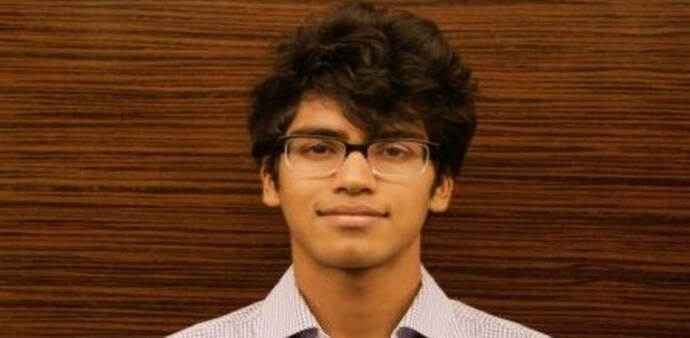
He started writing code at 14. By 25, Aman Sanger has engineered what may be one of the most valuable startup exits in the history of enterprise AI.
SpaceX has agreed to acquire Cursor's parent company, Anysphere Inc., in a deal valued at $60 billion, according to a filing with the US Securities and Exchange Commission. The transaction, expected to close by the third quarter of 2026, will make Anysphere a wholly owned subsidiary of Elon Musk's rocket and aerospace company.
At the centre of it all is Sanger, one of Cursor's four co-founders. His father, Arvind Sanger, is an IIT Bombay alumnus who went on to build a career in hedge funds. His mother, Shilpa Sanger, is an orthodontist, entrepreneur, and board member of Pratham USA, the education non-profit.
Sanger studied at the Massachusetts Institute of Technology, where he met his three co-founders, Michael Truell, Sualeh Asif, and Arvid Lunnemark. Before Cursor, he had stints at Bridgewater Associates and Google and ran an AI consultancy, but the real bet came in 2022 when the four launched Anysphere.
The founding thesis was deceptively simple: build AI tools that sit inside a developer's workflow rather than alongside it. An early detour into AI for computer-aided design was abandoned. Software engineering became the focus. Cursor was the result.
What separated Cursor from the crowded field of coding assistants was its scope. Rather than offering line-by-line autocomplete, the platform was built to read and reason across entire codebases, generating code, catching bugs, and handling tasks complex enough to demand real programming judgment. The approach found traction fast.
Cursor now counts more than 50,000 teams among its users, including engineering organisations at Nvidia, Adobe, Uber, Shopify, and PayPal. The company claims its tools are in use across 64% of Fortune 500 firms and that enterprise customers generate upward of 100 million lines of code through it each day.
Investor interest tracked the growth closely. Cursor crossed a $29.3 billion valuation last year following funding rounds backed by Accel and Coatue, with annualised revenue reported at more than $1 billion.
Cursor also found itself at the centre of a cultural shift in how software gets written. The platform became closely associated with "vibe coding," the practice of building software through natural language prompts rather than line-by-line instruction, a term Collins Dictionary named its Word of the Year for 2025.
For Unparalleled coverage of India's Businesses and Economy – Subscribe to Business Today Magazine
He started writing code at 14. By 25, Aman Sanger has engineered what may be one of the most valuable startup exits in the history of enterprise AI.
SpaceX has agreed to acquire Cursor's parent company, Anysphere Inc., in a deal valued at $60 billion, according to a filing with the US Securities and Exchange Commission. The transaction, expected to close by the third quarter of 2026, will make Anysphere a wholly owned subsidiary of Elon Musk's rocket and aerospace company.
At the centre of it all is Sanger, one of Cursor's four co-founders. His father, Arvind Sanger, is an IIT Bombay alumnus who went on to build a career in hedge funds. His mother, Shilpa Sanger, is an orthodontist, entrepreneur, and board member of Pratham USA, the education non-profit.
Sanger studied at the Massachusetts Institute of Technology, where he met his three co-founders, Michael Truell, Sualeh Asif, and Arvid Lunnemark. Before Cursor, he had stints at Bridgewater Associates and Google and ran an AI consultancy, but the real bet came in 2022 when the four launched Anysphere.
The founding thesis was deceptively simple: build AI tools that sit inside a developer's workflow rather than alongside it. An early detour into AI for computer-aided design was abandoned. Software engineering became the focus. Cursor was the result.
What separated Cursor from the crowded field of coding assistants was its scope. Rather than offering line-by-line autocomplete, the platform was built to read and reason across entire codebases, generating code, catching bugs, and handling tasks complex enough to demand real programming judgment. The approach found traction fast.
Cursor now counts more than 50,000 teams among its users, including engineering organisations at Nvidia, Adobe, Uber, Shopify, and PayPal. The company claims its tools are in use across 64% of Fortune 500 firms and that enterprise customers generate upward of 100 million lines of code through it each day.
Investor interest tracked the growth closely. Cursor crossed a $29.3 billion valuation last year following funding rounds backed by Accel and Coatue, with annualised revenue reported at more than $1 billion.
Cursor also found itself at the centre of a cultural shift in how software gets written. The platform became closely associated with "vibe coding," the practice of building software through natural language prompts rather than line-by-line instruction, a term Collins Dictionary named its Word of the Year for 2025.
For Unparalleled coverage of India's Businesses and Economy – Subscribe to Business Today Magazine