
Why KPMG thinks future jobs will evolve in the age of AI
The report predicts AI assistants will make up 36% of core technology teams within two years, creating demand for workers skilled in supervising and collaborating with AI.
- Jun 29, 2026,
- Updated Jun 29, 2026 5:32 PM IST
For the past two years, the debate around artificial intelligence has largely centred on a question: will artificial intelligence (AI) replace human jobs? A new KPMG Global Tech Report 2026 suggests the real disruption may lie not in mass layoffs, but in the emergence of an entirely new workforce where humans and AI agents work side by side.
Based on a survey of 2,500 technology executives across 27 countries, KPMG's global tech report finds that most organisations expect modest reductions in permanent human roles over the next two years. In fact, the highest-performing companies are continuing to invest in people alongside AI, signalling that the future of work is likely to be about augmenting human capabilities rather than replacing them.
That does not mean businesses are free of workforce challenges. More than half (53%) of the organisations surveyed say they still lack the talent needed to execute their digital transformation plans. As companies race to deploy AI, the shortage of skilled workers has become one of the biggest barriers to scaling these technologies.
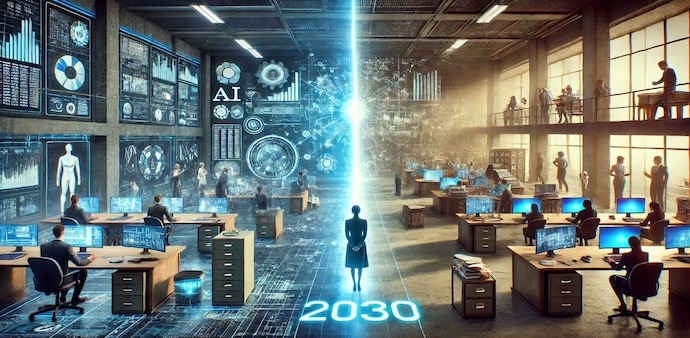
The report argues that the next major shift will be driven by Agentic AI, the AI systems capable of independently carrying out tasks rather than simply responding to prompts. These AI agents are expected to become digital co-workers embedded within enterprise teams. According to the report, digital assistants are projected to account for 36% of core technology teams within the next two years, while permanent human staff are expected to comprise about 43%.
This transition is already creating new categories of work. The report quotes Rohit Gupta, Founder and CEO of Auditoria.AI, saying organisations may soon need an HR database not just for employees but also for AI agents. Companies are already writing job descriptions that require people to manage and supervise these digital workers.
The implication is that future employees may not compete against AI, they will increasingly manage it. As the report notes, technology is advancing faster than organisations can rewrite job descriptions. The skills in demand will therefore evolve from simply using AI tools to orchestrating AI agents, designing prompts and policies, exercising judgment, and making strategic decisions.
For companies, KPMG says the 2026 priority should be building a future-ready, agent-empowered workforce by redesigning talent strategies around upskilling, AI fluency, and developing leaders capable of effectively using, managing and mastering AI. In the workplace of tomorrow, success may depend less on working harder and more on learning how to work alongside digital colleagues.
For Unparalleled coverage of India's Businesses and Economy – Subscribe to Business Today Magazine
For the past two years, the debate around artificial intelligence has largely centred on a question: will artificial intelligence (AI) replace human jobs? A new KPMG Global Tech Report 2026 suggests the real disruption may lie not in mass layoffs, but in the emergence of an entirely new workforce where humans and AI agents work side by side.
Based on a survey of 2,500 technology executives across 27 countries, KPMG's global tech report finds that most organisations expect modest reductions in permanent human roles over the next two years. In fact, the highest-performing companies are continuing to invest in people alongside AI, signalling that the future of work is likely to be about augmenting human capabilities rather than replacing them.
That does not mean businesses are free of workforce challenges. More than half (53%) of the organisations surveyed say they still lack the talent needed to execute their digital transformation plans. As companies race to deploy AI, the shortage of skilled workers has become one of the biggest barriers to scaling these technologies.
The report argues that the next major shift will be driven by Agentic AI, the AI systems capable of independently carrying out tasks rather than simply responding to prompts. These AI agents are expected to become digital co-workers embedded within enterprise teams. According to the report, digital assistants are projected to account for 36% of core technology teams within the next two years, while permanent human staff are expected to comprise about 43%.
This transition is already creating new categories of work. The report quotes Rohit Gupta, Founder and CEO of Auditoria.AI, saying organisations may soon need an HR database not just for employees but also for AI agents. Companies are already writing job descriptions that require people to manage and supervise these digital workers.
The implication is that future employees may not compete against AI, they will increasingly manage it. As the report notes, technology is advancing faster than organisations can rewrite job descriptions. The skills in demand will therefore evolve from simply using AI tools to orchestrating AI agents, designing prompts and policies, exercising judgment, and making strategic decisions.
For companies, KPMG says the 2026 priority should be building a future-ready, agent-empowered workforce by redesigning talent strategies around upskilling, AI fluency, and developing leaders capable of effectively using, managing and mastering AI. In the workplace of tomorrow, success may depend less on working harder and more on learning how to work alongside digital colleagues.
For Unparalleled coverage of India's Businesses and Economy – Subscribe to Business Today Magazine