
80th Independence Day: India to have more semiconductor plants in 7-8 yrs, says PM Modi
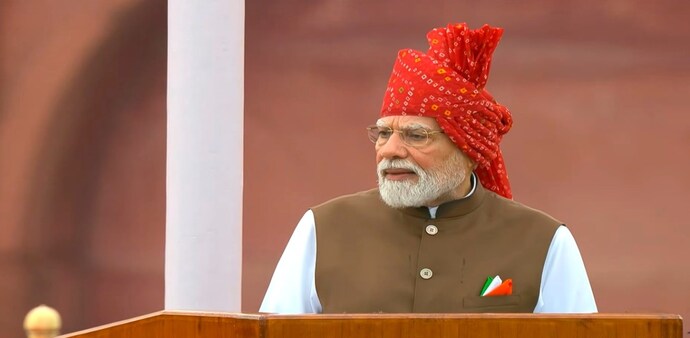
In his 13th consecutive Independence Day speech from the ramparts of the Red Fort, PM Modi said that India has taken significant steps towards self-reliance in the semiconductor sector.
- Aug 15, 2026,
- Updated Aug 15, 2026 10:05 AM IST
Independence Day 2026: Prime Minister Narendra Modi on Saturday said that the entire world would come to a standstill without chips. In his 13th consecutive Independence Day speech from the ramparts of the Red Fort, PM Modi said that India has taken significant steps towards self-reliance in the semiconductor sector.
The Prime Minister further said that India will build 5-8 more semiconductor plants in the next 7-8 years. He added that 3 semiconductor plants have already been established and have started exporting chips.
MUST READ | 80th Independence Day: President Murmu charts Viksit Bharat roadmap, outlines inclusive development vision
What did Modi say?
Modi said, "In today’s digital world and the age of technology, we understand the importance of chips. Whether it is electronic goods, medical equipment or transportation systems, chips are indispensable to all of them. Without chips, the entire world could come to a standstill. That is why India has taken significant steps towards self-reliance in the semiconductor sector. Three major semiconductor plants have already started operations, and I have been told that the production from these plants will also be exported. I want to tell my fellow citizens that in the next seven to eight years, another five to eight semiconductor plants are likely to become operational very soon. This journey towards an Atmanirbhar Bharat is paving the way for us to move towards a Viksit Bharat."
DON'T MISS | Nandan Nilekani says India's AI edge isn't chips—it's this opportunity that could create millions of jobs
India's Semicon 2.0 mission
In July, the Union Cabinet approved a ₹1.27 lakh crore programme — Semicon 2.0 — going far beyond setting up semiconductor fabs. The government is building an end-to-end ecosystem covering chip design and intellectual property, manufacturing equipment and materials, new fabs, advanced packaging, research and development, and specialised talent.
The goal is to reduce India’s dependence on imported chips and critical manufacturing inputs while helping domestic companies move up the value chain from assembly to design and high-end manufacturing. With the first semiconductor fab expected to start operations in 2028, the programme could strengthen India’s electronics supply chain, attract global investments and create a larger role for the country in the global semiconductor industry.
For Unparalleled coverage of India's Businesses and Economy – Subscribe to Business Today Magazine
Independence Day 2026: Prime Minister Narendra Modi on Saturday said that the entire world would come to a standstill without chips. In his 13th consecutive Independence Day speech from the ramparts of the Red Fort, PM Modi said that India has taken significant steps towards self-reliance in the semiconductor sector.
The Prime Minister further said that India will build 5-8 more semiconductor plants in the next 7-8 years. He added that 3 semiconductor plants have already been established and have started exporting chips.
MUST READ | 80th Independence Day: President Murmu charts Viksit Bharat roadmap, outlines inclusive development vision
What did Modi say?
Modi said, "In today’s digital world and the age of technology, we understand the importance of chips. Whether it is electronic goods, medical equipment or transportation systems, chips are indispensable to all of them. Without chips, the entire world could come to a standstill. That is why India has taken significant steps towards self-reliance in the semiconductor sector. Three major semiconductor plants have already started operations, and I have been told that the production from these plants will also be exported. I want to tell my fellow citizens that in the next seven to eight years, another five to eight semiconductor plants are likely to become operational very soon. This journey towards an Atmanirbhar Bharat is paving the way for us to move towards a Viksit Bharat."
DON'T MISS | Nandan Nilekani says India's AI edge isn't chips—it's this opportunity that could create millions of jobs
India's Semicon 2.0 mission
In July, the Union Cabinet approved a ₹1.27 lakh crore programme — Semicon 2.0 — going far beyond setting up semiconductor fabs. The government is building an end-to-end ecosystem covering chip design and intellectual property, manufacturing equipment and materials, new fabs, advanced packaging, research and development, and specialised talent.
The goal is to reduce India’s dependence on imported chips and critical manufacturing inputs while helping domestic companies move up the value chain from assembly to design and high-end manufacturing. With the first semiconductor fab expected to start operations in 2028, the programme could strengthen India’s electronics supply chain, attract global investments and create a larger role for the country in the global semiconductor industry.
For Unparalleled coverage of India's Businesses and Economy – Subscribe to Business Today Magazine