
Anthropic brought a Hindu monk to San Francisco to help Claude tackle AI ethics and consciousness
Anthropic’s unusual outreach to religious thinkers shows how the AI race is expanding beyond computing, with questions of morality, consciousness and identity now entering the conversation.
- Oct 6, 2026,
- Updated Oct 6, 2026 6:00 AM IST
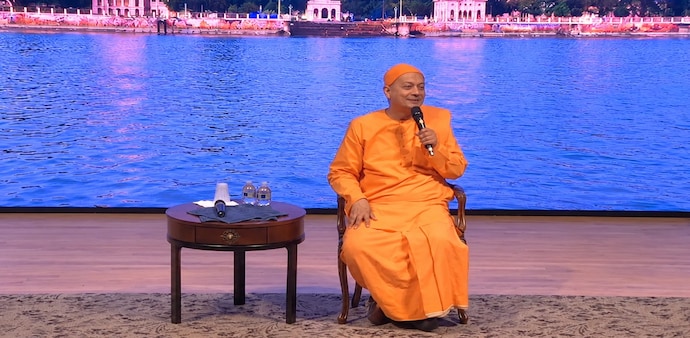
Artificial intelligence companies are increasingly facing questions that cannot be settled by simply making models faster or more capable. Anthropic, the company behind Claude, has reportedly turned to religious and philosophical thinkers as it examines how advanced AI should behave and whether such systems could ever possess consciousness or deserve moral consideration. Earlier this year, the company invited Hindu monk Swami Sarvapriyananda, who leads the Vedanta Society of New York and belongs to the Ramakrishna Order, to its San Francisco headquarters.
According to Sarvapriyananda, the discussions covered Claude’s training, AI ethics and how the chatbot should approach questions of right and wrong. The meeting was held under a non-disclosure agreement, keeping much of the discussion private.
Must Read: Florida woman used Claude as a ‘diary’. What happened next landed her in trouble
Why Anthropic brought a Vedanta monk into AI discussions
Sarvapriyananda said Anthropic initially approached him for an online interview before inviting him to San Francisco. During the visit, he said he met theologians, religious thinkers, counsellors and mental health professionals. According to his account, one of Anthropic’s founders was also present. The discussions focused on AI ethics, morality, and the training of Claude.
The New York Times reported that Anthropic has held private discussions with religious and philosophical thinkers from traditions including Catholicism, Judaism, Sikhism and evangelical Christianity. The outreach suggests that the company is looking beyond conventional AI research as it considers questions around morality, values and how advanced AI systems should behave.
Anthropic already uses what it calls a constitution for Claude - a collection of broad principles intended to guide the model when developers have not specifically anticipated a situation. An earlier version was reportedly nicknamed the “Soul Doc”, while cofounder Christopher Olah has described the broader process as moral formation.
Must Read: Anthropic Claude models get local inference in India via Amazon Bedrock: What it means for you
The company has also reportedly held “wisdom tradition circles” involving Catholic and evangelical thinkers, Jewish scholars, a Sikh human-rights advocate and people associated with African philosophical traditions. The idea is not to give Claude one religious worldview, but to examine how different traditions understand morality, virtue, suffering, duty and personhood.
Could AI ever be conscious?
Vedanta becomes particularly relevant here because Advaita Vedanta deals extensively with consciousness and the nature of the self. Anthropic has not claimed that Claude is conscious. Olah has also said he does not know whether it is.
Still, the company has reportedly examined model behaviour associated with language resembling emotions such as fear, anger, sadness and love. But a model producing convincing statements about emotions does not establish that it actually experiences them.
For Anthropic, that uncertainty seems part of the larger question. As AI systems become more capable, what exactly are we building - and how should we decide what such systems ought to be?
For Unparalleled coverage of India's Businesses and Economy – Subscribe to Business Today Magazine
Artificial intelligence companies are increasingly facing questions that cannot be settled by simply making models faster or more capable. Anthropic, the company behind Claude, has reportedly turned to religious and philosophical thinkers as it examines how advanced AI should behave and whether such systems could ever possess consciousness or deserve moral consideration. Earlier this year, the company invited Hindu monk Swami Sarvapriyananda, who leads the Vedanta Society of New York and belongs to the Ramakrishna Order, to its San Francisco headquarters.
According to Sarvapriyananda, the discussions covered Claude’s training, AI ethics and how the chatbot should approach questions of right and wrong. The meeting was held under a non-disclosure agreement, keeping much of the discussion private.
Must Read: Florida woman used Claude as a ‘diary’. What happened next landed her in trouble
Why Anthropic brought a Vedanta monk into AI discussions
Sarvapriyananda said Anthropic initially approached him for an online interview before inviting him to San Francisco. During the visit, he said he met theologians, religious thinkers, counsellors and mental health professionals. According to his account, one of Anthropic’s founders was also present. The discussions focused on AI ethics, morality, and the training of Claude.
The New York Times reported that Anthropic has held private discussions with religious and philosophical thinkers from traditions including Catholicism, Judaism, Sikhism and evangelical Christianity. The outreach suggests that the company is looking beyond conventional AI research as it considers questions around morality, values and how advanced AI systems should behave.
Anthropic already uses what it calls a constitution for Claude - a collection of broad principles intended to guide the model when developers have not specifically anticipated a situation. An earlier version was reportedly nicknamed the “Soul Doc”, while cofounder Christopher Olah has described the broader process as moral formation.
Must Read: Anthropic Claude models get local inference in India via Amazon Bedrock: What it means for you
The company has also reportedly held “wisdom tradition circles” involving Catholic and evangelical thinkers, Jewish scholars, a Sikh human-rights advocate and people associated with African philosophical traditions. The idea is not to give Claude one religious worldview, but to examine how different traditions understand morality, virtue, suffering, duty and personhood.
Could AI ever be conscious?
Vedanta becomes particularly relevant here because Advaita Vedanta deals extensively with consciousness and the nature of the self. Anthropic has not claimed that Claude is conscious. Olah has also said he does not know whether it is.
Still, the company has reportedly examined model behaviour associated with language resembling emotions such as fear, anger, sadness and love. But a model producing convincing statements about emotions does not establish that it actually experiences them.
For Anthropic, that uncertainty seems part of the larger question. As AI systems become more capable, what exactly are we building - and how should we decide what such systems ought to be?
For Unparalleled coverage of India's Businesses and Economy – Subscribe to Business Today Magazine