
Can hackers take control of your smart fridge? France attack highlights risks of connected devices
From refrigerators and security cameras to connected cars, internet-enabled devices offer convenience but can expose you to cyberattacks when software is outdated or security measures are weak.
- Oct 18, 2026,
- Updated Oct 18, 2026 11:00 AM IST
Your refrigerator may keep food fresh, but if it connects to the internet, its software and network access could also expose it to cybersecurity risks. A recent cyberattack on refrigeration systems at hundreds of French supermarkets showed how digital vulnerabilities can have real-world consequences. Attackers remotely triggered defrost cycles, causing temperatures to rise and food to spoil. The incident involved commercial refrigeration equipment, not a confirmed attack on household smart fridges.
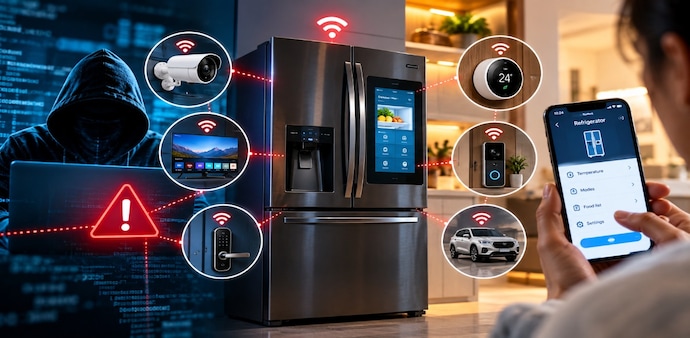
However, it raises a wider question about the security of devices that can be monitored or controlled remotely. Smart televisions, security cameras, video doorbells, locks and thermostats can also be vulnerable. In some cases, a compromised device may not only be disrupted itself but could also give attackers access to other systems on the same network.
MUST READ | One WhatsApp ‘NO’ could cost you your savings: Hyderabad Police warn of new cyber scam
How can hackers compromise connected devices?
Smart refrigerators can connect to Wi-Fi or cloud services for remote monitoring, alerts and temperature controls. Their security depends on factors such as software updates, strong authentication and how remote access is protected.
According to Reuters, the French attack affected around 350 supermarkets, with refrigeration temperatures reportedly reaching 50 degrees Celsius. Investigators were examining the incident, while outdated software was identified as a concern in some affected systems. The attack highlights the risks of leaving connected equipment running unsupported or unpatched software.
DON'T MISS | Landmark hit: Iranian hackers pull off historic cyber attack to paralyze British power plant
The threat extends beyond refrigerators. In 2015, researchers demonstrated that a Samsung smart fridge could be compromised to intercept some internet traffic. That year, a remote attack on a Jeep's entertainment system also led to a recall of around 1.4 million vehicles. More recently, researchers found vulnerabilities in certain Kia vehicles that could let attackers track, unlock, and start them using a licence plate number. The flaws were reported to Kia and subsequently fixed.
Routers are another important target because they connect multiple devices. The security-industry data claims they account for more than three-quarters of attacks on connected devices, although it does not identify the source of that statistic.
How to reduce the risk
India's Telecommunication Engineering Centre has published guidance for securing consumer Internet of Things (IoT) devices. Install software and firmware updates, change default passwords, use strong, unique credentials, secure your Wi-Fi router, and enable two-factor authentication where available. When buying, you should also check how long manufacturers provide security updates.
Connected appliances can make everyday tasks easier, but their security matters too. Keeping devices updated and protecting the network they use can help reduce the risk of cyberattacks.
For Unparalleled coverage of India's Businesses and Economy – Subscribe to Business Today Magazine
Your refrigerator may keep food fresh, but if it connects to the internet, its software and network access could also expose it to cybersecurity risks. A recent cyberattack on refrigeration systems at hundreds of French supermarkets showed how digital vulnerabilities can have real-world consequences. Attackers remotely triggered defrost cycles, causing temperatures to rise and food to spoil. The incident involved commercial refrigeration equipment, not a confirmed attack on household smart fridges.
However, it raises a wider question about the security of devices that can be monitored or controlled remotely. Smart televisions, security cameras, video doorbells, locks and thermostats can also be vulnerable. In some cases, a compromised device may not only be disrupted itself but could also give attackers access to other systems on the same network.
MUST READ | One WhatsApp ‘NO’ could cost you your savings: Hyderabad Police warn of new cyber scam
How can hackers compromise connected devices?
Smart refrigerators can connect to Wi-Fi or cloud services for remote monitoring, alerts and temperature controls. Their security depends on factors such as software updates, strong authentication and how remote access is protected.
According to Reuters, the French attack affected around 350 supermarkets, with refrigeration temperatures reportedly reaching 50 degrees Celsius. Investigators were examining the incident, while outdated software was identified as a concern in some affected systems. The attack highlights the risks of leaving connected equipment running unsupported or unpatched software.
DON'T MISS | Landmark hit: Iranian hackers pull off historic cyber attack to paralyze British power plant
The threat extends beyond refrigerators. In 2015, researchers demonstrated that a Samsung smart fridge could be compromised to intercept some internet traffic. That year, a remote attack on a Jeep's entertainment system also led to a recall of around 1.4 million vehicles. More recently, researchers found vulnerabilities in certain Kia vehicles that could let attackers track, unlock, and start them using a licence plate number. The flaws were reported to Kia and subsequently fixed.
Routers are another important target because they connect multiple devices. The security-industry data claims they account for more than three-quarters of attacks on connected devices, although it does not identify the source of that statistic.
How to reduce the risk
India's Telecommunication Engineering Centre has published guidance for securing consumer Internet of Things (IoT) devices. Install software and firmware updates, change default passwords, use strong, unique credentials, secure your Wi-Fi router, and enable two-factor authentication where available. When buying, you should also check how long manufacturers provide security updates.
Connected appliances can make everyday tasks easier, but their security matters too. Keeping devices updated and protecting the network they use can help reduce the risk of cyberattacks.
For Unparalleled coverage of India's Businesses and Economy – Subscribe to Business Today Magazine