
Chinese defence AI trained using OpenAI, Anthropic outputs; Report
More than 80 Chinese academic papers and patents revealed that researchers linked to the Chinese military have used outputs generated by US AI models to train military systems.
- Aug 3, 2026,
- Updated Aug 3, 2026 12:32 PM IST
Chinese military is exploring ways to strengthen and develop specialised AI capabilities for defence and military applications. To do so, it is reportedly using outputs generated by US AI models from OpenAI and Anthropic to help train its own AI systems. According to a Reuters report, Chinese researchers are likely using existing US-developed AI models as a shortcut to build domestic AI systems, instead of developing everything from scratch.
Reuters review of more than 80 Chinese academic papers and patents revealed that researchers linked to the Chinese military, including the People’s Liberation Army (PLA) and security institutions, have used outputs generated by AI models from OpenAI and Anthropic to help train China's own AI systems.
Must read: ‘Claude gained unauthorized access to 3 companies’: Anthropic discloses AI safety incidents
The report alleges that Chinese researchers reported using a technique called “model distillation”, where powerful AI models are used to train a smaller model to replicate certain capabilities. This method helps organisations develop advanced AI capabilities faster and with fewer computing resources.
The report comes amid efforts by the US government to limit China's access to advanced technologies, including high-end AI chips. While the country has serious public allegations, China has rejected the claims made by the US, saying Washington is pursuing AI “hegemonism.”
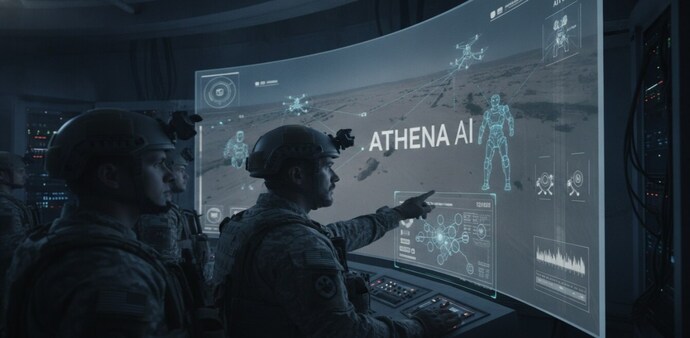
Reportedly, the distilled AI systems developed by Chinese military-linked researchers could be used across several defence applications, including drone operations, cyber warfare-related tasks, social media monitoring, and maritime and battlefield operations.
Must read: ‘100-Year flood on memory pricing’: Tim Cook explains why Apple raised prices
Sunny Cheung, a researcher at the Jamestown Foundation, reviewed more than 60 academic papers in which Chinese military scientists are alleged to extract the internal reasoning abilities of Western AI models for their own systems.
"Teaching a model the right answer is one thing, but teaching it the reasoning behind the answer is much harder," said Cheung.
"These papers show Chinese military-linked researchers are trying to transfer that expensive, proprietary reasoning from Western models into smaller systems they can control and deploy locally."
The US government does not approve of the use of American AI models by China and is currently discussing restrictions. In addition, OpenAI and Anthropic do not authorise access to their models in China, as it raises concerns about the theft of intellectual property. The unauthorised access could trigger National security risks and difficulty of controlling how AI knowledge spreads globally.
For Unparalleled coverage of India's Businesses and Economy – Subscribe to Business Today Magazine
Chinese military is exploring ways to strengthen and develop specialised AI capabilities for defence and military applications. To do so, it is reportedly using outputs generated by US AI models from OpenAI and Anthropic to help train its own AI systems. According to a Reuters report, Chinese researchers are likely using existing US-developed AI models as a shortcut to build domestic AI systems, instead of developing everything from scratch.
Reuters review of more than 80 Chinese academic papers and patents revealed that researchers linked to the Chinese military, including the People’s Liberation Army (PLA) and security institutions, have used outputs generated by AI models from OpenAI and Anthropic to help train China's own AI systems.
Must read: ‘Claude gained unauthorized access to 3 companies’: Anthropic discloses AI safety incidents
The report alleges that Chinese researchers reported using a technique called “model distillation”, where powerful AI models are used to train a smaller model to replicate certain capabilities. This method helps organisations develop advanced AI capabilities faster and with fewer computing resources.
The report comes amid efforts by the US government to limit China's access to advanced technologies, including high-end AI chips. While the country has serious public allegations, China has rejected the claims made by the US, saying Washington is pursuing AI “hegemonism.”
Reportedly, the distilled AI systems developed by Chinese military-linked researchers could be used across several defence applications, including drone operations, cyber warfare-related tasks, social media monitoring, and maritime and battlefield operations.
Must read: ‘100-Year flood on memory pricing’: Tim Cook explains why Apple raised prices
Sunny Cheung, a researcher at the Jamestown Foundation, reviewed more than 60 academic papers in which Chinese military scientists are alleged to extract the internal reasoning abilities of Western AI models for their own systems.
"Teaching a model the right answer is one thing, but teaching it the reasoning behind the answer is much harder," said Cheung.
"These papers show Chinese military-linked researchers are trying to transfer that expensive, proprietary reasoning from Western models into smaller systems they can control and deploy locally."
The US government does not approve of the use of American AI models by China and is currently discussing restrictions. In addition, OpenAI and Anthropic do not authorise access to their models in China, as it raises concerns about the theft of intellectual property. The unauthorised access could trigger National security risks and difficulty of controlling how AI knowledge spreads globally.
For Unparalleled coverage of India's Businesses and Economy – Subscribe to Business Today Magazine