
Google predicts Venezuela earthquake, but there’s a catch; Here's the science behind Alert
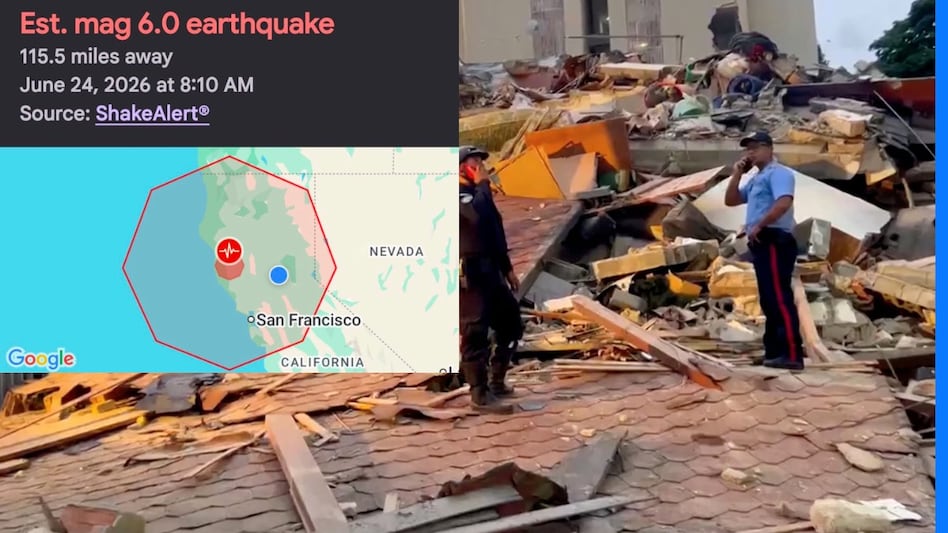
Google Earthquake Alert showcased estimated magnitude, epicentre from the Android user's location, and other crucial information so they can prepare before the tremor hits.
- Jun 25, 2026,
- Updated Jun 25, 2026 12:12 PM IST
Venezuela was struck by two massive earthquakes, one after the other, on June 23, measuring magnitudes of 7.1 and 7.5, making them among the strongest to affect the country in around 100 years. Several locations had extensive damage, with buildings collapsing and critical infrastructure impacted.
After the event, people started sharing screenshots on X of Google's earthquake alert system, which occurred seconds before they felt the tremors. This led many people to wonder how Google was able to detect the earthquake even before it happened.
A screenshot on X is going viral, which showcases a Google Earthquake Alert notification, highlighting that an earthquake has been detected. It also showcased an estimated earthquake of magnitude 6.2. It further highlighted that the quake's epicentre was about 212.3 miles (341 kilometres) away from the user's location.
How did Google predict the Venezuela earthquake?
While Google alerted many users in Venezuela seconds before the tremors, but it did not really predict the earthquake. According to a Google blog post, in several locations, the company receives data from official seismic networks. But in places without extensive sensor networks, Android phones with built-in accelerometers help detect earthquakes as they claim to work as miniature seismometers.
The science behind the system is that when rocks suddenly slip along a fault line, they release seismic waves in two main types of waves: P-waves that travel fastest and usually cause little damage and S-waves that travel slower but cause massive disruption. Therefore, the P-waves are said to be detected through seismic sensors and Android devices.
Must read: Magnitude 7.2 earthquake jolts Japan's Iwate coast; no tsunami risk, no injuries reported
When many phones in the same area detect similar motion, Google can identify a potential earthquake, its location, magnitude, and which areas are likely to experience strong tremors. Then the system instantly shares an alert using the internet and mobile networks, while seismic waves are said to travel much more slowly through the ground.
Therefore, Google detects an earthquake that has already started to shape and warns people before the strongest shaking reaches them. The company uses Android smartphones as a major earthquake detection network, with more than 2 billion phones connected to its earthquake detection system.
For Unparalleled coverage of India's Businesses and Economy – Subscribe to Business Today Magazine
Venezuela was struck by two massive earthquakes, one after the other, on June 23, measuring magnitudes of 7.1 and 7.5, making them among the strongest to affect the country in around 100 years. Several locations had extensive damage, with buildings collapsing and critical infrastructure impacted.
After the event, people started sharing screenshots on X of Google's earthquake alert system, which occurred seconds before they felt the tremors. This led many people to wonder how Google was able to detect the earthquake even before it happened.
A screenshot on X is going viral, which showcases a Google Earthquake Alert notification, highlighting that an earthquake has been detected. It also showcased an estimated earthquake of magnitude 6.2. It further highlighted that the quake's epicentre was about 212.3 miles (341 kilometres) away from the user's location.
How did Google predict the Venezuela earthquake?
While Google alerted many users in Venezuela seconds before the tremors, but it did not really predict the earthquake. According to a Google blog post, in several locations, the company receives data from official seismic networks. But in places without extensive sensor networks, Android phones with built-in accelerometers help detect earthquakes as they claim to work as miniature seismometers.
The science behind the system is that when rocks suddenly slip along a fault line, they release seismic waves in two main types of waves: P-waves that travel fastest and usually cause little damage and S-waves that travel slower but cause massive disruption. Therefore, the P-waves are said to be detected through seismic sensors and Android devices.
Must read: Magnitude 7.2 earthquake jolts Japan's Iwate coast; no tsunami risk, no injuries reported
When many phones in the same area detect similar motion, Google can identify a potential earthquake, its location, magnitude, and which areas are likely to experience strong tremors. Then the system instantly shares an alert using the internet and mobile networks, while seismic waves are said to travel much more slowly through the ground.
Therefore, Google detects an earthquake that has already started to shape and warns people before the strongest shaking reaches them. The company uses Android smartphones as a major earthquake detection network, with more than 2 billion phones connected to its earthquake detection system.
For Unparalleled coverage of India's Businesses and Economy – Subscribe to Business Today Magazine