
How Tim Cook introduced larger iPhone screens and changed Apple’s smartphone strategy
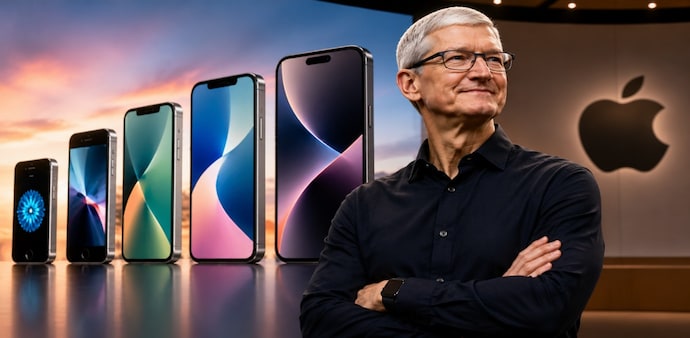
As Apple responded to changing smartphone preferences, larger displays became an increasingly important part of its strategy, reshaping the iPhone lineup and giving customers more choice across screen sizes.
- Aug 30, 2026,
- Updated Aug 30, 2026 3:00 PM IST
Apple’s iPhone strategy changed significantly during Tim Cook’s tenure, as the company moved away from the smaller-screen approach that had defined its smartphone lineup under Steve Jobs. The shift came as the smartphone market was evolving and Android rivals were increasingly offering devices with larger displays.
Must Read: Apple’s CEO History: Who led the company before Steve Jobs and Tim Cook?
Apple initially made a modest change, but later introduced multiple screen sizes across its iPhone range. The move gave customers more options while allowing Apple to compete more directly in a market where large-screen smartphones were becoming increasingly popular. It also marked a broader change in how Apple approached its product lineup after Cook became CEO.
iPhone 5 brought the first screen-size change
The first major step came with the iPhone 5, which was introduced with a 4-inch display. Earlier iPhone models had featured 3.5-inch screens, making the change notable for a company that had kept the iPhone's display size consistent across several generations.
Must Read: September 9 surprise: Apple could unveil more than just a new iPhone
The move came as Android smartphone makers were increasingly introducing larger-screen devices, putting pressure on Apple to respond to changing consumer preferences.
iPhone 6 expanded Apple's approach
Apple made a much bigger change in 2014 with the iPhone 6 and iPhone 6 Plus. The iPhone 6 featured a 4.7-inch display, while the iPhone 6 Plus introduced a 5.5-inch screen.
This was a significant departure from Apple's earlier strategy. Instead of offering an iPhone with essentially one screen size, the company began giving customers a choice between a standard model and a larger version.
The larger displays also helped Apple compete with Android phones that had already popularised bigger screens.
Bigger displays became part of Apple's product strategy
Apple continued to expand its display technology during Cook's tenure. The company eventually moved its premium iPhones from LCD to OLED screens and introduced Face ID with the iPhone X, replacing the earlier Touch ID system.
The shift towards larger displays was not limited to the iPhone. In 2015, Apple introduced the first iPad Pro, adding a larger-screen option to its tablet lineup.
The changes reflected a broader evolution in Apple's hardware strategy: rather than keeping its product formats tightly limited, the company increasingly offered different sizes and configurations to address changing customer preferences and competition.
For Unparalleled coverage of India's Businesses and Economy – Subscribe to Business Today Magazine
Apple’s iPhone strategy changed significantly during Tim Cook’s tenure, as the company moved away from the smaller-screen approach that had defined its smartphone lineup under Steve Jobs. The shift came as the smartphone market was evolving and Android rivals were increasingly offering devices with larger displays.
Must Read: Apple’s CEO History: Who led the company before Steve Jobs and Tim Cook?
Apple initially made a modest change, but later introduced multiple screen sizes across its iPhone range. The move gave customers more options while allowing Apple to compete more directly in a market where large-screen smartphones were becoming increasingly popular. It also marked a broader change in how Apple approached its product lineup after Cook became CEO.
iPhone 5 brought the first screen-size change
The first major step came with the iPhone 5, which was introduced with a 4-inch display. Earlier iPhone models had featured 3.5-inch screens, making the change notable for a company that had kept the iPhone's display size consistent across several generations.
Must Read: September 9 surprise: Apple could unveil more than just a new iPhone
The move came as Android smartphone makers were increasingly introducing larger-screen devices, putting pressure on Apple to respond to changing consumer preferences.
iPhone 6 expanded Apple's approach
Apple made a much bigger change in 2014 with the iPhone 6 and iPhone 6 Plus. The iPhone 6 featured a 4.7-inch display, while the iPhone 6 Plus introduced a 5.5-inch screen.
This was a significant departure from Apple's earlier strategy. Instead of offering an iPhone with essentially one screen size, the company began giving customers a choice between a standard model and a larger version.
The larger displays also helped Apple compete with Android phones that had already popularised bigger screens.
Bigger displays became part of Apple's product strategy
Apple continued to expand its display technology during Cook's tenure. The company eventually moved its premium iPhones from LCD to OLED screens and introduced Face ID with the iPhone X, replacing the earlier Touch ID system.
The shift towards larger displays was not limited to the iPhone. In 2015, Apple introduced the first iPad Pro, adding a larger-screen option to its tablet lineup.
The changes reflected a broader evolution in Apple's hardware strategy: rather than keeping its product formats tightly limited, the company increasingly offered different sizes and configurations to address changing customer preferences and competition.
For Unparalleled coverage of India's Businesses and Economy – Subscribe to Business Today Magazine