
India wants to take its technology story to the world: Scindia’s 10-year telecom vision
Addressing India Mobile Congress 2026, Scindia said India has built significant capabilities in telecommunications, digital connectivity, technology manufacturing and next-generation networks over the past decade.
- Oct 8, 2026,
- Updated Oct 8, 2026 12:14 PM IST
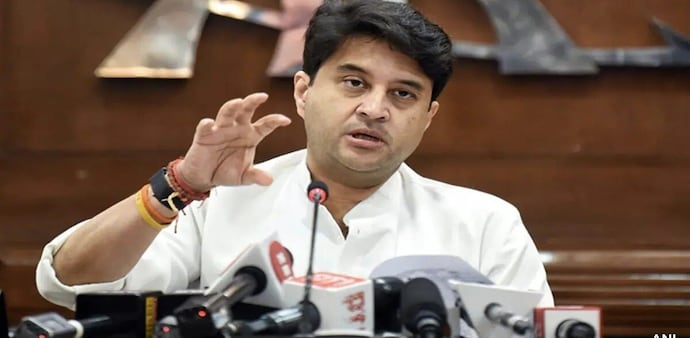
India Mobile Congress (IMC) must evolve into a global platform that showcases the country’s technological capabilities and takes India’s technology story to the world, Union Communications Minister Jyotiraditya Scindia said on Thursday.
Addressing India Mobile Congress 2026, Scindia said India has built significant capabilities in telecommunications, digital connectivity, technology manufacturing and next-generation networks over the past decade. The focus now, he said, should shift towards leveraging these capabilities for a larger global role.
“We have the manpower, mobility and mindset to take this momentum beyond boundaries,” Scindia said. “The first decade brought the world to India. The next decade must take India to the world.”
Scindia highlighted the expansion of India’s broadband ecosystem as one of the key indicators of this transformation. Broadband subscribers have increased from around 60 million a decade ago to more than 1.1 billion, making India one of the world's most affordable data markets, he said.
The minister also pointed to India’s growing capabilities in next-generation telecommunications. The Bharat 6G Alliance, comprising 90 institutions and collaborations with global partners, has established 7,700 patents, including 4,400 international patents, he said.
This growing research and intellectual property base is part of India’s attempt to move beyond being a large telecom market and strengthen its position as a technology developer and global participant in next-generation communications.
Scindia also highlighted the government’s production-linked incentive (PLI) programme, saying it has helped strengthen domestic mobile manufacturing. India has emerged among the world’s top four producers of technology equipment within 22 months, he said.
The government is simultaneously seeking to expand digital connectivity across rural India through the USD 15 billion BharatNet programme. The initiative aims to provide middle-mile connectivity to nearly 2.6 lakh gram panchayats and on-demand connectivity to another 3.8 lakh villages.
Scindia said digital inclusion remains central to the government’s technology strategy, with the Digital India mission focused on democratising technology and ensuring that technological progress reaches citizens, enterprises and communities.
India is also seeking a larger role in global telecommunications institutions. Scindia said the ITU Council has accepted India’s proposal to host the Plenipotentiary Conference in 2030, following the country’s hosting of the World Telecommunication Standardization Assembly in 2024.
The developments reflect India’s broader ambition to combine a large domestic digital market with manufacturing, innovation, connectivity and international partnerships to establish itself as a global technology and telecom hub.
For Unparalleled coverage of India's Businesses and Economy – Subscribe to Business Today Magazine
India Mobile Congress (IMC) must evolve into a global platform that showcases the country’s technological capabilities and takes India’s technology story to the world, Union Communications Minister Jyotiraditya Scindia said on Thursday.
Addressing India Mobile Congress 2026, Scindia said India has built significant capabilities in telecommunications, digital connectivity, technology manufacturing and next-generation networks over the past decade. The focus now, he said, should shift towards leveraging these capabilities for a larger global role.
“We have the manpower, mobility and mindset to take this momentum beyond boundaries,” Scindia said. “The first decade brought the world to India. The next decade must take India to the world.”
Scindia highlighted the expansion of India’s broadband ecosystem as one of the key indicators of this transformation. Broadband subscribers have increased from around 60 million a decade ago to more than 1.1 billion, making India one of the world's most affordable data markets, he said.
The minister also pointed to India’s growing capabilities in next-generation telecommunications. The Bharat 6G Alliance, comprising 90 institutions and collaborations with global partners, has established 7,700 patents, including 4,400 international patents, he said.
This growing research and intellectual property base is part of India’s attempt to move beyond being a large telecom market and strengthen its position as a technology developer and global participant in next-generation communications.
Scindia also highlighted the government’s production-linked incentive (PLI) programme, saying it has helped strengthen domestic mobile manufacturing. India has emerged among the world’s top four producers of technology equipment within 22 months, he said.
The government is simultaneously seeking to expand digital connectivity across rural India through the USD 15 billion BharatNet programme. The initiative aims to provide middle-mile connectivity to nearly 2.6 lakh gram panchayats and on-demand connectivity to another 3.8 lakh villages.
Scindia said digital inclusion remains central to the government’s technology strategy, with the Digital India mission focused on democratising technology and ensuring that technological progress reaches citizens, enterprises and communities.
India is also seeking a larger role in global telecommunications institutions. Scindia said the ITU Council has accepted India’s proposal to host the Plenipotentiary Conference in 2030, following the country’s hosting of the World Telecommunication Standardization Assembly in 2024.
The developments reflect India’s broader ambition to combine a large domestic digital market with manufacturing, innovation, connectivity and international partnerships to establish itself as a global technology and telecom hub.
For Unparalleled coverage of India's Businesses and Economy – Subscribe to Business Today Magazine