
‘Knowing a name doesn’t solve spam’: Truecaller says CNAP won’t replace its caller ID in India
Truecaller says CNAP complements its service and welcomes the government’s push for transparency in mobile calls, but argues a SIM owner’s name does not solve spam and fraud.
- Oct 16, 2026,
- Updated Oct 16, 2026 3:27 PM IST
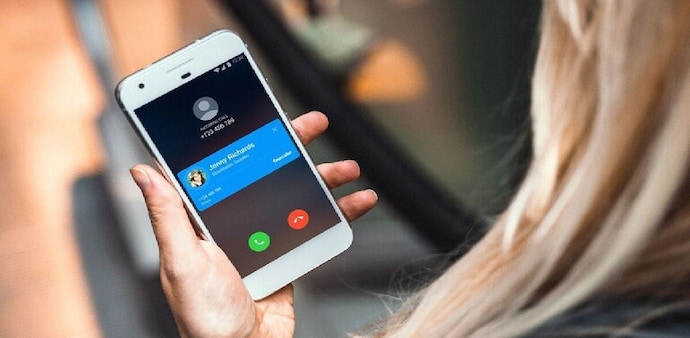
On October 15, the Department of Telecommunications (DoT) directed telecom operators to introduce Calling Name Presentation (CNAP), which showcases the caller's name and number on the recipient’s phone screen during an incoming call, starting November 1. This helps people identify unknown callers.
With the government mandate, there is speculation that the CNAP system could have a direct impact on Truecaller’s business, as users may no longer need to rely as heavily on third-party caller identification apps to identify unknown callers. However, Truecaller CEO Rishit Jhunjhunwala told Business Today that it does not impact the service, but acts as a “good complementary function.”
Must read: No more guesswork with unknown calls? Govt mandates caller name display from November 1
How does CNAP impact Truecaller services?
CNAP is a government-backed caller identification system that displays a caller's verified name, pulled from their SIM card KYC (Know Your Customer) records. It works directly through telecom service providers and does not rely on internet connections or any third-party app support like Truecaller. Initially, the service will be enabled by default for users on 4G and 5G networks.
As far as third-party app services are concerned, Truecaller says that its functions are not solely built on basic caller identification. Its services include providing real-time information from signals and community input to spot suspicious patterns. It also provides greater information apart from the name, such as “Someone you may know,” or “Likely important.” Therefore, the company claims that it offers more than just the caller’s name.
Must read: Jio IPO: How Ambani’s telecom giant stacks up against Mittal’s Bharti Airtel
Jhunjhunwala said, “CNAP has already been rolled out partially in many regions in the country since late last year. Since then, we have noticed that the SIM owner's name is only partially useful.”
“Knowing a name doesn't solve the rise of spam and fraud calls, which is also something Truecaller users love about our service,” he added. He further stated that CNAP could work as a good complementary feature to its services, and that the company “Welcomes the move by the government to increase transparency in mobile communication.”
For Unparalleled coverage of India's Businesses and Economy – Subscribe to Business Today Magazine
On October 15, the Department of Telecommunications (DoT) directed telecom operators to introduce Calling Name Presentation (CNAP), which showcases the caller's name and number on the recipient’s phone screen during an incoming call, starting November 1. This helps people identify unknown callers.
With the government mandate, there is speculation that the CNAP system could have a direct impact on Truecaller’s business, as users may no longer need to rely as heavily on third-party caller identification apps to identify unknown callers. However, Truecaller CEO Rishit Jhunjhunwala told Business Today that it does not impact the service, but acts as a “good complementary function.”
Must read: No more guesswork with unknown calls? Govt mandates caller name display from November 1
How does CNAP impact Truecaller services?
CNAP is a government-backed caller identification system that displays a caller's verified name, pulled from their SIM card KYC (Know Your Customer) records. It works directly through telecom service providers and does not rely on internet connections or any third-party app support like Truecaller. Initially, the service will be enabled by default for users on 4G and 5G networks.
As far as third-party app services are concerned, Truecaller says that its functions are not solely built on basic caller identification. Its services include providing real-time information from signals and community input to spot suspicious patterns. It also provides greater information apart from the name, such as “Someone you may know,” or “Likely important.” Therefore, the company claims that it offers more than just the caller’s name.
Must read: Jio IPO: How Ambani’s telecom giant stacks up against Mittal’s Bharti Airtel
Jhunjhunwala said, “CNAP has already been rolled out partially in many regions in the country since late last year. Since then, we have noticed that the SIM owner's name is only partially useful.”
“Knowing a name doesn't solve the rise of spam and fraud calls, which is also something Truecaller users love about our service,” he added. He further stated that CNAP could work as a good complementary feature to its services, and that the company “Welcomes the move by the government to increase transparency in mobile communication.”
For Unparalleled coverage of India's Businesses and Economy – Subscribe to Business Today Magazine