
Nvidia’s Jensen Huang faces Congress: Why the AI chip scandal could reshape US-China tech relations
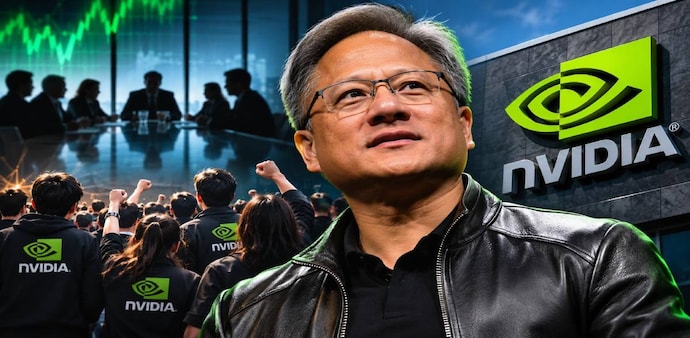
Jensen Huang is scheduled to face questioning by three Republican-led House committees on Tuesday following his reinstatement as chief executive, amid allegations involving the diversion of advanced Nvidia chips to China and national security concerns, AFP reported.
- Nov 29, 2026,
- Updated Nov 29, 2026 4:22 PM IST
The controversy surrounding Nvidia chief executive Jensen Huang could mark a turning point in US-China technology relations, intensifying pressure on Washington to tighten semiconductor export controls and restrict Beijing’s access to advanced artificial intelligence (AI) capabilities.
Huang is scheduled to face questioning by three Republican-led House committees on Tuesday following his reinstatement as chief executive, amid allegations involving the diversion of advanced Nvidia chips to China and national security concerns, AFP reported.
The congressional scrutiny comes just days after Huang returned to lead the US semiconductor giant, following his resignation over a controversy involving alleged personal relationships, including one with a suspected Chinese intelligence operative.
National security takes centre stage
The House Foreign Affairs Committee, Intelligence Committee and Select Committee on China are seeking answers over allegations that Nvidia’s advanced semiconductors were diverted to China through Singapore-based Megaspeed.
“The Nvidia board's brief internal investigation and reinstatement of Jensen Huang do not erase the national security threats and questions that must be addressed,” the committees’ chairmen said in a joint statement, according to AFP.
Lawmakers are particularly concerned about the potential use of advanced American semiconductors in Chinese military applications and the development of Beijing’s AI capabilities.
Nvidia’s general counsel Tim Teter is also scheduled to face congressional questioning on Wednesday, followed by Huang’s appearance before the Senate Banking Committee on Thursday.
Pressure mounts for tighter export controls
The controversy could strengthen bipartisan demands for more stringent semiconductor export restrictions, particularly around transactions involving overseas distributors and intermediaries.
Washington has increasingly viewed advanced computing chips as strategic assets rather than conventional commercial products. These semiconductors underpin generative AI, supercomputing, scientific research and sophisticated military technologies.
Republican Congressman Don Bacon questioned the logic of allowing China access to America’s advanced computing technology.
“We cannot say we want to win the AI race and then give China our best technology,” Bacon wrote on X, AFP reported.
However, US President Donald Trump has defended Huang, insisting that the Nvidia chief does not pose a security threat.
Commercial interests versus technological sovereignty
Stricter export restrictions could have significant commercial implications for American semiconductor manufacturers, potentially limiting access to one of the world’s largest technology markets while increasing regulatory compliance costs.
For China, additional restrictions could accelerate investments in indigenous semiconductor manufacturing, domestic AI accelerators and alternative computing infrastructure, further fragmenting the global technology ecosystem.
The controversy also raises questions about the effectiveness of existing export controls and corporate mechanisms for monitoring the ultimate destination of advanced chips.
Global AI markets on edge
Investors are closely watching the congressional proceedings amid heightened volatility in technology stocks.
Tech industry analyst Dan Ives warned of a “rollercoaster ride ahead”, AFP reported.
The outcome of the hearings could influence Washington’s semiconductor policy, Nvidia’s international business strategy and the broader balance between commercial interests and national security in the increasingly competitive global AI race.
For Unparalleled coverage of India's Businesses and Economy – Subscribe to Business Today Magazine