
OpenAI reveals how Jalapeño Chip performs, wider deployment coming in 2027
OpenAI reveals how Jalapeño Chip performs, wider deployment coming in 2027
OpenAI tested Jalapeño using SemiAnalysis’ InferenceX benchmark, which measures AI inference performance, and the results are said to be quite impressive.
Business Today Desk
- Aug 26, 2026,
- Updated Aug 26, 2026 10:31 AM IST
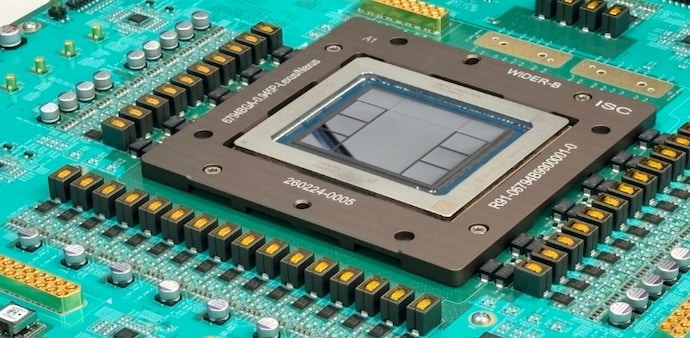
In June, OpenAI launched its first custom inference chip, Jalapeño, and now the company is planning a wider deployment in 2027. It has also provided more details about the chip and revealed its first benchmark results.
OpenAI tested Jalapeño using SemiAnalysis’ InferenceX benchmark, which measures AI inference performance, and the results were quite impressive. As per the company blog post, Jalapeño can deliver more tokens per user, meaning it can deliver faster AI responses.
Advertisement
“Jalapeño delivers both higher throughput and lower latency with one architecture,” OpenAI said. “For customers, that can mean faster responses, more responsive agents, and more reliable access as demand grows,” it added.
What is OpenAI’s Jalapeño, and how does it measure performance benchmarks
Jalapeño is OpenAI’s custom AI inference chip, developed in collaboration with Broadcom. The company presented the chip at the Hot Chips conference, revealing benchmark and performance results. The company used SemiAnalysis’ InferenceX benchmark and tested the chip across several large language models (LLMs).
OpenAI stated that the chip performed better overall across three important areas of AI inference: throughput, power efficiency, and latency. This means that the chip can handle more AI workloads, use less power, and deliver responses faster compared with the systems it was tested against.
Advertisement
Jalapeño performance and benchmarks
OpenAI tested Jalapeño with three AI models: GPT-OSS 120B, DeepSeek R1 670B, and Kimi K2.5 1T, and compared Jalapeño’s performance with other systems.
- Jalapeño processed 1.5 to 1.9 times more AI work per watt than the comparison systems.
- It reduced overall latency by 1.7 to 3.6 times
- For AI applications where users frequently interact with the model, it delivered 2.1 to 4.1 times better performance.
- Jalapeño delivered 8.6 to 104.3 times more work per watt, depending on which AI model was being tested.
OpenAI CEO Sam Altman shared an X post saying, “We made the chip and it's fast.’ OpenAI says that AI infrastructure isn't just about how powerful a chip is, but about how much useful AI work it can deliver for the same amount of electricity and hardware.
Advertisement
The company says that the chip could serve more users and AI requests, reduce the cost of delivering AI responses, and bring faster AI responses. OpenAI says it plans to start deploying Jalapeño inside its own computing infrastructure by the end of 2026.
As of now, OpenAI calls it the first generation of a multi-generation hardware roadmap, which says gen-1 is preparing for deployment, gen-2 is deep in development, and finally gen-3 is in early development and design.
For Unparalleled coverage of India's Businesses and Economy – Subscribe to Business Today Magazine
In June, OpenAI launched its first custom inference chip, Jalapeño, and now the company is planning a wider deployment in 2027. It has also provided more details about the chip and revealed its first benchmark results.
OpenAI tested Jalapeño using SemiAnalysis’ InferenceX benchmark, which measures AI inference performance, and the results were quite impressive. As per the company blog post, Jalapeño can deliver more tokens per user, meaning it can deliver faster AI responses.
Advertisement
“Jalapeño delivers both higher throughput and lower latency with one architecture,” OpenAI said. “For customers, that can mean faster responses, more responsive agents, and more reliable access as demand grows,” it added.
What is OpenAI’s Jalapeño, and how does it measure performance benchmarks
Jalapeño is OpenAI’s custom AI inference chip, developed in collaboration with Broadcom. The company presented the chip at the Hot Chips conference, revealing benchmark and performance results. The company used SemiAnalysis’ InferenceX benchmark and tested the chip across several large language models (LLMs).
OpenAI stated that the chip performed better overall across three important areas of AI inference: throughput, power efficiency, and latency. This means that the chip can handle more AI workloads, use less power, and deliver responses faster compared with the systems it was tested against.
Advertisement
Jalapeño performance and benchmarks
OpenAI tested Jalapeño with three AI models: GPT-OSS 120B, DeepSeek R1 670B, and Kimi K2.5 1T, and compared Jalapeño’s performance with other systems.
- Jalapeño processed 1.5 to 1.9 times more AI work per watt than the comparison systems.
- It reduced overall latency by 1.7 to 3.6 times
- For AI applications where users frequently interact with the model, it delivered 2.1 to 4.1 times better performance.
- Jalapeño delivered 8.6 to 104.3 times more work per watt, depending on which AI model was being tested.
OpenAI CEO Sam Altman shared an X post saying, “We made the chip and it's fast.’ OpenAI says that AI infrastructure isn't just about how powerful a chip is, but about how much useful AI work it can deliver for the same amount of electricity and hardware.
Advertisement
The company says that the chip could serve more users and AI requests, reduce the cost of delivering AI responses, and bring faster AI responses. OpenAI says it plans to start deploying Jalapeño inside its own computing infrastructure by the end of 2026.
As of now, OpenAI calls it the first generation of a multi-generation hardware roadmap, which says gen-1 is preparing for deployment, gen-2 is deep in development, and finally gen-3 is in early development and design.
For Unparalleled coverage of India's Businesses and Economy – Subscribe to Business Today Magazine
Read more!