
Your old phones could be a hidden gold mine: Here’s why e-waste matters
Your old smartphone may be worth more than its resale value. Tiny traces of gold and other metals can become valuable when millions of discarded devices are recycled.
- Aug 12, 2026,
- Updated Aug 12, 2026 7:15 AM IST
If you have a drawer filled with old phones, chargers and other unused gadgets, you may be sitting on something more valuable than you think. Not because each device contains a large amount of precious metal, but because modern electronics pack tiny quantities of valuable materials into a very small space.
Gold is used in electronic components because it conducts electricity well and resists corrosion. Smartphones also contain copper, silver and other valuable materials. When millions of discarded devices are collected together, those small quantities can add up.
Why old phones are being called an “urban mine”
This is where the idea of urban mining comes in. Instead of extracting metals from rocks underground, recyclers recover them from discarded electronics.
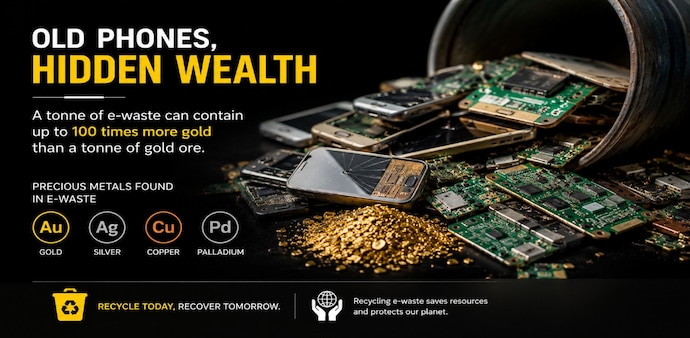
According to a recent United Nations Development Programme (UNDP) article, a tonne of electronic waste can contain up to 100 times more gold than a tonne of mined gold ore. The comparison is about the concentration of gold in the material being processed, not the amount of gold sitting inside one phone.
For you, that means an old smartphone is not a miniature gold bar. The amount of gold in an individual handset is tiny. The opportunity emerges when thousands or millions of devices are collected and processed together.
Why recycling all those metals is difficult
The bigger challenge is getting old electronics into formal recycling systems. The United Nations' Global E-waste Monitor 2024 found that the world generated 62 million tonnes of e-waste in 2022, but only about 22% was formally collected and recycled.
That leaves valuable metals locked inside discarded phones, computers and other electronics instead of being returned to the manufacturing cycle.
What this means for you
Before throwing an old phone into regular waste, consider whether it can be repaired, resold, traded in or sent to an authorised e-waste recycler. Reusing the device is generally preferable when possible, while recycling allows valuable materials to be recovered when the hardware has reached the end of its useful life.
So, the next time you find an old phone at the back of a drawer, remember - it may contain only traces of gold, but at scale, those traces can become a significant resource.
For Unparalleled coverage of India's Businesses and Economy – Subscribe to Business Today Magazine
If you have a drawer filled with old phones, chargers and other unused gadgets, you may be sitting on something more valuable than you think. Not because each device contains a large amount of precious metal, but because modern electronics pack tiny quantities of valuable materials into a very small space.
Gold is used in electronic components because it conducts electricity well and resists corrosion. Smartphones also contain copper, silver and other valuable materials. When millions of discarded devices are collected together, those small quantities can add up.
Why old phones are being called an “urban mine”
This is where the idea of urban mining comes in. Instead of extracting metals from rocks underground, recyclers recover them from discarded electronics.
According to a recent United Nations Development Programme (UNDP) article, a tonne of electronic waste can contain up to 100 times more gold than a tonne of mined gold ore. The comparison is about the concentration of gold in the material being processed, not the amount of gold sitting inside one phone.
For you, that means an old smartphone is not a miniature gold bar. The amount of gold in an individual handset is tiny. The opportunity emerges when thousands or millions of devices are collected and processed together.
Why recycling all those metals is difficult
The bigger challenge is getting old electronics into formal recycling systems. The United Nations' Global E-waste Monitor 2024 found that the world generated 62 million tonnes of e-waste in 2022, but only about 22% was formally collected and recycled.
That leaves valuable metals locked inside discarded phones, computers and other electronics instead of being returned to the manufacturing cycle.
What this means for you
Before throwing an old phone into regular waste, consider whether it can be repaired, resold, traded in or sent to an authorised e-waste recycler. Reusing the device is generally preferable when possible, while recycling allows valuable materials to be recovered when the hardware has reached the end of its useful life.
So, the next time you find an old phone at the back of a drawer, remember - it may contain only traces of gold, but at scale, those traces can become a significant resource.
For Unparalleled coverage of India's Businesses and Economy – Subscribe to Business Today Magazine