
India doesn’t have a skills shortage, it has a readiness crisis in the age of AI
India doesn’t have a skills shortage, it has a readiness crisis in the age of AI
“India’s skills challenge is no longer about whether people hold qualifications. It is about whether they can perform in roles that are changing faster than the systems preparing them,” the report notes.
Business Today Desk
- Mar 31, 2026,
- Updated Mar 31, 2026 11:00 AM IST
India doesn’t have a talent shortage. It has a readiness problem.
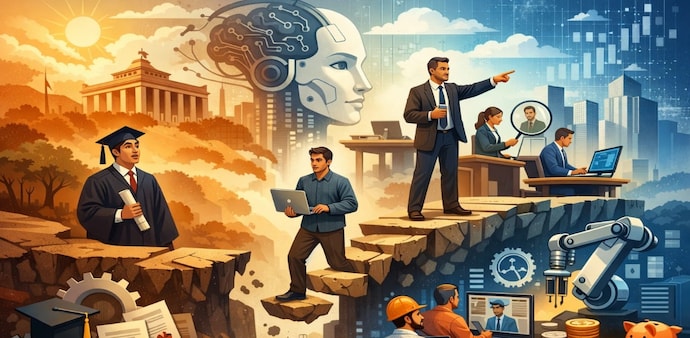
That’s the core takeaway from the India Skills Gap Report 2026 by NIIT, which argues that the country’s workforce is struggling not because people lack degrees, but because they aren’t prepared for how fast jobs are changing.
Advertisement
“India’s skills challenge is no longer about whether people hold qualifications. It is about whether they can perform in roles that are changing faster than the systems preparing them,” the report notes.
As artificial intelligence reshapes work, the definition of being “job-ready” is shifting. “Readiness is no longer a milestone reached at graduation; it must now be rebuilt continuously as work itself evolves,” it adds. The report, based on responses from 3,500 stakeholders including students, professionals, recruiters and CXOs, finds that willingness to learn isn’t the problem.
“Most people are willing to learn. Most organisations are willing to invest. Time expectations are aligned. What is missing is reach,” the report says.
Instead, barriers like cost, discoverability and lack of scalable delivery are holding back participation. “In an AI-shaped economy, the constraint is no longer motivation, it is access at scale,” it adds.
Advertisement
Confidence gap widens at entry level
One of the clearest gaps shows up at the entry level. Confidence in job readiness rises sharply with experience. Senior professionals rate themselves at 82 out of 100, mid-level workers at 75 and early-career talent at 68. Students lag far behind at just 57.
This mismatch is also reflected in expectations.
“51% of academic leaders believe graduates will be employer-ready within three to five years, yet only 35% of students feel very optimistic about their future,” the report says. Meanwhile, employers remain cautious as well. While 86% say skilled talent is available, only 49% are very confident in finding it, and 37% say it takes real effort. AI reshaping employability expectations
Advertisement
The skills gap report notes that AI is rapidly redefining what it means to be “job-ready”, shifting focus from degrees to demonstrable skills.
“As artificial intelligence becomes part of everyday work, the meaning of ‘job-ready’ is being rewritten,” the report said, adding that readiness must now be “rebuilt continuously as work itself evolves.”
However, preparedness remains uneven. While 51% of employers view AI as a driver of cost savings and productivity, only 34% of academic institutions are actively integrating AI and digital skills into curricula, pointing to a growing execution gap.
Mid-career talent crisis
If entry-level talent lacks readiness, mid-career talent is where the system is breaking.
Professionals with 6-15 years of experience are both the most in-demand and the hardest to find. They account for 47% of hiring demand but are also cited as the scarcest talent pool by 38% of recruiters.
This is forcing companies to rethink hiring strategies. Nearly half (46%) now hire a mix of entry-level and experienced workers, while 29% are leaning more heavily on fresh graduates.
Advertisement
But that shift only pushes the problem forward.
“The constraint is no longer hiring. It is capability progression,” the report says.
The degree is losing ground
One of the clearest structural shifts the report shows is the declining value of the college degree as an employment signal.
“Formal qualifications alone no longer signal readiness,” the report says. Employers are increasingly prioritising proof of skills such as portfolios, certifications and real-world work.
A portfolio of work is now the strongest signal, ranked in the top three by 45% of both employers and candidates.
But candidates haven’t fully caught up. While 43% of candidates still prioritise on-the-job experience and 31% value degrees, employers are moving faster toward alternative credentials like micro-certifications (38%) and industry certifications (28%).
The access issue
Despite strong demand for learning, access remains the biggest bottleneck. The report notes that “most people are willing to learn” and “most organisations are willing to invest,” but participation is limited by cost, discoverability and scalability.
Online courses are the most preferred format at 42%, followed by on-the-job learning at 37%. Around 47% of learners are willing to spend two to five hours per week on upskilling, a view mirrored by 49% of employers.
Advertisement
Yet cost remains a barrier for 35-40% of respondents, while about a quarter of students and early-career professionals report low awareness of available options.
Rising budgets fail to translate into impact
The report notes that corporate spending on skills is increasing, but outcomes remain limited. About 69% of organisations increased skills budgets last year, with 49% reporting steady growth, the report said
However, 62% say their learning programmes still reach less than half their workforce, limiting effectiveness. The report attributes this to a continued reliance on external hiring, with 37% of organisations prioritising hiring over reskilling, and only 23% focusing primarily on internal capability building.
“Without scalable delivery models and stronger investment in internal capability development, increased spending is unlikely to result in workforce-wide skill gains,” the report said.
For Unparalleled coverage of India's Businesses and Economy – Subscribe to Business Today Magazine
India doesn’t have a talent shortage. It has a readiness problem.
That’s the core takeaway from the India Skills Gap Report 2026 by NIIT, which argues that the country’s workforce is struggling not because people lack degrees, but because they aren’t prepared for how fast jobs are changing.
Advertisement
“India’s skills challenge is no longer about whether people hold qualifications. It is about whether they can perform in roles that are changing faster than the systems preparing them,” the report notes.
As artificial intelligence reshapes work, the definition of being “job-ready” is shifting. “Readiness is no longer a milestone reached at graduation; it must now be rebuilt continuously as work itself evolves,” it adds. The report, based on responses from 3,500 stakeholders including students, professionals, recruiters and CXOs, finds that willingness to learn isn’t the problem.
“Most people are willing to learn. Most organisations are willing to invest. Time expectations are aligned. What is missing is reach,” the report says.
Instead, barriers like cost, discoverability and lack of scalable delivery are holding back participation. “In an AI-shaped economy, the constraint is no longer motivation, it is access at scale,” it adds.
Advertisement
Confidence gap widens at entry level
One of the clearest gaps shows up at the entry level. Confidence in job readiness rises sharply with experience. Senior professionals rate themselves at 82 out of 100, mid-level workers at 75 and early-career talent at 68. Students lag far behind at just 57.
This mismatch is also reflected in expectations.
“51% of academic leaders believe graduates will be employer-ready within three to five years, yet only 35% of students feel very optimistic about their future,” the report says. Meanwhile, employers remain cautious as well. While 86% say skilled talent is available, only 49% are very confident in finding it, and 37% say it takes real effort. AI reshaping employability expectations
Advertisement
The skills gap report notes that AI is rapidly redefining what it means to be “job-ready”, shifting focus from degrees to demonstrable skills.
“As artificial intelligence becomes part of everyday work, the meaning of ‘job-ready’ is being rewritten,” the report said, adding that readiness must now be “rebuilt continuously as work itself evolves.”
However, preparedness remains uneven. While 51% of employers view AI as a driver of cost savings and productivity, only 34% of academic institutions are actively integrating AI and digital skills into curricula, pointing to a growing execution gap.
Mid-career talent crisis
If entry-level talent lacks readiness, mid-career talent is where the system is breaking.
Professionals with 6-15 years of experience are both the most in-demand and the hardest to find. They account for 47% of hiring demand but are also cited as the scarcest talent pool by 38% of recruiters.
This is forcing companies to rethink hiring strategies. Nearly half (46%) now hire a mix of entry-level and experienced workers, while 29% are leaning more heavily on fresh graduates.
Advertisement
But that shift only pushes the problem forward.
“The constraint is no longer hiring. It is capability progression,” the report says.
The degree is losing ground
One of the clearest structural shifts the report shows is the declining value of the college degree as an employment signal.
“Formal qualifications alone no longer signal readiness,” the report says. Employers are increasingly prioritising proof of skills such as portfolios, certifications and real-world work.
A portfolio of work is now the strongest signal, ranked in the top three by 45% of both employers and candidates.
But candidates haven’t fully caught up. While 43% of candidates still prioritise on-the-job experience and 31% value degrees, employers are moving faster toward alternative credentials like micro-certifications (38%) and industry certifications (28%).
The access issue
Despite strong demand for learning, access remains the biggest bottleneck. The report notes that “most people are willing to learn” and “most organisations are willing to invest,” but participation is limited by cost, discoverability and scalability.
Online courses are the most preferred format at 42%, followed by on-the-job learning at 37%. Around 47% of learners are willing to spend two to five hours per week on upskilling, a view mirrored by 49% of employers.
Advertisement
Yet cost remains a barrier for 35-40% of respondents, while about a quarter of students and early-career professionals report low awareness of available options.
Rising budgets fail to translate into impact
The report notes that corporate spending on skills is increasing, but outcomes remain limited. About 69% of organisations increased skills budgets last year, with 49% reporting steady growth, the report said
However, 62% say their learning programmes still reach less than half their workforce, limiting effectiveness. The report attributes this to a continued reliance on external hiring, with 37% of organisations prioritising hiring over reskilling, and only 23% focusing primarily on internal capability building.
“Without scalable delivery models and stronger investment in internal capability development, increased spending is unlikely to result in workforce-wide skill gains,” the report said.
For Unparalleled coverage of India's Businesses and Economy – Subscribe to Business Today Magazine
Read more!