
India’s new AI export could be human motion data
As humanoid robots leave the lab, India’s vast and diverse workforce could provide the real-world data needed to teach machines how humans work.
- Aug 27, 2026,
- Updated Aug 27, 2026 6:19 PM IST
As the race to build humanoid robots moves beyond computing power and hardware, a new bottleneck is emerging: real-world data that shows how humans perform physical tasks. Instawork Robotics Lab (IRL), the robotics arm of the US-based AI-powered labour marketplace Instawork, is betting that India can become an important source of that data.
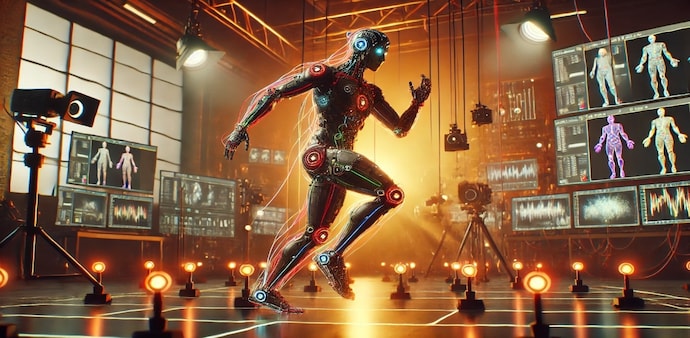
The company has launched Instacore, a wearable five-camera system in India designed to capture human movement and environmental data to train general-purpose robots and physical AI foundation models. The system uses cameras mounted on the head, chest and wrists, along with sensors and a compute backpack, to capture synchronised video, hand movements and spatial information as workers perform their regular tasks.
But for Instawork, India’s attraction is not simply cheaper labour. “It’s not because of the cost that we are here, but because of the diversity of tasks and jobs that we can cover in India,” Vaibhav Pandey, Country Manager, Instawork India, told Business Today.
That diversity could prove critical for physical AI. Unlike software models, which can be trained on vast quantities of text and images, robots need to understand how humans interact with physical environments — how hands move, how objects are picked up and manipulated, and how the same task can be performed differently depending on the setting.
Instawork says Instacore can be deployed across manufacturing, logistics, hospitality, construction, retail and other physical workplaces. The company is deliberately not limiting data collection to one sector. A worker packing shoes, making a bouquet or performing a manufacturing task could all provide useful data, as the objective is to expose models to different movements, tools and environments.
“Compute isn't the bottleneck in physical AI anymore. The scale and diversity of real-world skill data is,” Siddharth Srivastava, Head of IRL, APAC, said in the company’s announcement.
The business opportunity is emerging alongside the data gap. Instawork estimates that the industry collected around 100,000 hours of robot training data in 2024 and about one million hours in 2025. Even if data collection reaches 20 million hours in 2026, the company says that would still be less than 0.04% of what researchers believe is ultimately required.
Instawork’s customers are primarily robotics companies, including those building foundation models, full-stack robots and specialised systems. For these companies, Instawork positions itself as a human-capital layer that can supply physical-world data at scale.
The model could also create a new income stream for workers and businesses. Commercial establishments participating in data collection are compensated for every hour of data captured, and the company says there is no upfront hardware cost or disruption to normal operations.
Pandey sees data collection becoming a new category of employment as physical AI expands. The company also expects demand for workers who can deploy, maintain and troubleshoot robots as they enter real-world environments.
India is also becoming an engineering base for Instawork’s robotics operations. The company has teams in India and the US working on the technology, data pipeline and anonymisation, while its Bengaluru operation is building capabilities around deploying and maintaining the Instacore hardware.
The bigger bet, then, is that India’s next AI export may not be software or models, but the human movement data needed to teach machines how the physical world works.
For Unparalleled coverage of India's Businesses and Economy – Subscribe to Business Today Magazine
As the race to build humanoid robots moves beyond computing power and hardware, a new bottleneck is emerging: real-world data that shows how humans perform physical tasks. Instawork Robotics Lab (IRL), the robotics arm of the US-based AI-powered labour marketplace Instawork, is betting that India can become an important source of that data.
The company has launched Instacore, a wearable five-camera system in India designed to capture human movement and environmental data to train general-purpose robots and physical AI foundation models. The system uses cameras mounted on the head, chest and wrists, along with sensors and a compute backpack, to capture synchronised video, hand movements and spatial information as workers perform their regular tasks.
But for Instawork, India’s attraction is not simply cheaper labour. “It’s not because of the cost that we are here, but because of the diversity of tasks and jobs that we can cover in India,” Vaibhav Pandey, Country Manager, Instawork India, told Business Today.
That diversity could prove critical for physical AI. Unlike software models, which can be trained on vast quantities of text and images, robots need to understand how humans interact with physical environments — how hands move, how objects are picked up and manipulated, and how the same task can be performed differently depending on the setting.
Instawork says Instacore can be deployed across manufacturing, logistics, hospitality, construction, retail and other physical workplaces. The company is deliberately not limiting data collection to one sector. A worker packing shoes, making a bouquet or performing a manufacturing task could all provide useful data, as the objective is to expose models to different movements, tools and environments.
“Compute isn't the bottleneck in physical AI anymore. The scale and diversity of real-world skill data is,” Siddharth Srivastava, Head of IRL, APAC, said in the company’s announcement.
The business opportunity is emerging alongside the data gap. Instawork estimates that the industry collected around 100,000 hours of robot training data in 2024 and about one million hours in 2025. Even if data collection reaches 20 million hours in 2026, the company says that would still be less than 0.04% of what researchers believe is ultimately required.
Instawork’s customers are primarily robotics companies, including those building foundation models, full-stack robots and specialised systems. For these companies, Instawork positions itself as a human-capital layer that can supply physical-world data at scale.
The model could also create a new income stream for workers and businesses. Commercial establishments participating in data collection are compensated for every hour of data captured, and the company says there is no upfront hardware cost or disruption to normal operations.
Pandey sees data collection becoming a new category of employment as physical AI expands. The company also expects demand for workers who can deploy, maintain and troubleshoot robots as they enter real-world environments.
India is also becoming an engineering base for Instawork’s robotics operations. The company has teams in India and the US working on the technology, data pipeline and anonymisation, while its Bengaluru operation is building capabilities around deploying and maintaining the Instacore hardware.
The bigger bet, then, is that India’s next AI export may not be software or models, but the human movement data needed to teach machines how the physical world works.
For Unparalleled coverage of India's Businesses and Economy – Subscribe to Business Today Magazine