
Micron’s Rs 22,516 crore bet on India: What the Sanand facility will produce and why it matters
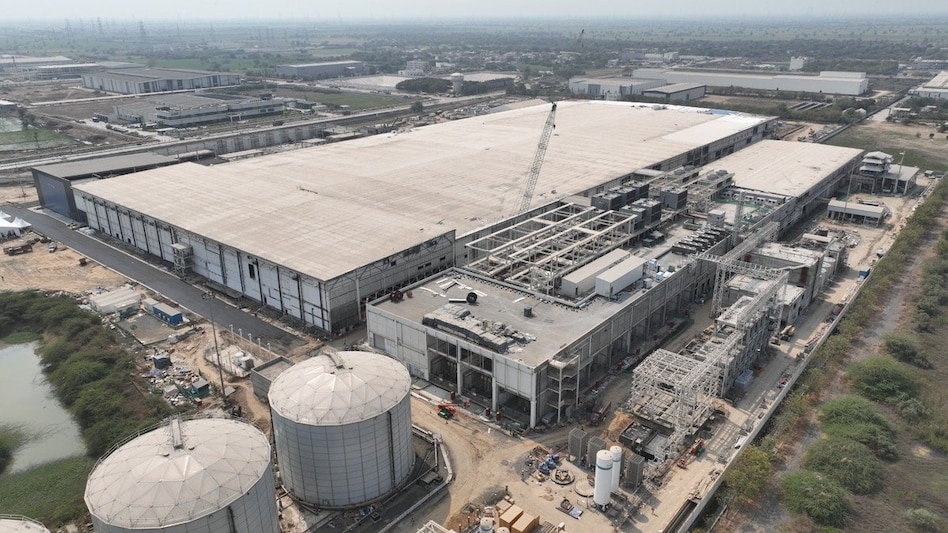
The plant, built with an investment of Rs 22,516 crore under the National Semiconductor Mission, is India's first large-scale facility dedicated to assembling and packaging advanced memory chips used in artificial intelligence (AI), data centres, smartphones and other systems
- Feb 27, 2026,
- Updated Feb 27, 2026 1:45 PM IST
Prime Minister Narendra Modi is set to inaugurate Micron Technology’s semiconductor facility in Sanand, Gujarat, on 28 February, marking a significant milestone in India’s ambitions to become a global hub for chip manufacturing.
The plant, built with an investment of Rs 22,516 crore under the National Semiconductor Mission, is India's first large-scale facility dedicated to assembling and packaging advanced memory chips used in artificial intelligence (AI), data centres, smartphones and other systems.
While currently India does not manufacture semiconductor wafers at scale, the Sanand plant places it firmly within the global chip supply chain by focusing on the final and crucial stages of production.
What the Sanand plant will produce
The facility is an ATMP plant, short for Assembly, Testing, Marking and Packaging. In simple terms, this is where finished silicon chips are converted into usable products that can be installed inside computers, servers and electronic devices.
Micron will package memory components such as DRAM (Dynamic Random Access Memory), which allows computers to run applications smoothly, and NAND flash memory, which stores data permanently in devices like smartphones and solid-state drives (SSDs). These components are essential for AI systems, which require vast amounts of memory to process data quickly.
The plant will also manufacture SSDs, modern storage devices that have largely replaced traditional hard drives due to their speed and reliability. Much of the output is expected to be exported to global markets.
Why memory matters for AI
Unlike traditional software, AI models must process large datasets in real time. This requires both fast working memory and high-capacity storage. Without these components, even the most advanced processors cannot function effectively.
Micron President and CEO Sanjay Mehrotra has emphasised that memory and storage are foundational to AI infrastructure, enabling faster responses and handling increasingly complex workloads. As generative AI and cloud computing expand, demand for memory chips is rising sharply worldwide.
From sand to chip: Where ATMP fits in
Semiconductor production is a multi-stage process that begins with sand. Silicon extracted from sand is purified, melted and formed into cylindrical blocks called ingots. These are sliced into ultra-thin discs known as wafers. In specialised fabrication plants, microscopic circuits are etched onto the wafers using photolithography, creating billions of tiny transistors.
Once the circuits are complete, the wafers are cut into individual chips. At this stage, however, the chips are fragile and cannot yet be used in devices.
This is where an ATMP facility comes in. The Sanand plant will assemble these raw chips into protective packages, test them to ensure they meet performance standards, mark them with identification details and prepare them for shipment. Packaging is critical because it determines how efficiently a chip connects.
Jobs, ecosystem and strategic impact
The facility currently employs about 2,000 people, with direct employment expected to rise to around 5,000 as operations scale up. The project is also expected to generate indirect jobs across logistics, suppliers and support services.
India remains heavily dependent on imported semiconductors, a vulnerability highlighted during recent global chip shortages. By hosting advanced packaging operations for a major global player like Micron, the country aims to build skills, infrastructure and supply networks that could eventually support full manufacturing capabilities.
With inputs from Brijesh Doshi, India Today Group.
For Unparalleled coverage of India's Businesses and Economy – Subscribe to Business Today Magazine
Prime Minister Narendra Modi is set to inaugurate Micron Technology’s semiconductor facility in Sanand, Gujarat, on 28 February, marking a significant milestone in India’s ambitions to become a global hub for chip manufacturing.
The plant, built with an investment of Rs 22,516 crore under the National Semiconductor Mission, is India's first large-scale facility dedicated to assembling and packaging advanced memory chips used in artificial intelligence (AI), data centres, smartphones and other systems.
While currently India does not manufacture semiconductor wafers at scale, the Sanand plant places it firmly within the global chip supply chain by focusing on the final and crucial stages of production.
What the Sanand plant will produce
The facility is an ATMP plant, short for Assembly, Testing, Marking and Packaging. In simple terms, this is where finished silicon chips are converted into usable products that can be installed inside computers, servers and electronic devices.
Micron will package memory components such as DRAM (Dynamic Random Access Memory), which allows computers to run applications smoothly, and NAND flash memory, which stores data permanently in devices like smartphones and solid-state drives (SSDs). These components are essential for AI systems, which require vast amounts of memory to process data quickly.
The plant will also manufacture SSDs, modern storage devices that have largely replaced traditional hard drives due to their speed and reliability. Much of the output is expected to be exported to global markets.
Why memory matters for AI
Unlike traditional software, AI models must process large datasets in real time. This requires both fast working memory and high-capacity storage. Without these components, even the most advanced processors cannot function effectively.
Micron President and CEO Sanjay Mehrotra has emphasised that memory and storage are foundational to AI infrastructure, enabling faster responses and handling increasingly complex workloads. As generative AI and cloud computing expand, demand for memory chips is rising sharply worldwide.
From sand to chip: Where ATMP fits in
Semiconductor production is a multi-stage process that begins with sand. Silicon extracted from sand is purified, melted and formed into cylindrical blocks called ingots. These are sliced into ultra-thin discs known as wafers. In specialised fabrication plants, microscopic circuits are etched onto the wafers using photolithography, creating billions of tiny transistors.
Once the circuits are complete, the wafers are cut into individual chips. At this stage, however, the chips are fragile and cannot yet be used in devices.
This is where an ATMP facility comes in. The Sanand plant will assemble these raw chips into protective packages, test them to ensure they meet performance standards, mark them with identification details and prepare them for shipment. Packaging is critical because it determines how efficiently a chip connects.
Jobs, ecosystem and strategic impact
The facility currently employs about 2,000 people, with direct employment expected to rise to around 5,000 as operations scale up. The project is also expected to generate indirect jobs across logistics, suppliers and support services.
India remains heavily dependent on imported semiconductors, a vulnerability highlighted during recent global chip shortages. By hosting advanced packaging operations for a major global player like Micron, the country aims to build skills, infrastructure and supply networks that could eventually support full manufacturing capabilities.
With inputs from Brijesh Doshi, India Today Group.
For Unparalleled coverage of India's Businesses and Economy – Subscribe to Business Today Magazine