
'Temple is not made for India': Deepinder Goyal responds to criticism over Rs 85,000 wearable
Temple is made for the world. Please check pricing. We don't expect any more than 1% of Temples being sold in India. If you are upset that the pricing is too high, I am sorry, says Deepinder Goyal
- Nov 8, 2026,
- Updated Nov 8, 2026 6:45 PM IST
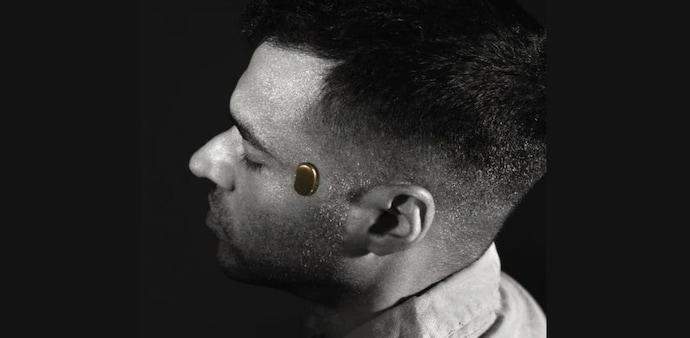
Zomato founder Deepinder Goyal on Sunday defended his wearable device Temple amid criticism over its Rs 85,000 price tag and scientific claims. He said the product was designed for a global market and that he expected no more than 1% of its sales to come from India.
In a detailed post on X, Goyal responded to questions raised over the device's pricing, scientific validation and positioning as a fitness and AI product.
"Temple is not made for India. It’s made for the world. Please check pricing. We don’t expect any more than 1% of Temples being sold in India," he wrote. "If you are upset that the pricing is too high, I am sorry. There's a lot of work that went into Temple, and we priced it at what we think it’s worth. If you think it's overpriced, you can wait for user reviews to decide if it's worth your money."
Read More: 'Humanity’s last personal device': Temple founder Deepinder Goyal shares vision for AI wearable
He also rejected the idea that Temple should receive support simply because it was developed by an Indian startup. "Please do not support us because we are an Indian startup. We want to compete globally. We don’t need/want nationalist support. Support us if you want to support early innovation, which could help you live a better life, and will continue to add more proof to its science over the years."
Goyal founded Temple, a wearable technology startup, in 2024 and currently serves as its founder and CEO.
'We didn't make any medical claim'
The device has attracted scrutiny from medical professionals who have questioned the scientific evidence behind its claims, particularly its ability to monitor changes in blood flow to the brain.
The entrepreneur maintained that Temple was not intended for medical diagnosis or treatment.
"We didn’t make any medical claim. Doctors primarily see things from a medical lens, so they see every claim as a medical claim. I repeat – Temple is strictly a fitness + AI device, and we've made no medical claims. Temple is not proven to diagnose or prevent any disease. It doesn't do anything which replaces the need for you to see a doctor."
On questions about scientific evidence, Goyal said customers could decide whether to purchase the product before peer-reviewed research became available.
"There are different audiences which buy products at various levels of proof. Proof goes from whitepaper -> pre-print -> peer-reviewed. You are free to sit on the fence until peer-reviewed proof arrives. You are free to not believe it even then. Nobody is forcing you to buy."
He added that the company would comply with regulatory requirements before making any claims requiring approval.
In Case You Missed It: 'Spent $30 million, including $20 million of my own': Deepinder Goyal responds to doctors questioning Temple
Entropy, not Brain Flow, is Temple's main focus
The Temple CEO also clarified that Brain Flow, one of the device's widely discussed features, was not its primary purpose. "The main point of Temple is NOT Brain Flow. That’s what we just started Temple for, and studies on Brain Flow are the first ones getting out."
Instead, he identified Entropy, a proprietary metric intended to measure physiological strain, as the central feature. "The main point of Temple is Entropy (I shared the HomeScreen of Temple three months ago with Entropy as the main thing). Our emails to our waitlisted users only talk about Entropy. We haven’t published anything on Entropy yet. We will."
The scientific validity of the metric remains under scrutiny, with independent validation yet to be established publicly.
Goyal also said Roomdeaf AI, another capability being developed for Temple, was an expansion of the product rather than a change in direction. "Roomdeaf AI is an expansion of the device’s capabilities, and our vision for Temple. It is not a pivot."
Addressing criticism on social media, he said the company would follow regulatory requirements wherever applicable. "Social media is not the regulator for Temple. Wherever we need regulatory clearances, we will have them before we make any claim needing them."
The Temple CEO said he would publish a separate detailed note explaining how Brain Flow was calculated, its potential uses, and its limitations.
For Unparalleled coverage of India's Businesses and Economy – Subscribe to Business Today Magazine