
'White-collar jobs aren't going away...': LSE professor challenges AI automation claims
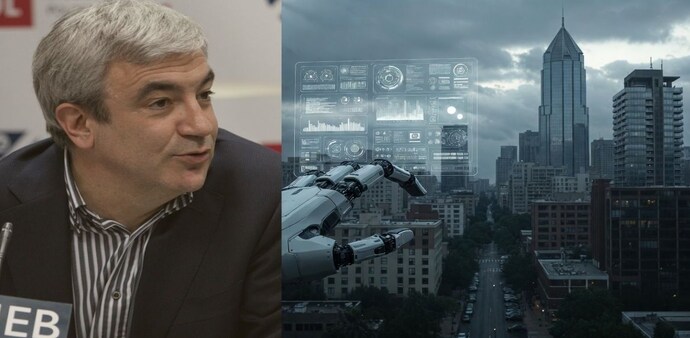
'I believe AI is a huge deal, and will radically change the world. But many white-collar jobs are Messy jobs, as our book will explain: automating the automatable tasks within them is not near to automating the job,' says professor Luis Garicano
- Feb 16, 2026,
- Updated Feb 16, 2026 2:32 PM IST
Luis Garicano, a professor at the London School of Economics, has rejected claims that artificial intelligence (AI) will soon replace most professional workers. He argued that the nature of many jobs makes full automation unlikely. "No, the white-collar jobs are not going away in 18 months," he said in a post responding to warnings that AI could automate office work within months.
The professor criticised comments attributed to Microsoft AI chief Mustafa Suleyman that many office roles would soon be automated. "I was furious with the populist-baiting language that Microsoft's Mustafa Suleyman used in his FT interview, threatening everyone's jobs: 'White-collar work, where you’re sitting down at a computer, either being a lawyer or an accountant or a project manager or a marketing person — most of those tasks will be fully automated by an AI within the next 12 to 18 months.'"
Garicano said artificial intelligence would be transformative but not in the way often predicted. He said AI is a huge deal, and "will radically change the world." But, he added, many white-collar jobs are messy jobs, "as our book will explain: automating the automatable tasks within them is not near to automating the job."
Why automation has limits
To illustrate, he pointed to housing construction in London, where shortages persist despite existing technology. He said London needs 88,000 new homes per year, but in the first nine months of 2025, just 3,248 private homes started construction. "Twenty-three of London's thirty-three boroughs recorded zero new housing starts in the first quarter of 2025. Planning permissions have fallen to their lowest level since records began in 2006. Construction of new rental homes fell by 80 percent in a single year. All this is after Starmer declared his government wants to 'build, baby, build.' Does anyone think AI will fix this?"
The professor argued that the obstacle is human coordination rather than technical capability. He further pointed out that all the technology to design a building exists, and existed pre-AI. "The bottleneck in London housing is human," he said. "What stops homes from being built in London are environmental and land use regulations and neighbors that weponize them. AI can draft the review, but that is a trivial bit. It cannot convince the environmental group to drop its lawsuit or persuade politicians or negotiate with the neighbors."
Garicano cited a similar example from the healthcare sector, where it was feared that radiologists would lose their jobs due to automation. He said radiologists spend only 1/3 of their time reading scans. "Their job was supposed to be gone in 2017; in fact, the demand for radiologists is booming (employment and wages are sharply up). Many consultants try to elicit the tacit, local knowledge of what is actually going on in a firm in order to make a recommendation. Yes, if you spend your day just doing PPTs, you will be replaced. But how many people do just that?"
The professor argued that many professional roles depend on authority and accountability - elements that require human responsibility in unpredictable situations. "Organisations/managers resolve conflicts and deal with exceptions. Making a decision stick requires authority: being a person who can be blamed, sued, or fired," he said. "The manager resolves disputes about the rules, not just within them. Think of your last renovation in your house. The contractor trying to get the guy installing the windows and the guys from the floor to show up and do a good job, a mess right? No algorithm does that."
What AI will change
He said artificial intelligence will reshape work rather than eliminate it. AI, he said, will make white-collar workers more productive. "Some single-task, automatable roles will shrink (doing taxes is an expert system, drafting contracts too), many tasks will be automated," the professor said. "Also, the disruption of career ladders is a real concern. But 'most tasks fully automated in 18 months' is not a prediction. It is marketing, designed to sell enterprise subscriptions and justify capital expenditure."
He concluded that human complexity remains central to economic activity. "The real world is messy. The mess is not a bug. It is what happens when human beings with competing interests try to get things done together."
For Unparalleled coverage of India's Businesses and Economy – Subscribe to Business Today Magazine
Luis Garicano, a professor at the London School of Economics, has rejected claims that artificial intelligence (AI) will soon replace most professional workers. He argued that the nature of many jobs makes full automation unlikely. "No, the white-collar jobs are not going away in 18 months," he said in a post responding to warnings that AI could automate office work within months.
The professor criticised comments attributed to Microsoft AI chief Mustafa Suleyman that many office roles would soon be automated. "I was furious with the populist-baiting language that Microsoft's Mustafa Suleyman used in his FT interview, threatening everyone's jobs: 'White-collar work, where you’re sitting down at a computer, either being a lawyer or an accountant or a project manager or a marketing person — most of those tasks will be fully automated by an AI within the next 12 to 18 months.'"
Garicano said artificial intelligence would be transformative but not in the way often predicted. He said AI is a huge deal, and "will radically change the world." But, he added, many white-collar jobs are messy jobs, "as our book will explain: automating the automatable tasks within them is not near to automating the job."
Why automation has limits
To illustrate, he pointed to housing construction in London, where shortages persist despite existing technology. He said London needs 88,000 new homes per year, but in the first nine months of 2025, just 3,248 private homes started construction. "Twenty-three of London's thirty-three boroughs recorded zero new housing starts in the first quarter of 2025. Planning permissions have fallen to their lowest level since records began in 2006. Construction of new rental homes fell by 80 percent in a single year. All this is after Starmer declared his government wants to 'build, baby, build.' Does anyone think AI will fix this?"
The professor argued that the obstacle is human coordination rather than technical capability. He further pointed out that all the technology to design a building exists, and existed pre-AI. "The bottleneck in London housing is human," he said. "What stops homes from being built in London are environmental and land use regulations and neighbors that weponize them. AI can draft the review, but that is a trivial bit. It cannot convince the environmental group to drop its lawsuit or persuade politicians or negotiate with the neighbors."
Garicano cited a similar example from the healthcare sector, where it was feared that radiologists would lose their jobs due to automation. He said radiologists spend only 1/3 of their time reading scans. "Their job was supposed to be gone in 2017; in fact, the demand for radiologists is booming (employment and wages are sharply up). Many consultants try to elicit the tacit, local knowledge of what is actually going on in a firm in order to make a recommendation. Yes, if you spend your day just doing PPTs, you will be replaced. But how many people do just that?"
The professor argued that many professional roles depend on authority and accountability - elements that require human responsibility in unpredictable situations. "Organisations/managers resolve conflicts and deal with exceptions. Making a decision stick requires authority: being a person who can be blamed, sued, or fired," he said. "The manager resolves disputes about the rules, not just within them. Think of your last renovation in your house. The contractor trying to get the guy installing the windows and the guys from the floor to show up and do a good job, a mess right? No algorithm does that."
What AI will change
He said artificial intelligence will reshape work rather than eliminate it. AI, he said, will make white-collar workers more productive. "Some single-task, automatable roles will shrink (doing taxes is an expert system, drafting contracts too), many tasks will be automated," the professor said. "Also, the disruption of career ladders is a real concern. But 'most tasks fully automated in 18 months' is not a prediction. It is marketing, designed to sell enterprise subscriptions and justify capital expenditure."
He concluded that human complexity remains central to economic activity. "The real world is messy. The mess is not a bug. It is what happens when human beings with competing interests try to get things done together."
For Unparalleled coverage of India's Businesses and Economy – Subscribe to Business Today Magazine