
Who is Tanay Kothari: The Indian-origin founder betting on a voice-first future with Wispr Flow
Kothari often frames his work as a generational shift rather than a feature upgrade. In his LinkedIn bio, he says he is building “a future where my kids aren’t stuck to phone screens all day, a future that is voice-first, not screen-first.”
- Feb 25, 2026,
- Updated Feb 25, 2026 10:43 AM IST
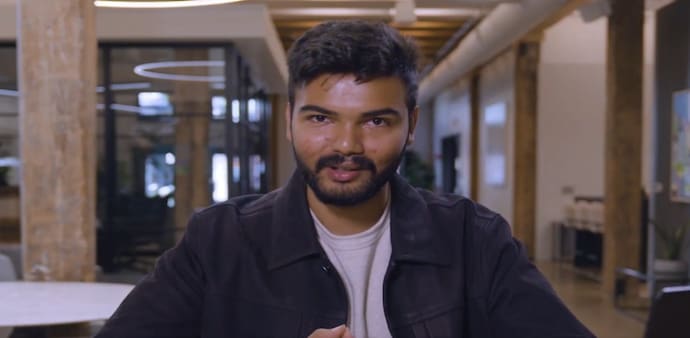
Tanay Kothari does not want the next generation glued to screens. The Delhi-born entrepreneur is building Wispr Flow around a simple idea: speaking should replace typing as the primary way humans interact with computers.
As co-founder and CEO of the San Francisco-based startup, Kothari is leading one of the most ambitious attempts to make voice the default input method across devices. The company recently expanded its AI-powered dictation tool to Android, completing a cross-platform rollout across Mac, Windows, iOS and now the world’s largest mobile operating system.
From Delhi classrooms to Silicon Valley
Kothari’s journey began in New Delhi at Delhi Public School, R.K. Puram, where he graduated as salutatorian with a 98% score in science. He served as Head Boy, led student organisations and was deeply involved in computer science and aerospace clubs.
Even before college, he was already building products. Between 2011 and 2015, while still in school, he launched seven mobile and desktop applications across categories such as voice assistants, safety tools and education. These apps collectively attracted more than 30,000 downloads from 17 countries.
He went on to study computer science at Stanford University from 2016 to 2020, focusing on artificial intelligence, machine learning and venture capital ecosystems. He later taught Stanford’s deep learning course (CS230) as a teaching assistant alongside AI pioneer Andrew Ng.
Kothari also worked on cutting-edge medical AI research at Stanford’s AIMI lab, co-authoring a paper on detecting pulmonary embolism in CT scans that was published in npj Digital Medicine.
Early startup instincts
Kothari’s entrepreneurial streak predates Wispr Flow. As a teenager, he co-founded music intelligence platform Convert.cc, which reached 2.5 million monthly users without marketing, and social travel app Proximity.
He also interned at Microsoft as a program manager, where he led a personalisation project for Microsoft News that reportedly increased revenue across hundreds of millions of users.
In 2020, he founded FeatherX, a personalisation platform for e-commerce websites that was acquired within months by Cerebra Technologies. He later served as Head of Product and then Head of Engineering at the company, scaling teams and building core infrastructure.
Building Wispr Flow
Kothari and his batchmate Sahaj Garg founded Wispr Flow in 2021 to create what he describes as “the best voice interfaces in the world.” The startup has since raised about $81 million from major venture capital firms, including Menlo Ventures, NEA, 8VC and Neo.
The product focuses on AI-driven dictation that not only transcribes speech but also corrects grammar, understands context and adapts to individual speaking styles. The company began with desktop users before expanding to mobile platforms, positioning itself as a productivity tool for professionals who spend hours writing emails, documents and messages.
On Android, Wispr Flow uses a floating interface instead of a keyboard replacement, reflecting the platform’s flexibility and fragmentation. The launch signals the startup’s ambition to compete directly with built-in voice tools from Google and Apple.
Kothari often frames his work as a generational shift rather than a feature upgrade. In his LinkedIn bio, he says he is building “a future where my kids aren’t stuck to phone screens all day, a future that is voice-first, not screen-first.”
For Unparalleled coverage of India's Businesses and Economy – Subscribe to Business Today Magazine
Tanay Kothari does not want the next generation glued to screens. The Delhi-born entrepreneur is building Wispr Flow around a simple idea: speaking should replace typing as the primary way humans interact with computers.
As co-founder and CEO of the San Francisco-based startup, Kothari is leading one of the most ambitious attempts to make voice the default input method across devices. The company recently expanded its AI-powered dictation tool to Android, completing a cross-platform rollout across Mac, Windows, iOS and now the world’s largest mobile operating system.
From Delhi classrooms to Silicon Valley
Kothari’s journey began in New Delhi at Delhi Public School, R.K. Puram, where he graduated as salutatorian with a 98% score in science. He served as Head Boy, led student organisations and was deeply involved in computer science and aerospace clubs.
Even before college, he was already building products. Between 2011 and 2015, while still in school, he launched seven mobile and desktop applications across categories such as voice assistants, safety tools and education. These apps collectively attracted more than 30,000 downloads from 17 countries.
He went on to study computer science at Stanford University from 2016 to 2020, focusing on artificial intelligence, machine learning and venture capital ecosystems. He later taught Stanford’s deep learning course (CS230) as a teaching assistant alongside AI pioneer Andrew Ng.
Kothari also worked on cutting-edge medical AI research at Stanford’s AIMI lab, co-authoring a paper on detecting pulmonary embolism in CT scans that was published in npj Digital Medicine.
Early startup instincts
Kothari’s entrepreneurial streak predates Wispr Flow. As a teenager, he co-founded music intelligence platform Convert.cc, which reached 2.5 million monthly users without marketing, and social travel app Proximity.
He also interned at Microsoft as a program manager, where he led a personalisation project for Microsoft News that reportedly increased revenue across hundreds of millions of users.
In 2020, he founded FeatherX, a personalisation platform for e-commerce websites that was acquired within months by Cerebra Technologies. He later served as Head of Product and then Head of Engineering at the company, scaling teams and building core infrastructure.
Building Wispr Flow
Kothari and his batchmate Sahaj Garg founded Wispr Flow in 2021 to create what he describes as “the best voice interfaces in the world.” The startup has since raised about $81 million from major venture capital firms, including Menlo Ventures, NEA, 8VC and Neo.
The product focuses on AI-driven dictation that not only transcribes speech but also corrects grammar, understands context and adapts to individual speaking styles. The company began with desktop users before expanding to mobile platforms, positioning itself as a productivity tool for professionals who spend hours writing emails, documents and messages.
On Android, Wispr Flow uses a floating interface instead of a keyboard replacement, reflecting the platform’s flexibility and fragmentation. The launch signals the startup’s ambition to compete directly with built-in voice tools from Google and Apple.
Kothari often frames his work as a generational shift rather than a feature upgrade. In his LinkedIn bio, he says he is building “a future where my kids aren’t stuck to phone screens all day, a future that is voice-first, not screen-first.”
For Unparalleled coverage of India's Businesses and Economy – Subscribe to Business Today Magazine