
Ranbir Kapoor's 'India had flying cars 5,000 years before Elon Musk' remark goes viral. What he said
Kapoor, who plays Lord Rama in Nitesh Tiwari's film adaptation of the Hindu epic, appeared to make the comment in a light-hearted vein while discussing the movie's depiction of the legendary flying chariot.
- Nov 2, 2026,
- Updated Nov 2, 2026 9:41 AM IST
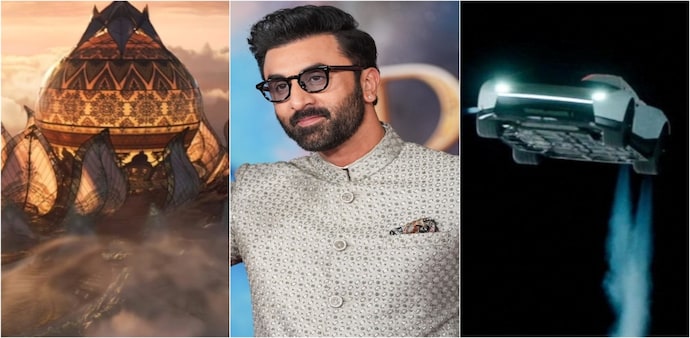
Actor Ranbir Kapoor has drawn a playful parallel between Elon Musk's newly showcased flying Tesla Roadster and the Pushpaka Vimana of the Ramayana, saying India had "invented" a flying vehicle 5,000 years ago. The remark came during a promotional interaction for Ramayana, which is scheduled to release on November 5.
Speaking during a special interview with TV presenter Suma on her show Chat Show ahead of the film's release, Kapoor referenced Musk's recent demonstration of Tesla's next-generation Roadster. "Elon Musk recently invented a flying car. I think India did it 5,000 years ago!" he said, referring to the Pushpaka Vimana.
In another version of the interaction, the actor reportedly said, "I must also add that Elon Musk recently invented a flying car," before adding that India had done so millennia earlier.
Kapoor, who plays Lord Rama in Nitesh Tiwari's film adaptation of the Hindu epic, appeared to make the comment in a light-hearted vein while discussing the movie's depiction of the legendary flying chariot.
The Tesla connection
The actor's reference was to Tesla's redesigned Roadster, which Musk showcased at an event in Texas on October 15. The vehicle was presented with rocket-style thrusters, with Musk suggesting it could take flight.
Kapoor's comparison quickly circulated on social media after a clip from the interview was shared online, drawing both amusement and criticism from users who questioned the comparison between mythology and modern engineering.
Pushpaka Vimana in the epic
The Pushpaka Vimana is described in Hindu epics, including the Valmiki Ramayana, as a divine, self-moving aerial vehicle associated with Ravana. In the forthcoming film, it is expected to feature prominently in the visual retelling of the epic.
In Nitesh Tiwari's Ramayana, the Pushpaka Vimana is not simply a decorative flying object; it is central to the film's Ravana-Jatayu battle sequence. Director Nitesh Tiwari said the team spent nearly two years developing the vehicle's final look, exploring 40 to 50 designs before finalising one.
MUST READ: Inside Ramayana’s VFX universe: How DNEG is building a mythological world for global cinema
The Ravana-Jatayu sequence, in which the Pushpaka Vimana appears, took approximately six-and-a-half years to complete, according to Tiwari. He said thousands of VFX artists worked across days and nights to refine individual frames, including details such as clouds, contrast and depth.
While Kapoor's statement framed the ancient description as an early "flying car," the Pushpaka Vimana remains a mythological and literary concept rather than a documented technological invention.
The comment arrives at a high-visibility moment for Ramayana, with Kapoor leading promotions less than a week before its November 5 release. The actor's remarks have added to online conversation around the film's ambitious visual interpretation of the epic, including its rendering of the Pushpaka Vimana.