
'Without MGR, no Saroja Devi': Screen icon who shaped a generation leaves behind a rich legacy
Her records are unmatched: the only Indian actress to headline 154 lead roles in just 23 years, and 161 consecutive films as the main heroine from 1955 to 1984. An astounding 147 of those were box office hits — a feat no actress has replicated.
- Jul 15, 2025,
- Updated Jul 15, 2025 8:52 AM IST
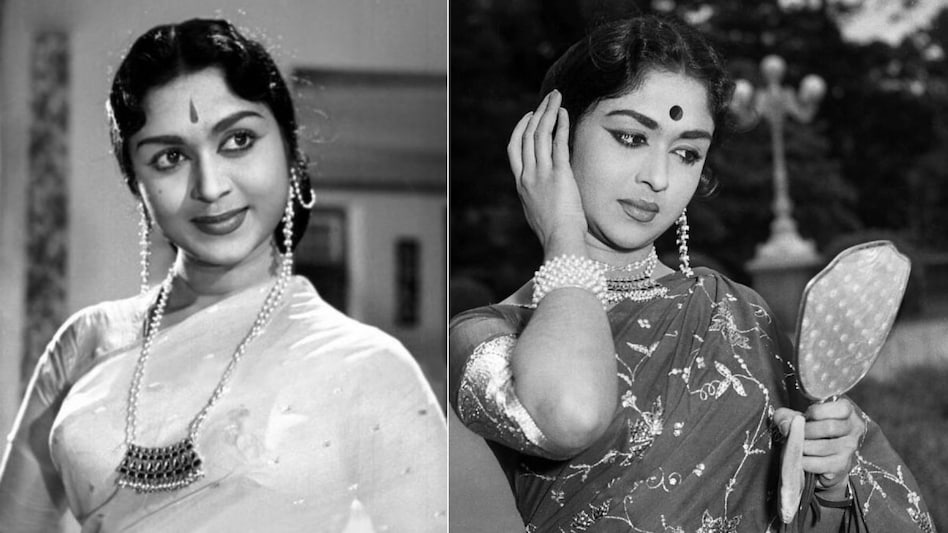
The great B. Saroja Devi is no more. The South Indian screen legend, who passed away at 87 in her Bengaluru home on July 14, leaves behind not just an illustrious filmography — but an era.
Known for her magnetic screen presence, B. Saroja Devi starred in over 200 films across Tamil, Telugu, Kannada, and Hindi — carving her name among Indian cinema’s true greats. Her on-screen pairing with M.G. Ramachandran (MGR) remains iconic, producing classics like Nadodi Mannan (1958), Deiva Thai (1964), and Anbe Vaa (1966). Though their professional bond ended in 1967 over a misunderstanding, the admiration remained. In a 2016 interview, she called MGR her anbu daivam — “lovable god.”
Her records are unmatched: the only Indian actress to headline 154 lead roles in just 23 years, and 161 consecutive films as the main heroine from 1955 to 1984. An astounding 147 of those were box office hits — a feat no actress has replicated.
Recognized with the Padma Shri (1969) and Padma Bhushan (1992), Saroja Devi also received the Kalaimamani award from the Tamil Nadu government and an honorary doctorate from Bangalore University for her contributions to cinema.
Born in Bangalore in 1938, her father, a police officer, encouraged her to learn classical dance — a skill that shaped her early film roles. She married industrialist Shri Harsha in 1967 and considered leaving cinema. But at the insistence of MGR and Dilip Kumar, she stayed, delivering some of her most iconic performances.
After her husband's death in 1986, she never remarried. “I couldn’t think of anyone else in his place. I was confident I could manage life without a male companion,” she once said.
Despite her superstar status, she was known for her humility. She never displayed diva behavior and remained deeply respected by colleagues and fans. She was affectionately known as Kannadathu Paingili (Kannada’s parrot) and Abhinaya Saraswathi (Saraswathi of expression).
She also broke ground in color cinema, starring in Amarashilpi Jakanachaari (1964), Kannada’s first full-length color film, and was one of the first Indian heroines to gain pan-India fame.
Saroja Devi’s passing marks more than just the end of a life — it closes a cinematic chapter few could rival.
The great B. Saroja Devi is no more. The South Indian screen legend, who passed away at 87 in her Bengaluru home on July 14, leaves behind not just an illustrious filmography — but an era.
Known for her magnetic screen presence, B. Saroja Devi starred in over 200 films across Tamil, Telugu, Kannada, and Hindi — carving her name among Indian cinema’s true greats. Her on-screen pairing with M.G. Ramachandran (MGR) remains iconic, producing classics like Nadodi Mannan (1958), Deiva Thai (1964), and Anbe Vaa (1966). Though their professional bond ended in 1967 over a misunderstanding, the admiration remained. In a 2016 interview, she called MGR her anbu daivam — “lovable god.”
Her records are unmatched: the only Indian actress to headline 154 lead roles in just 23 years, and 161 consecutive films as the main heroine from 1955 to 1984. An astounding 147 of those were box office hits — a feat no actress has replicated.
Recognized with the Padma Shri (1969) and Padma Bhushan (1992), Saroja Devi also received the Kalaimamani award from the Tamil Nadu government and an honorary doctorate from Bangalore University for her contributions to cinema.
Born in Bangalore in 1938, her father, a police officer, encouraged her to learn classical dance — a skill that shaped her early film roles. She married industrialist Shri Harsha in 1967 and considered leaving cinema. But at the insistence of MGR and Dilip Kumar, she stayed, delivering some of her most iconic performances.
After her husband's death in 1986, she never remarried. “I couldn’t think of anyone else in his place. I was confident I could manage life without a male companion,” she once said.
Despite her superstar status, she was known for her humility. She never displayed diva behavior and remained deeply respected by colleagues and fans. She was affectionately known as Kannadathu Paingili (Kannada’s parrot) and Abhinaya Saraswathi (Saraswathi of expression).
She also broke ground in color cinema, starring in Amarashilpi Jakanachaari (1964), Kannada’s first full-length color film, and was one of the first Indian heroines to gain pan-India fame.
Saroja Devi’s passing marks more than just the end of a life — it closes a cinematic chapter few could rival.