
Budget 2026: Industry hails data centre tax holiday as move to make India 'digital backbone for the world'
The measures come as India looks to scale domestic digital infrastructure alongside rising demand from artificial intelligence workloads, data localisation norms and hyperscaler expansion plans.
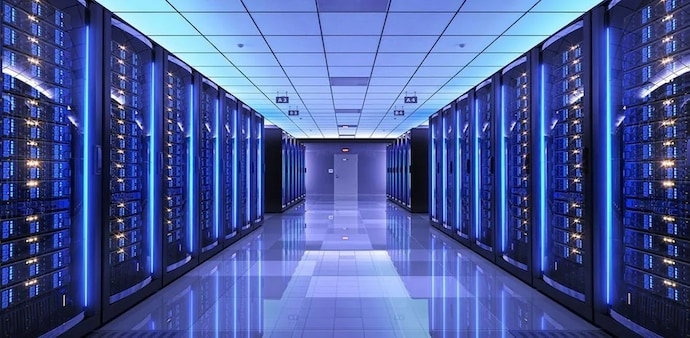
- Feb 1, 2026,
- Updated Feb 1, 2026 2:07 PM IST
Finance Minister Nirmala Sitharaman on 1 February rolled out long-term tax incentives to attract global cloud players to build data centres in India, a move the government says will boost critical digital infrastructure, and which industry leaders believe could reposition the country as a backbone for global data flows.
Presenting the Union Budget, Sitharaman said, “Recognising the need to enable critical infrastructure and boost investment in data centres, I propose to provide a tax holiday till 2047 to any foreign company that provides cloud services to customers globally by using data centre services from India.”
She added a second incentive aimed at multinational structures, saying, “I also propose to provide a safe harbour of 15% on cost in case the company providing data centre services from India is a related entity.”
The measures come as India looks to scale domestic digital infrastructure alongside rising demand from artificial intelligence workloads, data localisation norms and hyperscaler expansion plans.
Abhinav Johri, Partner, Technology Consulting at EY India, said the move goes well beyond tax breaks.
“India’s proposed tax holiday for foreign cloud service providers is more than a fiscal incentive; it is a strategic declaration. By anchoring global cloud infrastructure within the country, India positions itself as a digital backbone for the world,” Johri said. He added that the policy “accelerates investment into data centres, strengthens sovereign digital capacity, and catalyses the domestic technology ecosystem, from startups and SaaS firms to AI and life sciences,” noting that the long-term impact would span “jobs, innovation, resilience, and global competitiveness.”
The data centre push sits alongside a broader technology and manufacturing agenda outlined in the Budget, including an expanded semiconductor roadmap under ISM 2.0 and higher allocations for electronics components.
The government increased the allocation for the Electronics Component Manufacturing Scheme (ECMS) to Rs 40,000 crore, underscoring its push to expand component-level manufacturing alongside finished electronics.
Ashok Chandak, President of India Electronics and Semiconductor Association, said the Budget signals continuity as the ecosystem moves into execution mode.
“The Union Budget announced today represents a strong continuation of the momentum built under India Semiconductor Mission (ISM), ECMS, PLI, DLI, C2S and other ESDM initiatives over the past year,” Chandak said, adding that India has “transitioned from aspiration to credibility, establishing itself as a credible and investible destination for electronics and semiconductor manufacturing.”
He described ISM 2.0 as “a very important signal for India’s semiconductor ambitions,” marking “a clear evolution from a fab-centric approach to a full value-chain strategy, covering equipment, materials, Indian IP, and supply-chain resilience.”
Also read: Economic Survey calls for data sovereignty as India trails in AI training startups
AI startups also see the incentives as a catalyst for sovereign model development and workforce transformation.
Ganesh Gopalan, co-Founder & CEO of Gnani.ai, said the Union Budget 2026 is a “timely and forward-looking” roadmap, noting that the Finance Minister’s emphasis on AI reflects its strong multiplier effect on the Indian economy.
“The focus on assessing the impact of emerging technologies like artificial intelligence on jobs and skills reinforces the need to prepare for this shift. The adoption of AI and rapid tech advancements is essential for inclusive national progress, driving productivity and new economic opportunities,” Gopalan said.
He added that taxation benefits for data centres and safe harbour clauses will enable large-scale AI model training and infrastructure growth, while initiatives such as multilingual AI-based agriculture tools demonstrate grassroots impact. Large-scale upskilling and industry–academia collaboration, he said, will be key to building a future-ready workforce.
India generates about 20% of global data but hosts only around 3% of the world’s data-centre capacity, creating a sharp supply-demand mismatch.
On the infrastructure side, Amit Sarin, Managing Director at Anant Raj Limited, said the incentives would improve project economics for large facilities.
“The Government’s focus on building India into a global digital infrastructure hub is both visionary and timely,” Sarin said. “The tax holiday for cloud services and data centre operations announced in the Union Budget 2026 reflects a strong commitment to attracting long-term capital and enhancing India’s competitiveness in the digital economy.” He added that the measures would “enable faster capacity addition, and strengthen the broader technology ecosystem,” while supporting high-quality job creation.
Market researchers also see demand outpacing supply as AI adoption accelerates. Tarun Pathak, research director at Counterpoint Research, said India is likely to become a key destination for hyperscalers expanding across Asia-Pacific and the Middle East.
“With the rapid rise of AI applications and increasing government regulations on data privacy, requiring data to be stored within India, the demand for data capacity to support these workloads has already surpassed supply,” Pathak said, adding that data centres are capital-intensive and the Budget announcement supports long-term planning and investment for global cloud players.
Finance Minister Nirmala Sitharaman on 1 February rolled out long-term tax incentives to attract global cloud players to build data centres in India, a move the government says will boost critical digital infrastructure, and which industry leaders believe could reposition the country as a backbone for global data flows.
Presenting the Union Budget, Sitharaman said, “Recognising the need to enable critical infrastructure and boost investment in data centres, I propose to provide a tax holiday till 2047 to any foreign company that provides cloud services to customers globally by using data centre services from India.”
She added a second incentive aimed at multinational structures, saying, “I also propose to provide a safe harbour of 15% on cost in case the company providing data centre services from India is a related entity.”
The measures come as India looks to scale domestic digital infrastructure alongside rising demand from artificial intelligence workloads, data localisation norms and hyperscaler expansion plans.
Abhinav Johri, Partner, Technology Consulting at EY India, said the move goes well beyond tax breaks.
“India’s proposed tax holiday for foreign cloud service providers is more than a fiscal incentive; it is a strategic declaration. By anchoring global cloud infrastructure within the country, India positions itself as a digital backbone for the world,” Johri said. He added that the policy “accelerates investment into data centres, strengthens sovereign digital capacity, and catalyses the domestic technology ecosystem, from startups and SaaS firms to AI and life sciences,” noting that the long-term impact would span “jobs, innovation, resilience, and global competitiveness.”
The data centre push sits alongside a broader technology and manufacturing agenda outlined in the Budget, including an expanded semiconductor roadmap under ISM 2.0 and higher allocations for electronics components.
The government increased the allocation for the Electronics Component Manufacturing Scheme (ECMS) to Rs 40,000 crore, underscoring its push to expand component-level manufacturing alongside finished electronics.
Ashok Chandak, President of India Electronics and Semiconductor Association, said the Budget signals continuity as the ecosystem moves into execution mode.
“The Union Budget announced today represents a strong continuation of the momentum built under India Semiconductor Mission (ISM), ECMS, PLI, DLI, C2S and other ESDM initiatives over the past year,” Chandak said, adding that India has “transitioned from aspiration to credibility, establishing itself as a credible and investible destination for electronics and semiconductor manufacturing.”
He described ISM 2.0 as “a very important signal for India’s semiconductor ambitions,” marking “a clear evolution from a fab-centric approach to a full value-chain strategy, covering equipment, materials, Indian IP, and supply-chain resilience.”
Also read: Economic Survey calls for data sovereignty as India trails in AI training startups
AI startups also see the incentives as a catalyst for sovereign model development and workforce transformation.
Ganesh Gopalan, co-Founder & CEO of Gnani.ai, said the Union Budget 2026 is a “timely and forward-looking” roadmap, noting that the Finance Minister’s emphasis on AI reflects its strong multiplier effect on the Indian economy.
“The focus on assessing the impact of emerging technologies like artificial intelligence on jobs and skills reinforces the need to prepare for this shift. The adoption of AI and rapid tech advancements is essential for inclusive national progress, driving productivity and new economic opportunities,” Gopalan said.
He added that taxation benefits for data centres and safe harbour clauses will enable large-scale AI model training and infrastructure growth, while initiatives such as multilingual AI-based agriculture tools demonstrate grassroots impact. Large-scale upskilling and industry–academia collaboration, he said, will be key to building a future-ready workforce.
India generates about 20% of global data but hosts only around 3% of the world’s data-centre capacity, creating a sharp supply-demand mismatch.
On the infrastructure side, Amit Sarin, Managing Director at Anant Raj Limited, said the incentives would improve project economics for large facilities.
“The Government’s focus on building India into a global digital infrastructure hub is both visionary and timely,” Sarin said. “The tax holiday for cloud services and data centre operations announced in the Union Budget 2026 reflects a strong commitment to attracting long-term capital and enhancing India’s competitiveness in the digital economy.” He added that the measures would “enable faster capacity addition, and strengthen the broader technology ecosystem,” while supporting high-quality job creation.
Market researchers also see demand outpacing supply as AI adoption accelerates. Tarun Pathak, research director at Counterpoint Research, said India is likely to become a key destination for hyperscalers expanding across Asia-Pacific and the Middle East.
“With the rapid rise of AI applications and increasing government regulations on data privacy, requiring data to be stored within India, the demand for data capacity to support these workloads has already surpassed supply,” Pathak said, adding that data centres are capital-intensive and the Budget announcement supports long-term planning and investment for global cloud players.