
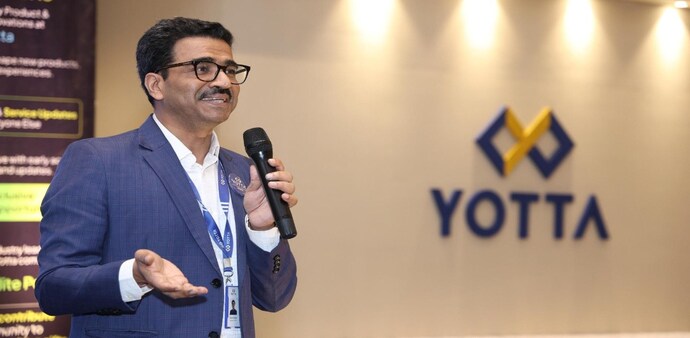
Budget 2026 must scale IndiaAI Mission to keep pace with surging AI compute demand: Yotta CEO Sunil Gupta
“Over the next five years, India’s roadmap must focus on three pillars: sovereign compute at scale, affordable power and creating deep talent and research ecosystems to emerge as a global AI hub,” the Yotta CEO told Business Today.
- Jan 27, 2026,
- Updated Jan 27, 2026 11:08 AM IST
As artificial intelligence (AI) adoption accelerates across India’s startup, enterprise and public-sector ecosystems, Budget 2026–27 will need to decisively scale sovereign AI infrastructure if India is to sustain its ambitions of becoming a global AI hub, Sunil Gupta, Co-Founder, CEO & Managing Director of Yotta Data Services, told Business Today.
Gupta said Budget 2026–27 should focus on “scaling the IndiaAI Mission beyond its initial phase by expanding the volume of available compute,” noting that “demand for AI infrastructure in India has already outpaced early estimates.” He added that “timely access to infrastructure is now critical to sustain the momentum across the ecosystem.”
The Rs 10,372 crore IndiaAI Mission, approved in March 2024, received a Rs 2,000 crore allocation in the 2025-26 Budget, a tenfold increase from prior estimates. However, Gupta argues for further expansion to match GPU demand, which has surged nearly fourfold in the past year.
In February 2025, Yotta Data Services was empanelled under the IndiaAI Mission, a government of India initiative aimed at establishing the country as a global leader in AI.
Key budget asks
A central expectation from the Budget is the introduction of long-term, bankable contracting frameworks for AI workloads under the IndiaAI Mission and allied public-sector programmes. Gupta said “three to five-year commitments would significantly improve capacity planning, enable competitive pricing and unlock institutional financing for large AI clusters.”
Fiscal support will also be important to lower the cost of building and deploying AI infrastructure.
“Rationalisation of duties and taxes on GPUs and AI infrastructure will also be important to ensure faster deployment, ease working capital pressures and lower the overall cost of AI compute,” Gupta told Business Today.
Together, these measures would help strengthen India’s ability to scale sovereign AI infrastructure in a “timely, sustainable and globally competitive manner,” he added.
Five-year AI roadmap
Looking beyond the upcoming Budget, Gupta said India needs a clear five-year roadmap to position itself as a global AI hub.
“Over the next five years, India’s roadmap must focus on three pillars: sovereign compute at scale, affordable power and creating deep talent and research ecosystems to emerge as a global AI hub,” the Yotta CEO told Business Today.
On infrastructure, Gupta said sovereign compute must move decisively to scale.
“This means building hyperscale AI data centres with high-density racks, advanced cooling, and geographically distributed capacity,” he said, adding that such infrastructure is needed “to support both consistent and low-latency access for AI infrastructure across India.”
The Yotta CEO also pointed to the need for India’s AI infrastructure to evolve alongside real-world adoption. “Equally important is the evolution from a training-centric environment to one that can support large-scale inferencing capabilities across sectors, as real-world adoption of AI and agentic systems gains speed,” Gupta said.
Power and talent imperatives
Power availability is expected to become a critical constraint.
“Access to affordable and preferably green power will become a binding constraint unless addressed beforehand,” Gupta said. As a result, the roadmap must prioritise “the integration of renewable energy into AI and data centre infrastructure, ensuring that India’s AI ecosystem remains both globally competitive and environmentally sustainable.”
As of November 2025, India’s installed power generation capacity had crossed the 510 GW mark, underpinned by rapid expansion in renewable energy. Non-fossil fuel capacity, including solar, wind and large hydro, had risen to nearly 267 GW by December 31, 2025. Solar power alone accounted for over 135 GW, while wind capacity had surpassed 54 GW, according to data from the Central Electricity Authority (CEA) under the Ministry of Power.
Beyond infrastructure and power, Gupta stressed the importance of talent and applied research. “Sovereign AI leadership cannot be achieved without deep investments in talent and applied research,” he said. This will require “continued support for hands-on access to high-end AI worklabs, and an increased collaboration between industry, startups, and academia.” He added that “this ecosystem approach will be a decisive factor in helping us build durable, homegrown AI capabilities.”
Unlocking capital
Given that data centres are capital-intensive and long-gestation assets, Gupta said attracting long-term global capital will require more than subsidies.
“What the sector needs most is predictability through long-term contracts, stable tax regulations, and clarity on returns,” he said. Measures such as “accelerated depreciation, aligning income-tax incentives with the new tax regime and allowing full GST input credit on data centre construction” would materially improve project viability.
As AI turns data centres into some of the largest power consumers in the economy, Gupta said Budget 2026 must align AI growth with power-sector reforms. “The answer lies in integrating AI growth with power-sector reforms,” he said, pointing to the need for “rationalising renewable power costs, including ISTS and wheeling charges and enabling open access to green energy at scale.”
With the right policy alignment, he added, data centres can become “anchors for renewable capacity rather than a strain on the grid.”
“Scale is critical in AI, and strengthening the IndiaAI Mission is the fastest way to build a resilient, sovereign computing backbone which can effectively power India’s AI ambitions,” Gupta said.
As artificial intelligence (AI) adoption accelerates across India’s startup, enterprise and public-sector ecosystems, Budget 2026–27 will need to decisively scale sovereign AI infrastructure if India is to sustain its ambitions of becoming a global AI hub, Sunil Gupta, Co-Founder, CEO & Managing Director of Yotta Data Services, told Business Today.
Gupta said Budget 2026–27 should focus on “scaling the IndiaAI Mission beyond its initial phase by expanding the volume of available compute,” noting that “demand for AI infrastructure in India has already outpaced early estimates.” He added that “timely access to infrastructure is now critical to sustain the momentum across the ecosystem.”
The Rs 10,372 crore IndiaAI Mission, approved in March 2024, received a Rs 2,000 crore allocation in the 2025-26 Budget, a tenfold increase from prior estimates. However, Gupta argues for further expansion to match GPU demand, which has surged nearly fourfold in the past year.
In February 2025, Yotta Data Services was empanelled under the IndiaAI Mission, a government of India initiative aimed at establishing the country as a global leader in AI.
Key budget asks
A central expectation from the Budget is the introduction of long-term, bankable contracting frameworks for AI workloads under the IndiaAI Mission and allied public-sector programmes. Gupta said “three to five-year commitments would significantly improve capacity planning, enable competitive pricing and unlock institutional financing for large AI clusters.”
Fiscal support will also be important to lower the cost of building and deploying AI infrastructure.
“Rationalisation of duties and taxes on GPUs and AI infrastructure will also be important to ensure faster deployment, ease working capital pressures and lower the overall cost of AI compute,” Gupta told Business Today.
Together, these measures would help strengthen India’s ability to scale sovereign AI infrastructure in a “timely, sustainable and globally competitive manner,” he added.
Five-year AI roadmap
Looking beyond the upcoming Budget, Gupta said India needs a clear five-year roadmap to position itself as a global AI hub.
“Over the next five years, India’s roadmap must focus on three pillars: sovereign compute at scale, affordable power and creating deep talent and research ecosystems to emerge as a global AI hub,” the Yotta CEO told Business Today.
On infrastructure, Gupta said sovereign compute must move decisively to scale.
“This means building hyperscale AI data centres with high-density racks, advanced cooling, and geographically distributed capacity,” he said, adding that such infrastructure is needed “to support both consistent and low-latency access for AI infrastructure across India.”
The Yotta CEO also pointed to the need for India’s AI infrastructure to evolve alongside real-world adoption. “Equally important is the evolution from a training-centric environment to one that can support large-scale inferencing capabilities across sectors, as real-world adoption of AI and agentic systems gains speed,” Gupta said.
Power and talent imperatives
Power availability is expected to become a critical constraint.
“Access to affordable and preferably green power will become a binding constraint unless addressed beforehand,” Gupta said. As a result, the roadmap must prioritise “the integration of renewable energy into AI and data centre infrastructure, ensuring that India’s AI ecosystem remains both globally competitive and environmentally sustainable.”
As of November 2025, India’s installed power generation capacity had crossed the 510 GW mark, underpinned by rapid expansion in renewable energy. Non-fossil fuel capacity, including solar, wind and large hydro, had risen to nearly 267 GW by December 31, 2025. Solar power alone accounted for over 135 GW, while wind capacity had surpassed 54 GW, according to data from the Central Electricity Authority (CEA) under the Ministry of Power.
Beyond infrastructure and power, Gupta stressed the importance of talent and applied research. “Sovereign AI leadership cannot be achieved without deep investments in talent and applied research,” he said. This will require “continued support for hands-on access to high-end AI worklabs, and an increased collaboration between industry, startups, and academia.” He added that “this ecosystem approach will be a decisive factor in helping us build durable, homegrown AI capabilities.”
Unlocking capital
Given that data centres are capital-intensive and long-gestation assets, Gupta said attracting long-term global capital will require more than subsidies.
“What the sector needs most is predictability through long-term contracts, stable tax regulations, and clarity on returns,” he said. Measures such as “accelerated depreciation, aligning income-tax incentives with the new tax regime and allowing full GST input credit on data centre construction” would materially improve project viability.
As AI turns data centres into some of the largest power consumers in the economy, Gupta said Budget 2026 must align AI growth with power-sector reforms. “The answer lies in integrating AI growth with power-sector reforms,” he said, pointing to the need for “rationalising renewable power costs, including ISTS and wheeling charges and enabling open access to green energy at scale.”
With the right policy alignment, he added, data centres can become “anchors for renewable capacity rather than a strain on the grid.”
“Scale is critical in AI, and strengthening the IndiaAI Mission is the fastest way to build a resilient, sovereign computing backbone which can effectively power India’s AI ambitions,” Gupta said.