
Economic Survey 2025-26 suggests minimum wage for gig workers
The goal of gig-economy policy should be to reshape the terms so that workers exercise real choice rather than being pushed into gigs due to weak demand, skill mismatch, or the absence of a safety net
- Jan 29, 2026,
- Updated Jan 29, 2026 4:13 PM IST
The Economic Survey 2025-26 has batted for minimum hourly or task-based wages for gig workers to encourage formal employment.
“Policy can reduce the cost gap between regular and gig work by limiting incentives to avoid mandatory benefits and by setting minimum per-hour or per-task earnings (including waiting time), encouraging formal employment and raising incomes for low- and medium-skilled gig workers,” the Economic Survey tabled in the Parliament on Thursday said.
The goal of gig economy policy should be to reshape the terms so that workers exercise real choice rather than being pushed into gigs due to weak demand, skill mismatch, or the absence of a safety net, the Survey noted.
India’s gig workers grew 55% from 77 lakh workers in FY21 to 1.2 crore workers in FY25, as per the Economic Survey. The Survey predicts growth of gig workers to outpace overall employment, with non-agricultural gigs projected to constitute 6.7 per cent of the workforce by 2029-30.
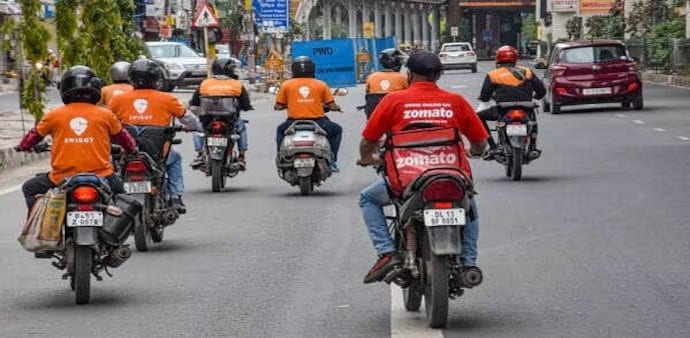
Online platforms such as Blinkit, Zepto, Swiggy, Urban Company, Rapido, BigBasket, Flipkart and Amazon, among others, account for the bulk of the gig workforce in India.
“This concentration of power raises concerns over fees, algorithms, and worker protections,” the survey cautioned. Policy should address this through competition rules, data access, and algorithmic transparency, while reorganising the social contract so that gig work benefits workers more fairly, it suggested.
Gig workers require basic financial planning support, including access to low-cost emergency savings schemes, portable social security benefits, and budgeting or financial literacy programmes, the Economic Survey said.
Gig workers are often classified as ‘freelancers’, ‘independent contractors’ or platform partners’, making it difficult to apply conventional labour market definitions and regulations. When classified this way, gig workers lack employment benefits such as social security, paid leave, minimum hours, and health coverage, resulting in poor job security and lower incomes, the survey noted.
“Globally, regulations related to the gig economy are becoming increasingly tightened. In 2021, Spain introduced the ‘ley rider’ (rider law), recognising food courier workers as employees rather than self-employed contractors, and establishing rules for the use of algorithms in the workplace,” said the survey.
“The European Union Platform Workers' Directive (2024) was implemented to correct the employment status of gig workers who are misclassified as self-employed, improve transparency, and regulate the use of algorithms and data in decision-making processes involving platform workers. In 2025, the ILO initiated formal discussions on establishing international standards for decent work in the platform economy, with a focus on fair wages, working conditions, and social protections. Over the years, cities such as Seattle86 and New York have implemented worker protections, including anti-retaliation measures, deactivation appeals, and minimum wage laws, for app-based workers,” it said.
The Economic Survey 2025-26 has batted for minimum hourly or task-based wages for gig workers to encourage formal employment.
“Policy can reduce the cost gap between regular and gig work by limiting incentives to avoid mandatory benefits and by setting minimum per-hour or per-task earnings (including waiting time), encouraging formal employment and raising incomes for low- and medium-skilled gig workers,” the Economic Survey tabled in the Parliament on Thursday said.
The goal of gig economy policy should be to reshape the terms so that workers exercise real choice rather than being pushed into gigs due to weak demand, skill mismatch, or the absence of a safety net, the Survey noted.
India’s gig workers grew 55% from 77 lakh workers in FY21 to 1.2 crore workers in FY25, as per the Economic Survey. The Survey predicts growth of gig workers to outpace overall employment, with non-agricultural gigs projected to constitute 6.7 per cent of the workforce by 2029-30.
Online platforms such as Blinkit, Zepto, Swiggy, Urban Company, Rapido, BigBasket, Flipkart and Amazon, among others, account for the bulk of the gig workforce in India.
“This concentration of power raises concerns over fees, algorithms, and worker protections,” the survey cautioned. Policy should address this through competition rules, data access, and algorithmic transparency, while reorganising the social contract so that gig work benefits workers more fairly, it suggested.
Gig workers require basic financial planning support, including access to low-cost emergency savings schemes, portable social security benefits, and budgeting or financial literacy programmes, the Economic Survey said.
Gig workers are often classified as ‘freelancers’, ‘independent contractors’ or platform partners’, making it difficult to apply conventional labour market definitions and regulations. When classified this way, gig workers lack employment benefits such as social security, paid leave, minimum hours, and health coverage, resulting in poor job security and lower incomes, the survey noted.
“Globally, regulations related to the gig economy are becoming increasingly tightened. In 2021, Spain introduced the ‘ley rider’ (rider law), recognising food courier workers as employees rather than self-employed contractors, and establishing rules for the use of algorithms in the workplace,” said the survey.
“The European Union Platform Workers' Directive (2024) was implemented to correct the employment status of gig workers who are misclassified as self-employed, improve transparency, and regulate the use of algorithms and data in decision-making processes involving platform workers. In 2025, the ILO initiated formal discussions on establishing international standards for decent work in the platform economy, with a focus on fair wages, working conditions, and social protections. Over the years, cities such as Seattle86 and New York have implemented worker protections, including anti-retaliation measures, deactivation appeals, and minimum wage laws, for app-based workers,” it said.