
Union Budget 2026 key takeaways: Youth-first reforms, tourism push, new tax overhaul, higher STT on trades
Union Budget 2026: With youth, jobs and compliance reform at the centre, the Budget sets the tone for the next phase of growth
- Feb 1, 2026,
- Updated Feb 1, 2026 1:36 PM IST
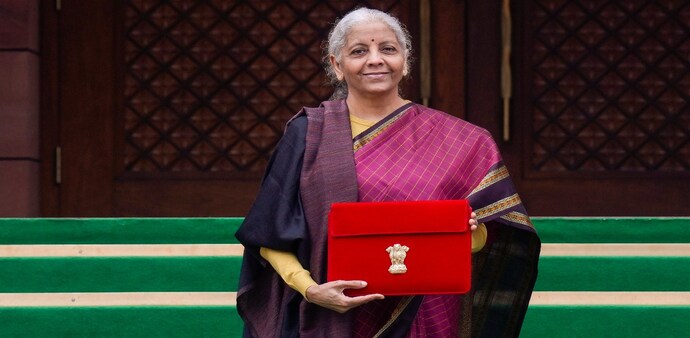
Finance Minister Nirmala Sitharaman presented her record ninth consecutive Union Budget amid global volatility and geopolitical uncertainty. The Union Cabinet, headed by Prime Minister Narendra Modi, has approved Nirmala Sitharaman's budget.
India’s economy has so far remained resilient despite the steep Trump tariffs. Growth is projected at 7.4% for the year ending March 31, supported by government spending on infrastructure and tax cuts on income and consumption that lifted consumer demand.
Key takeaways from the Union Budget
Big-picture direction
-
Focus stays on sustaining growth momentum through public capex, productivity reforms, and private investment push.
-
Budget positions itself around jobs, skilling, entrepreneurship and innovation, with a services-led growth approach.
-
The Budget formally lays out a three-kartavya framework in Part A, focused on accelerating growth, fulfilling aspirations/building capacity, and Sabka Sath-Sabka Vikas delivery architecture.
Jobs, skills and employability
-
Push for stronger education-to-employment linkages, with fresh institutional mechanisms proposed to improve workforce readiness.
-
Skill-building focus includes targeted training programmes tied to tourism and services, with emphasis on employability outcomes.
Women and entrepreneurship
-
Expansion of women-led livelihood ambitions beyond credit-linked support into women becoming enterprise owners (building on Lakhpati Didi-type models).
Advertisement -
Proposal to introduce “She-Mark” for women entrepreneurs, aimed at improving access to credit-linked products and innovative financial solutions.
Education and student infrastructure
-
Proposal to set up one girls’ hostel in every district, targeting improved access and inclusion for female students.
-
Support planned for university townships near major industrial logistics centres, linking higher education hubs with job markets.
-
A High-Level Education-to-Employment and Enterprise Standing Committee has been proposed to identify high-potential services sub-sectors, remove gaps, examine services exports, and map how emerging tech like AI will reshape jobs and skills.
-
The Standing Committee will also recommend measures for embedding AI into education curriculum, upgrading SCERTs for teacher training, upskilling professionals in AI, and enabling AI-based matching of workers, jobs and training opportunities
Advertisement
Tourism, heritage and cultural economy
-
Plan to develop 15 archaeological sites, including locations such as Lothal and Hastinapur, aimed at upgrading heritage tourism.
-
Proposal for a pilot to upgrade skills of 10,000 tourist guides across 20 iconic sites, improving visitor experience and service quality.
-
Focus on building India’s positioning as a world-class destination for mountaineering and experiential tourism.
-
Commitment to develop ecologically sustainable trails in Himachal Pradesh, Uttarakhand, and Jammu & Kashmir to support eco-tourism.
Sports and youth ecosystem
-
Khelo India Mission pitched as a long-term plan to reshape the sports sector over the next decade, supporting youth talent pathways.
Health systems and traditional medicine
-
Budget proposes upgradation of the WHO Global Traditional Medicine Centre at Jamnagar, Gujarat.
-
Plan also includes strengthening Ayush pharmacies and drug testing labs, improving formal quality standards and reach.
Veterinary and animal health infrastructure
-
Proposal for a loan-linked capital subsidy support scheme for veterinary colleges, hospitals and diagnostics labs, expanding animal healthcare capacity.
Services sector and governance structure
-
Proposal to set up an “Education to Employment and Enterprise” Standing Committee to recommend reforms with a services-sector focus.
Regional development and experience-led growth
-
Tourism-led interventions are positioned as a route to diversify income opportunities, especially through services and local employment creation.
-
A combination of heritage, trails, guide training and institutional support reflects a broader aim to turn tourism into a structured growth engine.
Direct taxes (Income tax, corporate tax, compliance)
-
The Finance Minister said the review of the Income Tax Act, 1961 announced in July 2024 has been completed, and the Income Tax Act, 2025 will come into effect from April 1, 2026.
-
The TCS rate on overseas tour programme packages has been reduced from the current 5% and 20% to 2%, without any stipulation of amount.
-
The TCS rate under the Liberalised Remittance Scheme (LRS) for pursuing education and medical purposes has been reduced from 5% to 2%.
-
Supply of manpower services is proposed to be specifically brought within the ambit of payment to contractors for TDS purposes, making TDS on such services either 1% or 2% to avoid ambiguity.
-
A scheme for small taxpayers will enable obtaining a lower or nil deduction certificate through a rule-based automated process instead of filing an application with the assessing officer.
-
The government said corporate taxation reforms launched in 2019 created a simplified regime with lower tax rates so companies could focus on business instead of deductions and exemptions.
Advertisement -
MAT is proposed to be made final tax, with no further credit accumulation from April 1, 2026, and the final tax rate is being reduced to 14% from 15%.
-
Brought forward MAT credit accumulated till March 31, 2026 will continue to be available for set-off under the revised framework.
-
The STT on futures contracts has been raised to 0.05% from 0.02%, while STT on options premiums and exercise of options has been raised to 0.15% from 0.1% and 0.125% respectively.
-
The TCS rate for sellers of specific goods, including alcoholic liquor, scrap and minerals, has been rationalised to 2%, and the TCS rate on tendu leaves has been reduced from 5% to 2%.
Indirect taxes
-
The limit for duty-free imports of specified inputs used for processing seafood products for export has been increased from 1% to 3% of the FOB value of the previous year’s export turnover.
-
Duty-free imports of specified inputs currently available for exports of leather or synthetic footwear have been extended to exports of shoe uppers as well.
-
The time period for export of final product has been extended from 6 months to 1 year for exporters of leather or textile garments, leather or synthetic footwear and other leather products.
Advertisement -
The basic customs duty exemption for capital goods used in manufacturing Lithium-Ion Cells for batteries has been extended to capital goods used for manufacturing Lithium-Ion Cells for battery energy storage systems.
-
Basic customs duty on the import of sodium antimonate for use in the manufacture of solar glass has been exempted.
-
Utilisation of non-intrusive scanning with advanced imaging and AI technology for risk assessment will be expanded in phases with an objective to scan every container across all major ports.
-
Fish catch by an Indian fishing vessel in the Exclusive Economic Zone (EEZ) or on the High Seas will be made free of duty, while landing such fish on a foreign port will be treated as export of goods, with safeguards to prevent misuse.
-
The current value cap of ₹10 lakh per consignment on courier exports has been completely removed to help small businesses, artisans and start-ups access global markets through e-commerce, while handling of rejected and returned consignments will be improved using technology.
-
Provisions governing baggage clearance during international travel will be revised to address passenger concerns, enhance duty-free allowances in line with present-day travel realities, and provide clarity on temporary carriage of goods.
-
Honest taxpayers willing to settle disputes will be able to close cases by paying an additional amount in lieu of penalty, since penalty language carries a negative connotation.
-
Central Excise Duty computation on blended CNG will exclude the value of Biogas/Compressed Biogas (CBG) contained in blended CNG, along with the GST paid on such CBG, for transaction value purposes.
-
The National Calamity Contingent Duty (NCCD) rate will be revised with effect from May 1, 2026, raising the rate on chewing tobacco, jarda scented tobacco, and other specified tobacco items from 25% to 60%, while maintaining the effective duty rate at 25% by notification.
Finance Minister Nirmala Sitharaman presented her record ninth consecutive Union Budget amid global volatility and geopolitical uncertainty. The Union Cabinet, headed by Prime Minister Narendra Modi, has approved Nirmala Sitharaman's budget.
India’s economy has so far remained resilient despite the steep Trump tariffs. Growth is projected at 7.4% for the year ending March 31, supported by government spending on infrastructure and tax cuts on income and consumption that lifted consumer demand.
Key takeaways from the Union Budget
Big-picture direction
-
Focus stays on sustaining growth momentum through public capex, productivity reforms, and private investment push.
-
Budget positions itself around jobs, skilling, entrepreneurship and innovation, with a services-led growth approach.
-
The Budget formally lays out a three-kartavya framework in Part A, focused on accelerating growth, fulfilling aspirations/building capacity, and Sabka Sath-Sabka Vikas delivery architecture.
Jobs, skills and employability
-
Push for stronger education-to-employment linkages, with fresh institutional mechanisms proposed to improve workforce readiness.
-
Skill-building focus includes targeted training programmes tied to tourism and services, with emphasis on employability outcomes.
Women and entrepreneurship
-
Expansion of women-led livelihood ambitions beyond credit-linked support into women becoming enterprise owners (building on Lakhpati Didi-type models).
Advertisement -
Proposal to introduce “She-Mark” for women entrepreneurs, aimed at improving access to credit-linked products and innovative financial solutions.
Education and student infrastructure
-
Proposal to set up one girls’ hostel in every district, targeting improved access and inclusion for female students.
-
Support planned for university townships near major industrial logistics centres, linking higher education hubs with job markets.
-
A High-Level Education-to-Employment and Enterprise Standing Committee has been proposed to identify high-potential services sub-sectors, remove gaps, examine services exports, and map how emerging tech like AI will reshape jobs and skills.
-
The Standing Committee will also recommend measures for embedding AI into education curriculum, upgrading SCERTs for teacher training, upskilling professionals in AI, and enabling AI-based matching of workers, jobs and training opportunities
Advertisement
Tourism, heritage and cultural economy
-
Plan to develop 15 archaeological sites, including locations such as Lothal and Hastinapur, aimed at upgrading heritage tourism.
-
Proposal for a pilot to upgrade skills of 10,000 tourist guides across 20 iconic sites, improving visitor experience and service quality.
-
Focus on building India’s positioning as a world-class destination for mountaineering and experiential tourism.
-
Commitment to develop ecologically sustainable trails in Himachal Pradesh, Uttarakhand, and Jammu & Kashmir to support eco-tourism.
Sports and youth ecosystem
-
Khelo India Mission pitched as a long-term plan to reshape the sports sector over the next decade, supporting youth talent pathways.
Health systems and traditional medicine
-
Budget proposes upgradation of the WHO Global Traditional Medicine Centre at Jamnagar, Gujarat.
-
Plan also includes strengthening Ayush pharmacies and drug testing labs, improving formal quality standards and reach.
Veterinary and animal health infrastructure
-
Proposal for a loan-linked capital subsidy support scheme for veterinary colleges, hospitals and diagnostics labs, expanding animal healthcare capacity.
Services sector and governance structure
-
Proposal to set up an “Education to Employment and Enterprise” Standing Committee to recommend reforms with a services-sector focus.
Regional development and experience-led growth
-
Tourism-led interventions are positioned as a route to diversify income opportunities, especially through services and local employment creation.
-
A combination of heritage, trails, guide training and institutional support reflects a broader aim to turn tourism into a structured growth engine.
Direct taxes (Income tax, corporate tax, compliance)
-
The Finance Minister said the review of the Income Tax Act, 1961 announced in July 2024 has been completed, and the Income Tax Act, 2025 will come into effect from April 1, 2026.
-
The TCS rate on overseas tour programme packages has been reduced from the current 5% and 20% to 2%, without any stipulation of amount.
-
The TCS rate under the Liberalised Remittance Scheme (LRS) for pursuing education and medical purposes has been reduced from 5% to 2%.
-
Supply of manpower services is proposed to be specifically brought within the ambit of payment to contractors for TDS purposes, making TDS on such services either 1% or 2% to avoid ambiguity.
-
A scheme for small taxpayers will enable obtaining a lower or nil deduction certificate through a rule-based automated process instead of filing an application with the assessing officer.
-
The government said corporate taxation reforms launched in 2019 created a simplified regime with lower tax rates so companies could focus on business instead of deductions and exemptions.
Advertisement -
MAT is proposed to be made final tax, with no further credit accumulation from April 1, 2026, and the final tax rate is being reduced to 14% from 15%.
-
Brought forward MAT credit accumulated till March 31, 2026 will continue to be available for set-off under the revised framework.
-
The STT on futures contracts has been raised to 0.05% from 0.02%, while STT on options premiums and exercise of options has been raised to 0.15% from 0.1% and 0.125% respectively.
-
The TCS rate for sellers of specific goods, including alcoholic liquor, scrap and minerals, has been rationalised to 2%, and the TCS rate on tendu leaves has been reduced from 5% to 2%.
Indirect taxes
-
The limit for duty-free imports of specified inputs used for processing seafood products for export has been increased from 1% to 3% of the FOB value of the previous year’s export turnover.
-
Duty-free imports of specified inputs currently available for exports of leather or synthetic footwear have been extended to exports of shoe uppers as well.
-
The time period for export of final product has been extended from 6 months to 1 year for exporters of leather or textile garments, leather or synthetic footwear and other leather products.
Advertisement -
The basic customs duty exemption for capital goods used in manufacturing Lithium-Ion Cells for batteries has been extended to capital goods used for manufacturing Lithium-Ion Cells for battery energy storage systems.
-
Basic customs duty on the import of sodium antimonate for use in the manufacture of solar glass has been exempted.
-
Utilisation of non-intrusive scanning with advanced imaging and AI technology for risk assessment will be expanded in phases with an objective to scan every container across all major ports.
-
Fish catch by an Indian fishing vessel in the Exclusive Economic Zone (EEZ) or on the High Seas will be made free of duty, while landing such fish on a foreign port will be treated as export of goods, with safeguards to prevent misuse.
-
The current value cap of ₹10 lakh per consignment on courier exports has been completely removed to help small businesses, artisans and start-ups access global markets through e-commerce, while handling of rejected and returned consignments will be improved using technology.
-
Provisions governing baggage clearance during international travel will be revised to address passenger concerns, enhance duty-free allowances in line with present-day travel realities, and provide clarity on temporary carriage of goods.
-
Honest taxpayers willing to settle disputes will be able to close cases by paying an additional amount in lieu of penalty, since penalty language carries a negative connotation.
-
Central Excise Duty computation on blended CNG will exclude the value of Biogas/Compressed Biogas (CBG) contained in blended CNG, along with the GST paid on such CBG, for transaction value purposes.
-
The National Calamity Contingent Duty (NCCD) rate will be revised with effect from May 1, 2026, raising the rate on chewing tobacco, jarda scented tobacco, and other specified tobacco items from 25% to 60%, while maintaining the effective duty rate at 25% by notification.