
Budget 2026: Defence spending gets massive ₹7.84 lakh crore boost after Operation Sindoor
Union Budget 2026: The higher outlay signals a continued emphasis on operational readiness, force modernisation, and welfare of defence personnel, at a time when evolving security challenges have brought renewed attention to India’s military capabilities.
- Feb 1, 2026,
- Updated Feb 1, 2026 3:11 PM IST
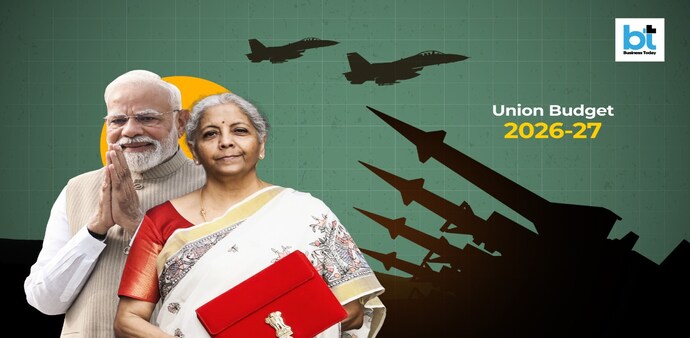
The government earmarked ₹7,84,678 crore for defence in FY 2026-27 in Union Budget 2026, marking a sharp increase of over 15% from ₹6,81,210 crore allocated last year, underscoring New Delhi’s sustained focus on military preparedness and modernisation.
This is the first Union Budget presented by Finance Minister Nirmala Sitharaman after Operation Sindoor — India’s precision military strikes on terror camps in Pakistan and Pakistan-Occupied Jammu and Kashmir (PoJK) following the Pahalgam terror attack in April 2025.
Follow live coverage on Union Budget 2026 here
The total defence allocation for FY27 covers defence services (revenue expenditure), capital outlay for defence, defence pensions, and civil establishments under the Ministry of Defence.
Of the total allocation, Rs 3.65 lakh crore is earmarked for defence services revenue, Rs 2.19 lakh crore for capital outlay, a 21.8% increase from the revised estimate of Rs 1.86 lakh crore.
In the aftermath of Operation Sindoor, the Ministry of Defence (MoD) has significantly stepped up the pace of defence procurement, driven by urgent operational requirements.
The government has already spent around ₹40,000 crore on emergency acquisitions, including drones, ammunition and critical weapon systems.
Reflecting this surge in spending, the MoD sought an additional ₹64,000 crore over last year’s allocation, signalling both full utilisation of the previous budget and overshooting caused by emergency purchases.
In Budget 2026, the defence capital outlay has risen sharply from ₹1.8 lakh crore to ₹2.19 lakh crore, pointing to faster decision-making and the likelihood of large-ticket defence contracts in the pipeline.
However, actual expenditure will be spread over multiple years, as payments are linked to contract milestones.
A significant portion of the capital allocation is expected to be directed towards the €8-10 billion submarine programme and pending payments for Rafale fighter aircraft.
Focus on readiness, modernisation, and personnel welfare
The higher outlay signals a continued emphasis on operational readiness, force modernisation, and welfare of defence personnel, at a time when evolving security challenges have brought renewed attention to India’s military capabilities.
The recent India-Pakistan military confrontation highlighted the growing importance of state-of-the-art weaponry and technologically advanced aerial platforms, which have become central to modern warfare. Against this backdrop, expectations had been high that defence spending would see a meaningful increase in the FY27 Budget.
Defence spend as a pillar of public investment
Officials have consistently described defence expenditure as a critical component of the government’s broader public investment strategy. Capital-intensive defence spending, they argue, not only strengthens military preparedness but also supports domestic manufacturing, enhances strategic autonomy, and delivers long-term economic spillovers.
In line with the government’s push for self-reliance in defence production, a growing share of the defence capital outlay is expected to be channelled towards domestic industry, reinforcing the “Make in India” thrust in the strategic sector.
The government earmarked ₹7,84,678 crore for defence in FY 2026-27 in Union Budget 2026, marking a sharp increase of over 15% from ₹6,81,210 crore allocated last year, underscoring New Delhi’s sustained focus on military preparedness and modernisation.
This is the first Union Budget presented by Finance Minister Nirmala Sitharaman after Operation Sindoor — India’s precision military strikes on terror camps in Pakistan and Pakistan-Occupied Jammu and Kashmir (PoJK) following the Pahalgam terror attack in April 2025.
Follow live coverage on Union Budget 2026 here
The total defence allocation for FY27 covers defence services (revenue expenditure), capital outlay for defence, defence pensions, and civil establishments under the Ministry of Defence.
Of the total allocation, Rs 3.65 lakh crore is earmarked for defence services revenue, Rs 2.19 lakh crore for capital outlay, a 21.8% increase from the revised estimate of Rs 1.86 lakh crore.
In the aftermath of Operation Sindoor, the Ministry of Defence (MoD) has significantly stepped up the pace of defence procurement, driven by urgent operational requirements.
The government has already spent around ₹40,000 crore on emergency acquisitions, including drones, ammunition and critical weapon systems.
Reflecting this surge in spending, the MoD sought an additional ₹64,000 crore over last year’s allocation, signalling both full utilisation of the previous budget and overshooting caused by emergency purchases.
In Budget 2026, the defence capital outlay has risen sharply from ₹1.8 lakh crore to ₹2.19 lakh crore, pointing to faster decision-making and the likelihood of large-ticket defence contracts in the pipeline.
However, actual expenditure will be spread over multiple years, as payments are linked to contract milestones.
A significant portion of the capital allocation is expected to be directed towards the €8-10 billion submarine programme and pending payments for Rafale fighter aircraft.
Focus on readiness, modernisation, and personnel welfare
The higher outlay signals a continued emphasis on operational readiness, force modernisation, and welfare of defence personnel, at a time when evolving security challenges have brought renewed attention to India’s military capabilities.
The recent India-Pakistan military confrontation highlighted the growing importance of state-of-the-art weaponry and technologically advanced aerial platforms, which have become central to modern warfare. Against this backdrop, expectations had been high that defence spending would see a meaningful increase in the FY27 Budget.
Defence spend as a pillar of public investment
Officials have consistently described defence expenditure as a critical component of the government’s broader public investment strategy. Capital-intensive defence spending, they argue, not only strengthens military preparedness but also supports domestic manufacturing, enhances strategic autonomy, and delivers long-term economic spillovers.
In line with the government’s push for self-reliance in defence production, a growing share of the defence capital outlay is expected to be channelled towards domestic industry, reinforcing the “Make in India” thrust in the strategic sector.