
Union Budget 2026: What is Economic Survey, its importance, role of Budget, who drafts it
In the end, before the Budget speaks through numbers and announcements, the Economic Survey tells the story of the economy it is responding to.
- Jan 29, 2026,
- Updated Jan 29, 2026 7:32 AM IST
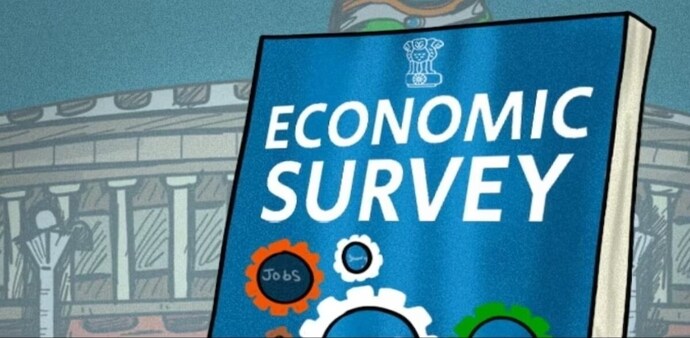
As India gears up for the Union Budget 2026, attention is once again turning to a document that quietly shapes the Budget’s narrative long before the Finance Minister rises to speak in Parliament, the Economic Survey. Released ahead of the Budget, the Survey serves as the government’s annual report card on the economy, offering crucial context to understand where the country stands and where policy priorities may head next.
The Economic Survey captures key economic trends across sectors, helping explain how resources are mobilised and allocated in the Union Budget. It analyses developments in agriculture and industry, infrastructure, employment, money supply, inflation, trade, foreign exchange reserves, and other macroeconomic indicators that directly influence Budget decisions.
By mapping these trends, the Survey helps lawmakers and citizens alike better appreciate the logic behind revenue estimates, spending priorities, and borrowing plans.
Over time, the role of the Union Budget itself has evolved. Since Independence, and especially after the launch of Five-Year Plans, the Budget has gone beyond a simple statement of receipts and expenditure to become a powerful articulation of government policy. It not only reflects the state of the economy but also actively shapes it.
To better assess this impact, government finances are often analysed through broader economic lenses-how much is devoted to capital formation, how much is spent directly by the government, and how much flows to other sectors through grants and loans. This deeper analysis is presented separately through the Economic and Functional Classification of the Central Government Budget, published by the Ministry of Finance.
Traditionally, the Economic Survey is authored by the Chief Economic Advisor (CEA). In recent years, it has also reflected shifts in presentation style. The Economic Survey 2021–22, drafted under the leadership of Principal Economic Advisor Sanjeev Sanyal, marked a return to a single-volume format after eight years. The earlier two-volume structure, Sanyal noted in his introduction, had become unwieldy.
That year also saw a transition at the top, with V Anantha Nageswaran appointed as CEA just days before the Budget, underscoring how closely the Survey and the Budget are intertwined in timing and purpose.
As India gears up for the Union Budget 2026, attention is once again turning to a document that quietly shapes the Budget’s narrative long before the Finance Minister rises to speak in Parliament, the Economic Survey. Released ahead of the Budget, the Survey serves as the government’s annual report card on the economy, offering crucial context to understand where the country stands and where policy priorities may head next.
The Economic Survey captures key economic trends across sectors, helping explain how resources are mobilised and allocated in the Union Budget. It analyses developments in agriculture and industry, infrastructure, employment, money supply, inflation, trade, foreign exchange reserves, and other macroeconomic indicators that directly influence Budget decisions.
By mapping these trends, the Survey helps lawmakers and citizens alike better appreciate the logic behind revenue estimates, spending priorities, and borrowing plans.
Over time, the role of the Union Budget itself has evolved. Since Independence, and especially after the launch of Five-Year Plans, the Budget has gone beyond a simple statement of receipts and expenditure to become a powerful articulation of government policy. It not only reflects the state of the economy but also actively shapes it.
To better assess this impact, government finances are often analysed through broader economic lenses-how much is devoted to capital formation, how much is spent directly by the government, and how much flows to other sectors through grants and loans. This deeper analysis is presented separately through the Economic and Functional Classification of the Central Government Budget, published by the Ministry of Finance.
Traditionally, the Economic Survey is authored by the Chief Economic Advisor (CEA). In recent years, it has also reflected shifts in presentation style. The Economic Survey 2021–22, drafted under the leadership of Principal Economic Advisor Sanjeev Sanyal, marked a return to a single-volume format after eight years. The earlier two-volume structure, Sanyal noted in his introduction, had become unwieldy.
That year also saw a transition at the top, with V Anantha Nageswaran appointed as CEA just days before the Budget, underscoring how closely the Survey and the Budget are intertwined in timing and purpose.