
'Going to have a good deal': Trump expresses confidence in India-US trade deal as negotiations progress
This statement comes as officials from both nations confirm that talks are in advanced stages, with the aim of expanding bilateral trade from the present $191 billion to $500 billion by 2030.
- Jan 21, 2026,
- Updated Jan 21, 2026 11:19 PM IST
US President Donald Trump has voiced optimism regarding the outcome of ongoing negotiations for an India-US bilateral trade agreement, reinforcing expectations of a significant economic partnership. This statement comes as officials from both nations confirm that talks are in advanced stages, with the aim of expanding bilateral trade from the present USD 191 billion to USD 500 billion by 2030. The agreement, initially proposed in February, is considered a pivotal step in strengthening trade ties and fostering mutual economic growth.
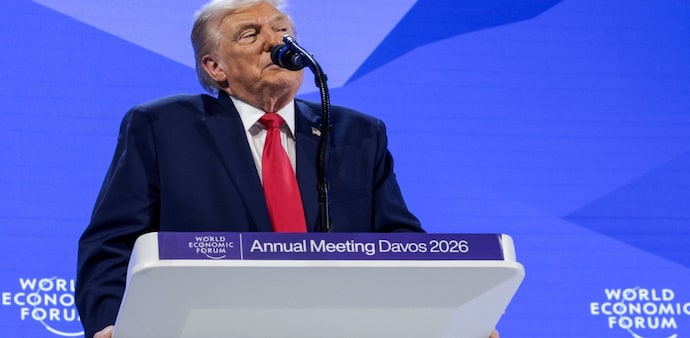
Donald Trump, speaking to Moneycontrol during the World Economic Forum summit, stated: "I have great respect for your Prime Minister. He's a fantastic man and a friend of mine, and we are going to have a good deal," when questioned about progress on the India-US trade agreement.
Earlier, Indian Commerce Secretary Rajesh Agrawal commented that the first phase of the agreement is "very near", indicating the possibility of a breakthrough in the near future. However, Agrawal declined to provide a specific timeline for the deal's conclusion. The close proximity to a deal has raised anticipation among stakeholders across both countries, given the scale of economic opportunity at stake.
The Indian Ministry of External Affairs highlighted the longstanding commitment between both governments, stating, "India and the United States were committed to negotiating a bilateral trade agreement with the US as far as far back as 13th of February last year. That is, since then, two sides have held multiple rounds of negotiations to arrive at a balanced and mutually beneficial trade agreement." This underscores the sustained diplomatic and technical engagement over the past year to address trade barriers.
During discussions, the Ministry noted that, "On several occasions, we have been close to a deal," signalling the complex nature of trade negotiations and the effort invested by both sides to resolve outstanding issues. These repeated near-agreements reflect ongoing attempts to balance diverse economic interests and policies.
The agreement's formal proposal in February 2025, during Prime Minister Narendra Modi's visit to Washington, set the stage for multiple rounds of negotiations. The BTA seeks not only to reduce tariffs and facilitate greater market access but also to set frameworks for long-term cooperation across various sectors.
Industry observers note that the move towards a bilateral agreement aligns with global trends, where major economies are strengthening regional and bilateral ties to optimise supply chains and trade resilience. The targeted increase in trade volume reflects ambitions to surpass current benchmarks and establish a robust foundation for future economic collaboration.
Both governments remain cautious about providing an exact date for the agreement's signing. However, the steady progress and recent public affirmations from leaders and officials suggest a shared intent to overcome remaining challenges and finalise a mutually advantageous deal.
US President Donald Trump has voiced optimism regarding the outcome of ongoing negotiations for an India-US bilateral trade agreement, reinforcing expectations of a significant economic partnership. This statement comes as officials from both nations confirm that talks are in advanced stages, with the aim of expanding bilateral trade from the present USD 191 billion to USD 500 billion by 2030. The agreement, initially proposed in February, is considered a pivotal step in strengthening trade ties and fostering mutual economic growth.
Donald Trump, speaking to Moneycontrol during the World Economic Forum summit, stated: "I have great respect for your Prime Minister. He's a fantastic man and a friend of mine, and we are going to have a good deal," when questioned about progress on the India-US trade agreement.
Earlier, Indian Commerce Secretary Rajesh Agrawal commented that the first phase of the agreement is "very near", indicating the possibility of a breakthrough in the near future. However, Agrawal declined to provide a specific timeline for the deal's conclusion. The close proximity to a deal has raised anticipation among stakeholders across both countries, given the scale of economic opportunity at stake.
The Indian Ministry of External Affairs highlighted the longstanding commitment between both governments, stating, "India and the United States were committed to negotiating a bilateral trade agreement with the US as far as far back as 13th of February last year. That is, since then, two sides have held multiple rounds of negotiations to arrive at a balanced and mutually beneficial trade agreement." This underscores the sustained diplomatic and technical engagement over the past year to address trade barriers.
During discussions, the Ministry noted that, "On several occasions, we have been close to a deal," signalling the complex nature of trade negotiations and the effort invested by both sides to resolve outstanding issues. These repeated near-agreements reflect ongoing attempts to balance diverse economic interests and policies.
The agreement's formal proposal in February 2025, during Prime Minister Narendra Modi's visit to Washington, set the stage for multiple rounds of negotiations. The BTA seeks not only to reduce tariffs and facilitate greater market access but also to set frameworks for long-term cooperation across various sectors.
Industry observers note that the move towards a bilateral agreement aligns with global trends, where major economies are strengthening regional and bilateral ties to optimise supply chains and trade resilience. The targeted increase in trade volume reflects ambitions to surpass current benchmarks and establish a robust foundation for future economic collaboration.
Both governments remain cautious about providing an exact date for the agreement's signing. However, the steady progress and recent public affirmations from leaders and officials suggest a shared intent to overcome remaining challenges and finalise a mutually advantageous deal.