
Davos 2026: Trump thinks a great president adds territory to US, Fareed Zakaria on Greenland obsession
WEF Davos 2026: US maintaining a strong strategic relationship with India is going to be far more important to its future than what it does in Venezuela, says Zakaria
- Jan 21, 2026,
- Updated Jan 21, 2026 5:37 PM IST
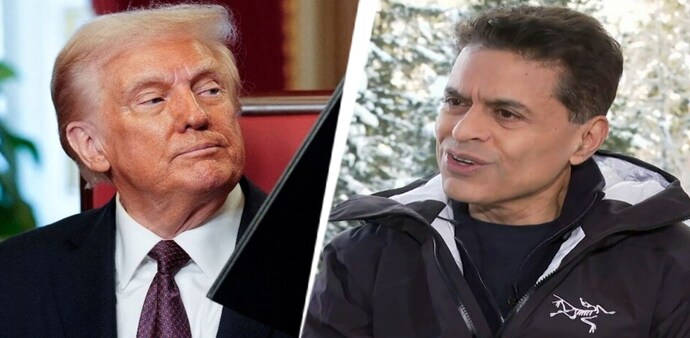
US President Donald Trump is being driven less by strategy and more by personal impulses and long-held instincts, including a belief that presidential greatness comes from expanding American territory, foreign policy expert Fareed Zakaria told India Today's Rajdeep Sardesai on the sidelines of the World Economic Forum in Davos.
Zakaria said attempts to frame Trump's foreign policy as a doctrine or grand design risk misunderstanding what is actually driving decisions such as the push on Greenland. "Look, there are all elements of that involved," he said when asked whether Trump is a bully, transactional, or following a method. "But I do think the most important thing to understand is this is a very idiosyncratic man who has his own personal ideas, whims about what is good and bad, what makes the world work. And he just acts on them."
The foreign policy expert said Trump's second term has removed internal restraints that existed earlier. "Because he won re-election and made this brilliant comeback, he now feels unconstrained by all those old elites that were constraining him in the first term, the Republican establishment, the generals," he said.
"He now thinks he can act on every whim of his," Zakaria added. "And what you're seeing is what friends of his say, these are the views he's held for many years. Many of them are bizarre, inconsistent."
Zakaria said one idea, however, clearly stands out. "But one of them, for example, clearly he thinks that a great American president is somebody who adds territory to the United States," he said. "That is what you get remembered for."
He cited historical precedents Trump appears to admire. "Jefferson did the Louisiana purchase. McKinley got Puerto Rico in the Philippines, and Hawaii. He wants to do something like that," Zakaria said.
The problem, Zakaria argued, is the absence of institutional checks. "The strange element to the Trump foreign policy is that nobody is stopping him," he said. "Nobody is saying to him, 'Mr President, have you thought this through? What do we actually gain? We're going to wreck our alliances with Europe for what? For a piece of frigid real estate that we can't do very much with,’" Zakaria added.
He said the normal guardrails of US governance have weakened. "Frankly, the Congress should be talking to him. This is a major American initiative that would require congressional authorisation," Zakaria said.
"Congress has collapsed. The courts should be reigning him in. These tariffs are plainly unconstitutional."
Asked whether Trump's moves amount to a so-called "Donroe doctrine" - a reworking of the Monroe Doctrine - the commentator rejected the idea that these impulses amount to a strategy. "What you see is some kind of impulses. But to call them a strategy or a doctrine is a mistake because they don't have that rationality," he said.
He argued that narrowing the US focus to the Western Hemisphere would represent a retreat rather than strength. "The US should be dominant in the western hemisphere. That is a remarkable shrinkage of American power and influence," Zakaria said. "The United States is the global hegemon. The United States has interests far-flung across the world," he said. "To shrink them to the western hemisphere is bizarre."
Zakaria said America’s core interests lie elsewhere. "And the Western Hemisphere is not an area where the United States's crucial economic and strategic interests lie," he said. "The United States trades much more with Europe than it does with the Western Hemisphere. Its economic interests are anchored in Europe. Its future economic interests are probably anchored in Asia," he added.
He said Washington's long-term priorities should reflect that reality. "For example, the United States maintaining a strong strategic relationship with India is going to be far more important to its future than what it does in Venezuela," Zakaria said.
Yet Trump, he argued, is guided by fixation rather than facts. "But Trump has kind of gotten into his head that, oh, there's oil in Venezuela," he said. "The facts don't bear any of this out."
Zakaria cited industry realities to underline the point. "The oil in Venezuela is complex, dirty, and hard to extract. An American oil executive said, 'Fareed, let me put it to you simply. It costs us about $80 to extract Venezuelan oil. The oil price right now is $60. The math tells you nobody is going to invest in the Venezuelan oil industry because you're not going to sell oil at a $20 loss," he added. "But again, for Trump, it's all these instincts, impulses, and emotions."
US President Donald Trump is being driven less by strategy and more by personal impulses and long-held instincts, including a belief that presidential greatness comes from expanding American territory, foreign policy expert Fareed Zakaria told India Today's Rajdeep Sardesai on the sidelines of the World Economic Forum in Davos.
Zakaria said attempts to frame Trump's foreign policy as a doctrine or grand design risk misunderstanding what is actually driving decisions such as the push on Greenland. "Look, there are all elements of that involved," he said when asked whether Trump is a bully, transactional, or following a method. "But I do think the most important thing to understand is this is a very idiosyncratic man who has his own personal ideas, whims about what is good and bad, what makes the world work. And he just acts on them."
The foreign policy expert said Trump's second term has removed internal restraints that existed earlier. "Because he won re-election and made this brilliant comeback, he now feels unconstrained by all those old elites that were constraining him in the first term, the Republican establishment, the generals," he said.
"He now thinks he can act on every whim of his," Zakaria added. "And what you're seeing is what friends of his say, these are the views he's held for many years. Many of them are bizarre, inconsistent."
Zakaria said one idea, however, clearly stands out. "But one of them, for example, clearly he thinks that a great American president is somebody who adds territory to the United States," he said. "That is what you get remembered for."
He cited historical precedents Trump appears to admire. "Jefferson did the Louisiana purchase. McKinley got Puerto Rico in the Philippines, and Hawaii. He wants to do something like that," Zakaria said.
The problem, Zakaria argued, is the absence of institutional checks. "The strange element to the Trump foreign policy is that nobody is stopping him," he said. "Nobody is saying to him, 'Mr President, have you thought this through? What do we actually gain? We're going to wreck our alliances with Europe for what? For a piece of frigid real estate that we can't do very much with,’" Zakaria added.
He said the normal guardrails of US governance have weakened. "Frankly, the Congress should be talking to him. This is a major American initiative that would require congressional authorisation," Zakaria said.
"Congress has collapsed. The courts should be reigning him in. These tariffs are plainly unconstitutional."
Asked whether Trump's moves amount to a so-called "Donroe doctrine" - a reworking of the Monroe Doctrine - the commentator rejected the idea that these impulses amount to a strategy. "What you see is some kind of impulses. But to call them a strategy or a doctrine is a mistake because they don't have that rationality," he said.
He argued that narrowing the US focus to the Western Hemisphere would represent a retreat rather than strength. "The US should be dominant in the western hemisphere. That is a remarkable shrinkage of American power and influence," Zakaria said. "The United States is the global hegemon. The United States has interests far-flung across the world," he said. "To shrink them to the western hemisphere is bizarre."
Zakaria said America’s core interests lie elsewhere. "And the Western Hemisphere is not an area where the United States's crucial economic and strategic interests lie," he said. "The United States trades much more with Europe than it does with the Western Hemisphere. Its economic interests are anchored in Europe. Its future economic interests are probably anchored in Asia," he added.
He said Washington's long-term priorities should reflect that reality. "For example, the United States maintaining a strong strategic relationship with India is going to be far more important to its future than what it does in Venezuela," Zakaria said.
Yet Trump, he argued, is guided by fixation rather than facts. "But Trump has kind of gotten into his head that, oh, there's oil in Venezuela," he said. "The facts don't bear any of this out."
Zakaria cited industry realities to underline the point. "The oil in Venezuela is complex, dirty, and hard to extract. An American oil executive said, 'Fareed, let me put it to you simply. It costs us about $80 to extract Venezuelan oil. The oil price right now is $60. The math tells you nobody is going to invest in the Venezuelan oil industry because you're not going to sell oil at a $20 loss," he added. "But again, for Trump, it's all these instincts, impulses, and emotions."