
WEF considers shifting annual meeting from Davos, will India emerge as the next possible host in autumn?
Ashwini Vaishnaw, Minister of Railways, Electronics and Information Technology, told Business Today that India’s reform-led growth has triggered discussions among global leaders on hosting a World Economic Forum event in the country. He added that the idea includes the possibility of an “autumn Davos”-style meeting in India.
- Jan 21, 2026,
- Updated Jan 21, 2026 7:31 PM IST
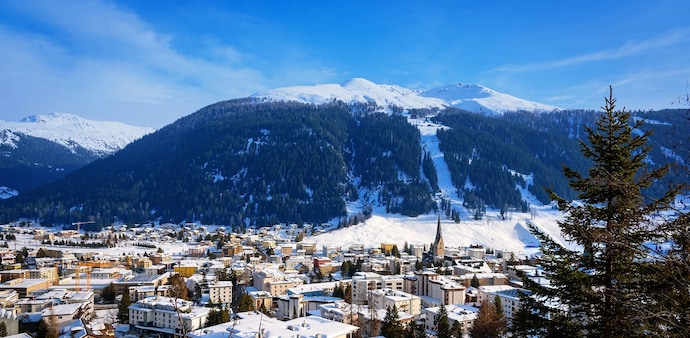
Senior leaders at the World Economic Forum (WEF) are deliberating whether to shift the venue of its flagship annual meeting away from Davos, the Swiss Alpine town that has hosted the event for decades, according to a report by the Financial Times. The discussions reflect growing concerns within the organisation that the scale and ambition of the meeting may no longer be well served by its traditional location.
Larry Fink, chief executive of BlackRock and interim co-chair of the WEF’s governing board, has held private conversations on potential alternatives. These include the possibility of permanently relocating the annual summit or adopting a rotational model that would see the forum hosted in different global cities. Detroit and Dublin have emerged as among the locations being considered, the report said.
Besides, Fink has also mentioned Jakarta and Buenos Aires as other options.
"For 56 years, the World Economic Forum has been synonymous with Davos. And that’s likely to remain true for a while. But you should also see WEF start doing something new: showing up—and listening—in the places where the modern world is actually built. Davos, yes. But also places like Detroit and Dublin—and cities like Jakarta and Buenos Aires. The mountain will come down to earth," Fink wrote on LinkedIn.
The push for change is driven in part by the belief that the Davos meeting has outgrown the physical and logistical constraints of the Alpine resort. As the event continues to expand in size and global relevance, senior figures are reportedly keen to make it more accessible and representative.
Fink is said to be interested in reshaping the forum to broaden participation beyond the relatively narrow circle of political and corporate leaders that traditionally dominate the gathering.
For decades, the annual meeting in Davos has been regarded as one of the world’s most influential convenings, drawing heads of state, top executives, policymakers, and thought leaders to debate global economic, political, and social challenges. However, rising costs, capacity limits, and perceptions of exclusivity have increasingly prompted questions about whether the format and location remain fit for purpose.
Amid these global discussions, India has also emerged as a potential host for future WEF-related events. Earlier in the day, Ashwini Vaishnaw, Minister of Railways, Electronics and Information Technology, told Business Today that India’s strong reform-driven growth has sparked conversations among world leaders about holding a World Economic Forum event in the country.
Vaishnaw highlighted reforms in areas such as GST, labour laws, and the opening up of sectors including nuclear energy as key factors strengthening investor confidence. “People recognise that the investment momentum is very strong,” he said, adding that there is a growing suggestion to host an “autumn Davos” session in India. Such a move, he noted, would reflect global recognition of India’s economic transformation and its increasing relevance in shaping global growth discussions.
WEF annual meeting
The World Economic Forum’s annual meeting started this week in the Swiss resort town of Davos, drawing global leaders from politics, business, academia and civil society for a five-day agenda-setting summit. Organisers expect nearly 3,000 participants, including around 400 senior political leaders, among them more than 60 heads of state and government, and roughly 850 chairpersons and chief executives from leading global companies.
US President Donald Trump is among the headline speakers and is scheduled to address the forum on Wednesday, alongside senior members of his cabinet and advisory team. According to reports, he is also seeking to convene a “Board of Peace” meeting on Gaza during the event.
The gathering includes leaders such as French President Emmanuel Macron, European Commission President Ursula von der Leyen, Ukrainian President Volodymyr Zelenskyy and China’s Vice Premier He Lifeng, along with top technology executives and heads of major international institutions.
A strong contingent of Indian corporate leaders is expected to participate in this year’s World Economic Forum meeting, underscoring India’s growing presence at the global gathering. Those likely to attend include Tata Sons Chairman Natarajan Chandrasekaran, Bharti Enterprises Chairman Sunil Bharti Mittal, Wipro CEO Srini Pallia and Infosys CEO Salil S. Parekh.
The Indian delegation is also set to feature Mahindra Group CEO Anish Shah, Bajaj Finserv Chairman and Managing Director Sanjiv Bajaj, and Jubilant Bhartia Group Founder and Co-Chairman Hari S. Bhartia. Collectively, these executives represent some of India’s largest business groups across sectors such as technology, manufacturing, finance and infrastructure, highlighting the breadth of the country’s corporate influence on the global stage.
Senior leaders at the World Economic Forum (WEF) are deliberating whether to shift the venue of its flagship annual meeting away from Davos, the Swiss Alpine town that has hosted the event for decades, according to a report by the Financial Times. The discussions reflect growing concerns within the organisation that the scale and ambition of the meeting may no longer be well served by its traditional location.
Larry Fink, chief executive of BlackRock and interim co-chair of the WEF’s governing board, has held private conversations on potential alternatives. These include the possibility of permanently relocating the annual summit or adopting a rotational model that would see the forum hosted in different global cities. Detroit and Dublin have emerged as among the locations being considered, the report said.
Besides, Fink has also mentioned Jakarta and Buenos Aires as other options.
"For 56 years, the World Economic Forum has been synonymous with Davos. And that’s likely to remain true for a while. But you should also see WEF start doing something new: showing up—and listening—in the places where the modern world is actually built. Davos, yes. But also places like Detroit and Dublin—and cities like Jakarta and Buenos Aires. The mountain will come down to earth," Fink wrote on LinkedIn.
The push for change is driven in part by the belief that the Davos meeting has outgrown the physical and logistical constraints of the Alpine resort. As the event continues to expand in size and global relevance, senior figures are reportedly keen to make it more accessible and representative.
Fink is said to be interested in reshaping the forum to broaden participation beyond the relatively narrow circle of political and corporate leaders that traditionally dominate the gathering.
For decades, the annual meeting in Davos has been regarded as one of the world’s most influential convenings, drawing heads of state, top executives, policymakers, and thought leaders to debate global economic, political, and social challenges. However, rising costs, capacity limits, and perceptions of exclusivity have increasingly prompted questions about whether the format and location remain fit for purpose.
Amid these global discussions, India has also emerged as a potential host for future WEF-related events. Earlier in the day, Ashwini Vaishnaw, Minister of Railways, Electronics and Information Technology, told Business Today that India’s strong reform-driven growth has sparked conversations among world leaders about holding a World Economic Forum event in the country.
Vaishnaw highlighted reforms in areas such as GST, labour laws, and the opening up of sectors including nuclear energy as key factors strengthening investor confidence. “People recognise that the investment momentum is very strong,” he said, adding that there is a growing suggestion to host an “autumn Davos” session in India. Such a move, he noted, would reflect global recognition of India’s economic transformation and its increasing relevance in shaping global growth discussions.
WEF annual meeting
The World Economic Forum’s annual meeting started this week in the Swiss resort town of Davos, drawing global leaders from politics, business, academia and civil society for a five-day agenda-setting summit. Organisers expect nearly 3,000 participants, including around 400 senior political leaders, among them more than 60 heads of state and government, and roughly 850 chairpersons and chief executives from leading global companies.
US President Donald Trump is among the headline speakers and is scheduled to address the forum on Wednesday, alongside senior members of his cabinet and advisory team. According to reports, he is also seeking to convene a “Board of Peace” meeting on Gaza during the event.
The gathering includes leaders such as French President Emmanuel Macron, European Commission President Ursula von der Leyen, Ukrainian President Volodymyr Zelenskyy and China’s Vice Premier He Lifeng, along with top technology executives and heads of major international institutions.
A strong contingent of Indian corporate leaders is expected to participate in this year’s World Economic Forum meeting, underscoring India’s growing presence at the global gathering. Those likely to attend include Tata Sons Chairman Natarajan Chandrasekaran, Bharti Enterprises Chairman Sunil Bharti Mittal, Wipro CEO Srini Pallia and Infosys CEO Salil S. Parekh.
The Indian delegation is also set to feature Mahindra Group CEO Anish Shah, Bajaj Finserv Chairman and Managing Director Sanjiv Bajaj, and Jubilant Bhartia Group Founder and Co-Chairman Hari S. Bhartia. Collectively, these executives represent some of India’s largest business groups across sectors such as technology, manufacturing, finance and infrastructure, highlighting the breadth of the country’s corporate influence on the global stage.