
How Israel hacked Tehran's traffic cameras, mobile networks to track Khamenei before deadly strike
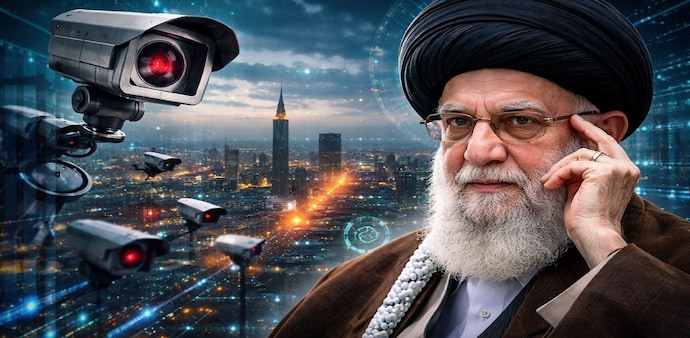
Much of the city’s traffic camera grid was allegedly accessed and monitored over an extended period, allowing operatives to map movements in and around key government facilities
- Mar 3, 2026,
- Updated Mar 3, 2026 11:21 AM IST
The killing of Iran’s Supreme Leader Ali Khamenei was not a sudden strike, but the culmination of a prolonged intelligence operation, according to reporting by the Financial Times.
The newspaper, citing serving and former Israeli intelligence officials along with sources familiar with the mission, said Israeli agencies had quietly penetrated Tehran’s surveillance systems years in advance.
Much of the city’s traffic camera grid was allegedly accessed and monitored over an extended period, allowing operatives to map movements in and around key government facilities. Two sources quoted in the report said the video feeds were encrypted and routed to secure servers in Tel Aviv and southern Israel.
Among the surveillance tools, one camera angle was said to be particularly revealing. It reportedly allowed analysts to observe where members of Khamenei’s security detail parked and to build a picture of daily rhythms inside the Pasteur Street compound.
How the Israeli intelligence led the investigation
According to CNN, US and Israeli intelligence services conducted detailed assessments of Khamenei’s patterns, "where he lived, whom he met with, how he communicated and where he might retreat under threat of attack." The review extended to other senior officials who rarely convened together with the 86-year-old cleric.
CNN reported that several high-ranking Iranian officials, including Khamenei, were due to gather on Saturday morning at different buildings within a heavily guarded Tehran compound that houses the offices of the supreme leader, the presidency, and the national security apparatus.
Sources cited by the network said an initial plan for a nighttime assault was altered in favour of a daytime operation. Around 6 am Israel time, fighter jets reportedly launched precision-guided weapons at the site, initiating what was described as a coordinated US-Israeli campaign.
An Israeli military official, speaking anonymously to the Associated Press, said three locations were struck within one minute, killing Khamenei and roughly 40 senior figures, including the commander of the Revolutionary Guard. Conducting the operation in daylight, the official said, created tactical surprise.
Echoes of earlier covert tactics
The alleged intelligence build-up mirrors previous operations attributed to Israel. In September 2024, Mossad operatives reportedly targeted Hezbollah members in Lebanon and Syria by planting explosives inside modified pagers and walkie-talkies.
The devices were redesigned to conceal small explosive charges and were repeatedly tested to calibrate the blast impact. Operatives also experimented with different alert tones to ensure recipients would retrieve the devices immediately. An agent identified as “Gabriel” said it took two weeks to persuade Hezbollah to adopt the upgraded pagers, partly by promoting them through misleading online advertisements.
Shell companies, including one registered in Hungary, were allegedly used to obscure the operation’s origin and mislead the Taiwanese manufacturer Gold Apollo into cooperating without knowing the end user. Hezbollah was reportedly unaware of the deception.
The killing of Iran’s Supreme Leader Ali Khamenei was not a sudden strike, but the culmination of a prolonged intelligence operation, according to reporting by the Financial Times.
The newspaper, citing serving and former Israeli intelligence officials along with sources familiar with the mission, said Israeli agencies had quietly penetrated Tehran’s surveillance systems years in advance.
Much of the city’s traffic camera grid was allegedly accessed and monitored over an extended period, allowing operatives to map movements in and around key government facilities. Two sources quoted in the report said the video feeds were encrypted and routed to secure servers in Tel Aviv and southern Israel.
Among the surveillance tools, one camera angle was said to be particularly revealing. It reportedly allowed analysts to observe where members of Khamenei’s security detail parked and to build a picture of daily rhythms inside the Pasteur Street compound.
How the Israeli intelligence led the investigation
According to CNN, US and Israeli intelligence services conducted detailed assessments of Khamenei’s patterns, "where he lived, whom he met with, how he communicated and where he might retreat under threat of attack." The review extended to other senior officials who rarely convened together with the 86-year-old cleric.
CNN reported that several high-ranking Iranian officials, including Khamenei, were due to gather on Saturday morning at different buildings within a heavily guarded Tehran compound that houses the offices of the supreme leader, the presidency, and the national security apparatus.
Sources cited by the network said an initial plan for a nighttime assault was altered in favour of a daytime operation. Around 6 am Israel time, fighter jets reportedly launched precision-guided weapons at the site, initiating what was described as a coordinated US-Israeli campaign.
An Israeli military official, speaking anonymously to the Associated Press, said three locations were struck within one minute, killing Khamenei and roughly 40 senior figures, including the commander of the Revolutionary Guard. Conducting the operation in daylight, the official said, created tactical surprise.
Echoes of earlier covert tactics
The alleged intelligence build-up mirrors previous operations attributed to Israel. In September 2024, Mossad operatives reportedly targeted Hezbollah members in Lebanon and Syria by planting explosives inside modified pagers and walkie-talkies.
The devices were redesigned to conceal small explosive charges and were repeatedly tested to calibrate the blast impact. Operatives also experimented with different alert tones to ensure recipients would retrieve the devices immediately. An agent identified as “Gabriel” said it took two weeks to persuade Hezbollah to adopt the upgraded pagers, partly by promoting them through misleading online advertisements.
Shell companies, including one registered in Hungary, were allegedly used to obscure the operation’s origin and mislead the Taiwanese manufacturer Gold Apollo into cooperating without knowing the end user. Hezbollah was reportedly unaware of the deception.